


Can a clogged drain cause an FTD error?
Yes. On a GE DDT595SBL5TS dishwasher, a clogged drain or leftover water in the tub can trigger an FTD (fill trouble) type error because the dishwasher expects the tub to be empty before it starts the next fill and wash sequence.
What to check first (fast, no parts)
- Cancel the cycle and let the unit try to drain; listen for the drain pump running.
- Check the bottom of the tub for standing water after cancel/drain.
- Remove and clean the filter area and sump screen (food debris and labels are common).
- Inspect the sink drain and garbage disposal inlet where the dishwasher drain hose connects.
- Look for a kinked, crushed, or sagging drain hose loop under the sink.
Common clog points that lead to FTD
A restriction anywhere in the drain path can leave water behind and confuse the fill logic.
| Clog location | What you may notice | Typical fix |
|---|---|---|
| Filter/sump area | Grit, odor, slow drain | Clean filter and sump area |
| Drain hose | Slow drain, intermittent FTD | Clear hose, correct routing |
| Drain pump | Hums, drains weakly | Clear debris; replace pump if damaged |
| House plumbing/disposal | Dishwasher backs up into sink | Clear disposal/branch drain |
Parts that are often involved
If cleaning and hose checks do not restore normal draining, these model-matched parts are the most common next steps:
- Drain pump asm WD19X24829: the pump that pushes water out during drain.
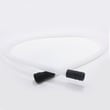
- Dishwasher drain hose WD24X10062: the hose that carries water to the sink/disposal.
Why it matters
FTD errors are often a symptom, not the root problem. If water cannot drain fully, the dishwasher may stop mid-cycle, wash poorly, or leave dirty water that redeposits soil on dishes.
Helpful DIY references
- GE electronic dishwasher error codes: quick definitions and what to check for GE electronic control systems.
- Dishwasher not draining video: step-by-step visuals for clearing common drain restrictions.
Last updated: January 2026
How do I clear the error code on my GE dishwasher?
On the GE DDT595SBL5TS dishwasher, most error codes clear after you correct the underlying problem and reset power. Start by canceling the cycle, then do a brief power reset at the breaker; if the code returns, use the code to target the failed system (drain, fill, heating, or control).
Quick steps to clear an error code
- Press Start/Reset (or Cancel/Drain) and wait for the unit to drain (often 1 to 2 minutes).
- Turn OFF power to the dishwasher at the breaker for 2 to 5 minutes, then turn it back ON.
- Start a short cycle and watch for the code to reappear.
- If the dishwasher will not respond, check the door is fully latched and the control panel is not locked.
- Look up the exact code meaning in GE electronic dishwasher error codes.
If the code comes back: what to check first
Most repeat codes point to a condition the control still detects.
- Drain-related codes/symptoms: standing water, humming, slow drain
- Check the sink/disposer knockout, air gap (if used), and hose routing.
- Inspect the dishwasher drain hose WD24X10062 for kinks, clogs, or a low loop issue.
- If the pump runs but does not move water, the drain pump can be the cause.
- Wash or spray performance codes/symptoms: poor cleaning, no spray sound
- Clean debris from spray arm holes and filters.
- Inspect the dishwasher spray arm, lower WD22X33499 for cracks or a stripped hub.
- Heating/drying codes/symptoms: cool water, wet dishes at end
- Confirm hot water supply to the dishwasher.
- Heating circuit issues can involve the heater or control.
Common “reset” methods and what they do
| Method | What it clears | Best for |
|---|---|---|
| Cancel/Drain | Current cycle state | Stuck cycle, mid-cycle error |
| Breaker reset (2 to 5 min) | Control memory and temporary faults | Most repeating codes |
| Fix root cause | The condition that triggers the code | Codes that return quickly |
Why it matters
An error code is the dishwasher’s way of protecting the pump, heater, and electronic control from running under unsafe conditions (no water, no drain, overheating). Clearing the code without fixing the cause usually makes it return.
Last updated: January 2026
How do I fix an FTD error on my GE dishwasher?
An FTD error on a GE DDT595SBL5TS dishwasher points to a drain problem (the unit is not draining as expected). We fix it by clearing the drain path first, then checking the drain pump and related wiring; a failed drain pump typically needs replacement.
Quick checks that solve most FTD errors
- Cancel the cycle and let the dishwasher run its drain step; listen for the drain pump sound.
- Remove standing water (if present), then clear debris from the sump area and filter screen.
- Check the sink drain/disposer inlet and the dishwasher drain hose for a clog or kink.
- Verify the drain hose has a proper high loop (or is connected to an air gap if used).
- Make sure the drain hose connection at the sink or disposer is not blocked by grease buildup.
Parts that commonly cause an FTD drain error
If the drain path is clear but the dishwasher still will not drain, these parts are the most common suspects on this model:
| What you observe | Most likely cause | What we typically do |
|---|---|---|
| Hums but drains slowly or not at all | Drain pump jammed or weak | Inspect for blockage; replace pump if weak |
| No drain sound at all | Drain pump not running, wiring issue, or control issue | Check harness connections; test pump; then control diagnostics |
| Drains sometimes, then errors | Partial clog, intermittent pump, or door switch/latch issue | Clear hose; verify door closes and latches consistently |
Helpful model-matched parts:
- Drain pump asm WD19X24829 (drain pump kit)
- Dishwasher drain hose WD24X10062 (hose if kinked, split, or internally clogged)
- GE dishwasher door latch lock WD21X10490 (if the door is not latching and the cycle is interrupting)
How we confirm the drain pump is the problem
- Disconnect power at the breaker.
- Access the pump area and check for broken glass, labels, or food debris.
- Inspect the pump wiring connector for corrosion or a loose fit.
- Test the drain pump motor for continuity with a multimeter; an open circuit indicates a failed motor.
Why it matters
When the dishwasher cannot drain, it can stop mid-cycle, leave dirty water in the tub, and trigger repeated error codes. Fixing the drain path and restoring proper pump operation prevents odors, poor cleaning, and repeat shutdowns.
For code interpretation and related GE drain faults, use GE electronic dishwasher error codes.
Last updated: January 2026





