 Owner’s manual


What is the life expectancy of a Kenmore washer?
Most Kenmore washers, including the Kenmore Elite model 79631622310, typically last 10 to 15 years with normal household use and routine care. Lifespan depends most on load size, how often you run cycles, and whether the washer stays level and drains and fills correctly (see the 79631622310 owner's manual).
- Overloading (strain on the drive system, tub, and suspension)
- Unbalanced loads (extra vibration and wear)
- Water quality and pressure (sediment and valve wear; pressure should be in the normal operating range)
- Drain performance (slow draining increases pump wear)
- Basic maintenance (cleaning, checking pockets, and using the right detergent amount)
- Keep loads evenly distributed; mix large and small items.
- Use HE detergent and avoid overdosing.
- Run a periodic clean washer cycle to reduce residue buildup.
- Check and clear the washplate area for trapped items; objects left in pockets can cause damage.
- Inspect fill hoses for cracking or bulging and replace if worn.
| Symptom | Often caused by | Typical next step |
|---|---|---|
| Won’t drain or drains slowly | Clogged or failing pump | Check drain path; consider lg washer drain pump 5859EA1004P |
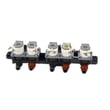
| Won’t fill or fills slowly | Inlet screens clogged, valve issue | Check screens; consider lg washer water inlet valve assembly AJU73213301 |
| Loud banging, walking, heavy vibration | Out-of-balance load, leveling, suspension wear | Re-level; consider suspension inspection |
| Lid won’t lock or cycle won’t start | Lid lock failure | Consider washer lid lock and switch assembly EBF61674802 |
A washer that is kept level, not overloaded, and allowed to fill and drain normally puts less stress on high-wear components like the drain pump, inlet valve, and lid lock. That directly extends the usable life of your Kenmore Elite washer and reduces repeat breakdowns.
Last updated: February 2026
How to hard reset a Kenmore Elite washer?
To hard reset a Kenmore Elite washer model 79631622310, unplug it for 60 seconds, plug it back in, then power it on and restart your cycle. This clears many temporary control glitches and is the reset method we use most often for this model.
- Press POWER to turn the washer off.
- Unplug the washer from the outlet.
- Wait 60 seconds.
- Plug the washer back in.
- Press POWER, re-select your cycle, then press START/PAUSE.
For model-specific operating details and troubleshooting notes, use the 79631622310 owner's manual.
These checks solve the most common “dead” or “won’t run” complaints after a power reset:
- Confirm the power cord is fully seated in a working outlet.
- Check the home breaker or fuse; the washer should be on a dedicated circuit.
- Make sure the lid is fully closed; this washer will not run or spin unless the lid locks.
- Turn both hot and cold water faucets fully on.
- Verify inlet hoses are not kinked or pinched.
| What you see | What it usually means | What to do |
|---|---|---|
| Washer powers on but won’t start | Cycle not reselected or lid not locked | Re-select cycle; press START/PAUSE; close lid firmly |
| Washer pauses and drains after a few minutes | Pause exceeded the time limit | Restart the cycle and stay with the washer during setup |
| Error returns quickly | Ongoing condition (load, drain, lid lock, motor) | Troubleshoot the specific symptom or code |
A hard reset restores normal control-board logic after a power interruption or a “stuck” state. If the same problem repeats, the washer is reacting to a real condition (lid lock, water supply, drain, or drive system) rather than needing repeated resets.
Last updated: February 2026
Does my Kenmore Elite washing machine have a filter?
Yes. Your Kenmore Elite washer model 79631622310 uses a drain pump clean-out (coin trap) style filter that catches lint and small items before they reach the drain pump. Cleaning it regularly helps prevent slow draining, drain errors, and water left in the tub; see the 79631622310 owner's manual.
On most Kenmore Elite top-load designs like this, the “filter” is part of the drain system, not a removable lint screen at the top of the tub.
- It’s typically accessed at the lower front area of the washer (behind a small access panel) or near the drain pump.
- It traps coins, hair pins, lint, and debris.
- A clogged trap can make the washer drain slowly or stop mid-cycle.
- Unplug the washer.
- Place a shallow pan and towels under the access area.
- Open the access panel.
- Slowly loosen the clean-out cap to let water drain out.
- Remove debris, rinse the trap, and reinstall the cap snugly.
- Run a quick rinse and spin to confirm normal draining.
- Water left in the tub after the cycle
- Longer-than-normal drain time
- Gurgling or grinding noise during draining
- Musty odor from standing water
- Intermittent draining problems that come and go
A blockage can also be in the hose or the pump itself.
| What to check | What you’re looking for | Related part for this model |
|---|---|---|
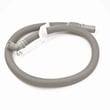
| Drain hose routing | Kinks, pinches, crushed section | Washer drain hose AEM73732901 |
| Pump area | Debris in pump inlet, damaged impeller | Lg washer drain pump 5859EA1004P |
| Lid lock operation | Lid not locking can stop spin and drain on some cycles | Washer lid lock and switch assembly EBF61674802 |
Keeping the drain clean-out clear protects the drain pump, helps the washer complete spin cycles, and reduces the chance of no-drain or water-left-in-tub complaints.
Last updated: February 2026
What model is my Kenmore Elite washer?
Your Kenmore Elite washer’s model number is printed on a rating label attached to the washer cabinet. On Kenmore Elite model 79631622310, the label is typically on the back of the control panel area, along the cabinet edge near the bottom, or in the lid opening area where it’s easy to read when you lift the lid; confirm the exact location in the 79631622310 owner's manual.
Check these common label locations first:
- Back of the control panel or rear panel
- Left or right side of the main cabinet near the bottom
- Under the lid, around the lid opening (top-load style)
- Along the top rim of the cabinet (near the tub opening)
- Inside the cabinet edge where the lid closes
Kenmore Elite model numbers are usually a long number string. For parts lookup and troubleshooting, we recommend matching the model number exactly, character for character, before ordering parts like a lid lock, drain pump, or control board.
- Model number: identifies the exact washer design and parts list
- Serial number: identifies the production unit and date range
- Brand line: “Kenmore Elite” is the series name, not the model number
If the sticker is worn or covered by detergent residue:
- Wipe gently with a damp cloth and a drop of mild dish soap
- Use a flashlight at an angle to make faint printing stand out
- Take a close-up photo and zoom in
- Copy the number exactly as printed (including any leading zeros)
| Washer style | Most common model label spot |
|---|---|
| Top-load (lid on top) | Under the lid opening or on the cabinet near the bottom |
| Front-load (door on front) | Door jamb area or behind/around the door opening |
Using the correct model number prevents ordering the wrong Kenmore or LG-built compatible parts and helps you use the right diagnostic steps from the manual.
Last updated: February 2026
How do I get my Kenmore washer to drain?
On the Kenmore Elite washer model 79631622310, the fastest way to force draining is to run Drain & Spin so the drain pump turns on and pushes water out through the drain hose. If it still will not drain, a kinked hose, a clogged standpipe, or a failing drain pump is usually the cause.
- Press POWER to turn the washer on.
- Select Drain & Spin.
- Press START/PAUSE to activate the drain pump.
- Watch the standpipe or laundry tub for fast flow; this washer pumps out water rapidly.
- If water backs up, stop the cycle and clear the household drain restriction.
A drain problem is often outside the washer.
- Make sure the drain hose is not kinked, crushed, or pinched.
- Pull the hose end out and clear lint, coins, or small socks from the outlet.
- Check the standpipe or sink drain for a clog if water backs up during draining.
- Confirm the hose insertion depth:
- Smaller drain pipes: insert to the hose flange.
- Larger drain pipes: insert 1 to 2 inches past the flange.
- Secure the hose so it cannot pop out during draining.
| What you see | Likely cause | What to do |
|---|---|---|
| Pump runs, water backs up | Clogged/slow house drain | Clear standpipe, use a plumber if needed |
| No pump sound, no draining | Drain pump or control issue | Inspect wiring, consider pump replacement |
| Drains slowly | Partial clog or restricted hose | Straighten hose, clear outlet and standpipe |
If the hose and household drain are clear but the tub stays full, the drain pump is the most common failed component.
- Loud humming with little or no water movement points to a restricted or failing pump.
- Intermittent draining can indicate a weak pump motor or an electrical connection issue.
A common replacement for this model is the lg washer drain pump 5859EA1004P.
A washer that cannot drain will not spin correctly, can leave clothes soaking wet, and can trigger drain-related errors. Correct drain hose installation also prevents water from backing up or spilling during the high-flow drain.
For cycle and control details (including Drain & Spin operation), follow the 79631622310 owner's manual.
Last updated: February 2026
Is the Kenmore Elite a HE washer?
Yes. The Kenmore Elite washer model 79631622310 is a high-efficiency (HE) washer; it’s designed to reduce water use during cycles, including a jet-spray rinse system used in certain cycles to save rinse water. For cycle and option details, use the 79631622310 owner's manual.
High-efficiency washers clean with less water and rely on load sensing, optimized agitation, and higher spin speeds to remove more water from clothes.
Common HE traits you’ll notice:
- Lower water levels than traditional top-load washers
- Longer cycle times (normal)
- Higher spin speeds to shorten drying time
- Better results with HE detergent
- More sensitivity to unbalanced loads
Using the right setup prevents oversudsing, poor rinsing, and drain issues.
- Use HE detergent only; start with a small amount and adjust for soil level
- Avoid extra detergent for large loads; it can cause residue and odors
- Load loosely around the washplate; don’t pack items down
- Use the built-in options (extra rinse, rinse/spin) when needed
- Keep the dispenser area clean to prevent buildup
| Topic | HE washer (79631622310) | Traditional top-load |
|---|---|---|
| Water level | Lower, load-sensed | Higher, tub-fill |
| Detergent | HE only, less amount | Standard OK |
| Cycle time | Often longer | Often shorter |
| Spin | Higher extraction | Lower extraction |
When we treat an HE washer like an older, deep-fill washer (too much detergent, overloading, or packing clothes), we typically see poor rinsing, odors, and performance complaints. Using HE detergent and proper loading keeps cleaning and rinsing consistent.
Last updated: February 2026
What does F35 mean on a Kenmore Elite washer?
On the Kenmore Elite washer model 79631622310, the F35 error means the washer is not getting a correct water-level signal from the analog pressure sensing system (the sensor and its air hose). The cycle may stop to prevent overfilling or improper draining; the code often returns until the cause is fixed.
- Unplug the washer for 2 minutes, then restore power and try a Rinse/Spin.
- Make sure the tub is not over-sudsing; use HE detergent and reduce the amount.
- Verify the drain hose is not shoved too far down the standpipe (can cause siphoning and level-sensing issues).
- Check that the washer is level and not bouncing excessively.
- If the washer is mid-cycle, remove the load and restart with a smaller, evenly distributed load.
F35 is usually tied to the pressure switch circuit, the pressure hose, or wiring connections.
| Symptom you notice | Most likely area | Related part for this model |
|---|---|---|
| F35 appears during fill or early wash | Water-level sensing | Lg washer water-level pressure switch 6501EA1001R |
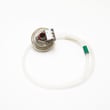
| F35 after heavy suds or repeated retries | Air trap/pressure hose, suds | Washer water-level pressure switch hose 5210FA3427J |
| F35 with other random electrical symptoms | Harness/connection issue | Inspect connectors at the switch and control |
- Disconnect power before removing panels.
- Inspect the pressure hose for kinks, pinches, cracks, or a loose fit at the switch.
- Blow gently through the hose (removed from the switch) to confirm it is clear; clear any blockage at the tub air dome connection.
- Reseat wiring connectors at the pressure switch and look for corrosion.
- If the hose is good and connections are tight, replace the pressure switch.
The pressure sensing system tells the control board when to stop filling and when the tub is empty enough to spin. A bad signal can cause no-fill, overfill protection stops, or spin/drain problems.
For model-specific feature and diagnostic guidance, use the 79631622310 owner’s manual.
Last updated: February 2026


