Owner’s manual
 View engine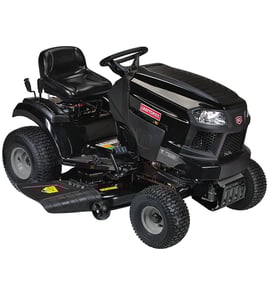

What engine does Craftsman riding mower use?
The Craftsman riding mower model 917288513 uses a low-emission gasoline engine (horsepower is rated by the engine manufacturer). For the exact engine make, model, and service specs for your tractor, we recommend checking the identification and specifications section in the 917288513 owner's manual.
How to identify the exact engine on your 917288513
Use these quick checks to match the correct engine parts and tune-up items:
- Look for the engine ID label on the blower housing, valve cover, or near the starter
- Record the engine model, type, and code exactly as shown
- Confirm whether your tractor has electric start (this model does)
- Use only fresh gasoline up to E10 (10% ethanol)
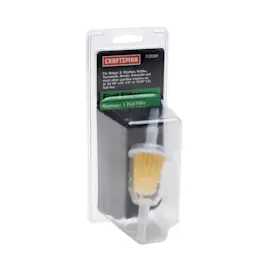
- Match maintenance parts (spark plug, air filter, fuel filter) to the engine ID, not just the tractor model
What we can confirm from the manual
Your operator’s manual for this tractor identifies these key engine-related details:
| Item | What it means for you |
|---|---|
| Low-emission engine | May run differently than older designs; follow the manual’s starting steps |
| Fuel requirement | Gasoline up to 10% ethanol (E10) is acceptable |
| Starting system | Electric start is listed for this tractor |
Why it matters
Craftsman tractors often share the same tractor model family while using different engine variants over time. Using the engine’s model/type/code ensures you get the right ignition, fuel, and air-intake parts and follow the correct starting and maintenance procedures.
Last updated: February 2026
Is RP25513 left or right side?
RP25513 is a Delta faucet cartridge, not a part used on the Craftsman 917288513 front-engine lawn tractor. For this tractor, “left” and “right” references apply to mower deck and chassis components (viewed from the operator’s seat); use the 917288513 owner's manual to confirm the correct side and procedure before ordering or installing parts.
How to identify left vs right on the 917288513
We use the standard mower convention: sit in the seat facing forward.
- Left side is your left hand side at the steering wheel.
- Right side is your right hand side at the steering wheel.
- Deck parts often mirror each other; steering links and lift hardware usually do not.
- If a part description says “right,” it typically means the operator’s right.
- When removing the mower deck, the manual procedure slides the mower out from the right side of the tractor.
Quick check: are you looking for a tractor part or a faucet part?
If your goal is to fix a mowing or drive issue on the Craftsman 917288513, these are common “side-specific” areas:
| System | Often side-specific? | Example part on this model page |
|---|---|---|
| Steering linkage | Yes | Lawn mower drag link, right 597069902 |
| Mower deck suspension | Sometimes | Lift links, suspension arms (manual shows both sides) |
| Deck spindle/mandrel | Usually not side-specific | Lawn tractor mandrel housing 587819701 |
| Belts and pulleys | No | Lawn tractor ground drive or blade drive belt, 1/2 x 92-2/5-in 592855201 |
Why it matters
Ordering the wrong side can delay your repair and can also affect deck leveling and cut quality. The manual’s deck removal and leveling steps help you confirm orientation and get the mower housing set correctly after reassembly.
Last updated: February 2026
How much does it cost to replace a riding lawn mower engine?
For a Craftsman riding tractor like model 917288513, a full engine replacement typically runs about $260 to $1,800 installed, depending on the engine type, whether you reuse accessories (starter, pulleys), and local labor rates. Plan on around 5 to 8 labor hours for a riding mower engine swap.
What drives the total cost?
- Engine price (new vs. remanufactured; horsepower and shaft specs)
- Labor time (shop rate and how much disassembly is required)
- Extra parts often replaced during the job (belts, wiring, fuel lines)
- Electrical starting issues that get discovered during diagnosis (battery, solenoid, starter)
- Deck and drive condition (worn pulleys or belts can add time)
Quick cost breakdown (typical ranges)
| Cost item | Typical range | Notes |
|---|---|---|
| Engine (part only) | $200 to $1,400 | Varies by brand/spec and availability |
| Labor | $200 to $700 | Often 5 to 8 hours total |
| “While you’re in there” parts | $20 to $200 | Belts, hardware, filters, fuel line |
Before replacing the engine: confirm it is really the problem
Many “dead engine” complaints are actually starting or safety-interlock issues. The troubleshooting chart in the 917288513 owner’s manual points to common causes when the engine clicks but will not start.
Check these first:
- Battery charge and cable condition (clean corrosion at terminals)
- Loose or damaged wiring at the starter/solenoid
- Starter solenoid operation (a common no-crank culprit)
- Safety switches (brake/clutch and PTO engagement)
- Fuel quality and basic tune-up items if it cranks but will not start
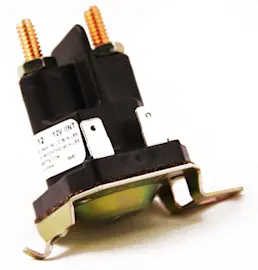
If you suspect a solenoid problem, the model uses a replaceable starter solenoid; see lawn tractor starter solenoid 582042802.
Why it matters
An engine replacement is one of the highest-cost repairs on a riding mower. A quick diagnosis of the battery, wiring, and solenoid can prevent replacing a good engine and can get your 917288513 back to mowing faster.
Last updated: February 2026
What size belt does a Craftsman 46 inch mower take?
A Craftsman 46-inch mower deck belt size depends on the exact tractor and deck configuration. For Craftsman model 917288513, the correct approach is to match the belt by the model’s deck drive routing and the belt’s OEM replacement number listed in the 917288513 owner's manual, not by deck width alone.
How to get the right belt for model 917288513
Deck size (46-inch) is a starting point, but belt length and profile vary by idler layout and pulley sizes. Use these checks before ordering:
- Confirm whether you’re replacing the mower blade drive (deck) belt or the ground drive belt
- Compare the old belt’s printed number (if readable) to the manual’s belt listing
- Verify the belt is routed in all pulley grooves and inside belt guides (misrouting mimics a “wrong belt”)
- Inspect idler pulleys and mandrel pulleys for binding (a frozen pulley quickly ruins a new belt)
- If blades will not rotate, treat the belt as a likely wear item per the troubleshooting chart
Belt replacement basics (what the manual emphasizes)
When installing a mower blade drive belt, the manual’s key points are:
- Park on a level surface and set the parking brake
- Remove the mower deck if required for access
- Work the belt off mandrel pulleys and idler pulleys
- Install the new belt around mandrel pulleys and idlers
- Make sure the belt is seated in every pulley groove and inside all belt guides
If you’re also replacing worn deck hardware, the lawn tractor ground drive or blade drive belt, 1/2 x 92-2/5-in 592855201 is a model-matched belt option shown for this tractor.
Quick comparison: deck belt vs ground drive belt
| Belt type | What it drives | Common symptom when worn | What to inspect with it |
|---|---|---|---|
| Mower blade drive (deck) belt | Blades and deck pulleys | Blades will not rotate, poor cut | Mandrel pulleys, idler pulleys, belt guides |
| Ground drive belt | Transmission drive | Tractor won’t move or slips | Idler pulley, transmission pulley, belt keepers |
Why it matters
Ordering by “46-inch mower belt” alone often leads to the wrong length or profile. Matching the belt to Craftsman 917288513 prevents premature wear, slipping, and blade engagement problems.
Last updated: February 2026
Is it worth replacing a lawn mower engine?
Yes; replacing the engine on your Craftsman 917288513 front-engine lawn tractor is worth it when the deck, frame, and drive system are in good shape and the total engine-swap cost stays well below the price of a comparable new rider. If several major systems are worn, replacement makes more sense.
Quick decision checklist
- Deck and frame are structurally sound (no cracks or rust-through)
- Transmission drives forward and reverse without slipping or grinding
- Steering and brakes operate correctly
- You can source the correct engine and mounting hardware for this chassis
- You plan to keep the tractor and maintain it long-term
Cost and condition guide
| Factor | Engine swap is worth it when... | Replace the tractor when... |
|---|---|---|
| Overall condition | Deck and chassis are solid | Deck/frame are heavily damaged or corroded |
| Drive system | Belts and transmission are healthy | Loss of drive or major transmission issues |
| Total cost | Clearly less than a comparable new rider | Near half the cost of a new unit |
What to inspect before buying an engine
- Deck spindles and vibration: rumbling or wobble often points to spindle wear (mandrel issues)
- Belts and pulleys: glazing, cracking, or squeal under load signals wear
- Starting circuit: the manual troubleshooting chart ties click-no-start to battery, wiring, starter, or solenoid
- Safety interlocks: brake and seat switches must function correctly
If you are already doing deck work, parts that commonly come up include the lawn tractor ground drive or blade drive belt, 1/2 x 92-2/5-in 592855201 and the lawn tractor starter solenoid 582042802.
Why it matters
An engine swap restores reliability only if the rest of the tractor is safe and mechanically sound. Before any service, follow the shutdown steps in the 917288513 owner’s manual (key off, blades stopped, spark plug wire disconnected).
Last updated: February 2026