Installation guide
 Owner’s manual
 Error Codes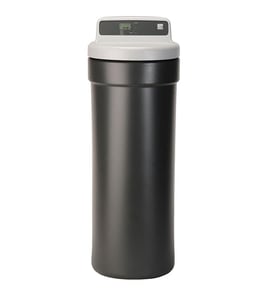




What water softeners do plumbers recommend?
Plumbers typically recommend water softeners that match your water test results (hardness in grains per gallon and iron in ppm), your home’s flow needs, and local plumbing code requirements. For a Kenmore 625388270 water softener, we focus on correct sizing, proper installation, and correct programming so it performs as designed. See the 625388270 installation guide for placement, code, and setup requirements.
What plumbers look for when recommending a softener
- Verified water test results (hardness and iron) to size the system correctly
- A reliable control valve and regeneration system (motor, rotor/disc, seals)
- Correct installation location (near main line, drain access, power access)
- A working bypass valve for service and troubleshooting
- Easy maintenance (salt management, periodic cleaning and sanitizing)
How to choose the right softener for your home
Use this checklist before buying or replacing any water softener:
- Test your water for hardness and iron; this determines capacity and settings.
- Confirm what the softener can and cannot do: it removes hardness minerals and some “clear water” iron, but it does not fix tastes/odors, acidity, or other iron types.
- Plan for code compliance: local plumbing and sanitation codes can affect installation details.
- Match the softener to your household demand (bathrooms, occupants, peak flow).
| What you have | What plumbers recommend | Why it matters |
|---|---|---|
| Hard water only | Standard ion-exchange softener | Prevents scale and improves soap efficiency |
| Hard water + clear-water iron | Softener sized for iron load | Reduces staining and resin fouling |
| Odor, acidity, bacteria concerns | Additional treatment (separate equipment) | A softener is not a purifier |
Common maintenance habits plumbers recommend
- Keep salt in the brine tank; in humid areas, keep it about 1/4 to 1/2 full and refill more often to help reduce salt bridging.
- Run the correct regeneration schedule based on your water hardness.
- Periodically disinfect the softener when your water supply conditions call for it (follow the manual’s procedure).
Why it matters
A “recommended” brand matters less than correct sizing, correct installation, and correct settings. When those are right, your Kenmore 625388270 can reliably remove hardness minerals and some clear-water iron within its rated limits.
Last updated: January 2026
What is the life expectancy of a Kenmore water softener?
A Kenmore water softener like model 625388270 typically lasts 8 to 15 years. Lifespan depends most on your water hardness, iron content, chlorine exposure, and how consistently the unit is maintained and regenerated per the settings in the 625388270 owner's manual.
What usually wears out first
Most “end of life” issues are really one or two components wearing out, not the entire softener.
- Resin media loses capacity over time (common around 10 to 15 years)
- Valve seals can wear and cause leaking or poor regeneration
- The drive system can fail (motor or position sensing)
- Nozzle/venturi and screens can clog from sediment or iron
- Salt bridging or mush can cause repeated hard-water complaints
Maintenance that extends life
The Kenmore documentation emphasizes correct setup and ongoing operation and maintenance after installation. Use these habits to keep performance steady.
- Keep salt in the brine tank; in humid areas, keep it about 1/4 to 1/2 full and refill more often
- Clean out salt crust, salt bridging, and sludge before it causes brine problems
- Disinfect periodically when needed (some water supplies require it)
- If you have clear-water iron, clean the resin bed regularly (commonly every 6 months, more often if iron shows up sooner)
- Protect the unit from freezing; drain it if installed where it could freeze
Quick “age vs. symptom” guide
| What you notice | Most common cause | What to check first |
|---|---|---|
| Hard water returns quickly | Resin worn or settings off | Hardness setting, regeneration frequency, resin condition |
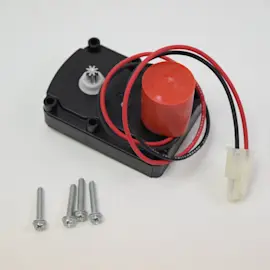
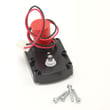
| Softener runs but does not advance cycles | Drive or sensing issue | Rep'l motor 7286039, rotor position switch function |
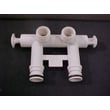
| Leaking at valve area | Worn seals | Kenmore water softener seal kit 7129716 |
| Low brine draw or poor regeneration | Clogged venturi/screen | Venturi, screen, brine line restrictions |
Why it matters
A softener that is near the end of its service life often still runs, but it uses more salt and water to deliver less softening. Catching wear early (resin capacity loss, seal leaks, brine problems) helps you decide whether a repair restores performance or whether a full replacement makes more sense.
Last updated: January 2026
Is it worth repairing a water softener?
Yes, repairing a Kenmore water softener model 625388270 is usually worth it when the problem is isolated (leak at the valve, no soft water, stuck regeneration) and the fix is a common service part; replacement makes more sense when the resin tank or cabinet is failing or repair costs approach half the price of a comparable new unit.
Quick decision checklist
- Repair if the unit still regenerates but performance is inconsistent (often a valve or flow-sensing issue).
- Repair if you have a specific symptom like leaking at the valve area or a motor that will not advance.
- Repair if the issue is maintenance-related (salt bridging, clogged venturi/nozzle, dirty screen).
- Replace if the tank or salt storage drum is leaking or structurally damaged.
- Replace if multiple major components are failing at once (motor, seals, rotor/disc, electronics).
Common repairs that are typically cost-effective
These are frequent “fixable” items on many Kenmore softeners, including model 625388270:
| Symptom | Likely area | Example part for this model |
|---|---|---|
| Softener stuck in a cycle or not advancing | Drive motor / valve drive | Rep'l motor 7286039 |
| Leaks at the valve, poor sealing between cycles | Valve seals | Kenmore water softener seal kit 7129716 |
| No soft water, erratic gallons counting | Turbine / sensor path | Whirlpool water softener turbine 7117858 |
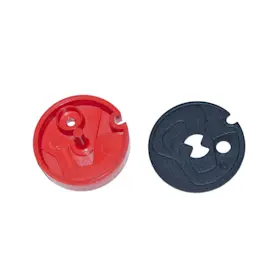
| Will not index correctly during regeneration | Position sensing | Waterworks water softener rotor position switch 7030713 |
Why it matters
A working softener protects plumbing and water-using appliances from hardness minerals (measured in grains per gallon) and can also reduce some clear-water iron (ppm). The installation guidance also matters: this softener should be installed on the house main water line before the water heater, and water through the softener must stay under 120°F (49°C) to avoid damaging internal parts. Use the 625388270 installation guide for placement and connection details.
Before you spend money on parts
We recommend these quick checks first because they often solve “no soft water” complaints without replacing parts:
- Confirm the bypass valve is in the “service” position.
- Break up any salt bridge and verify the brine tank has usable salt.
- Clean the nozzle/venturi area and check for debris.
- Check that the unit has constant power (use a continuously live outlet).
- Verify your hardness setting matches your water test results.
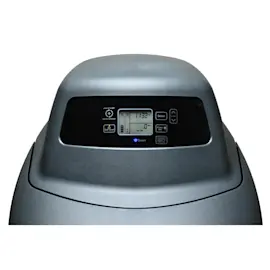
If you’re seeing an error code on the display, use Kenmore error codes to narrow the repair to the right circuit or component.
Last updated: January 2026