Owner’s manual
 View engine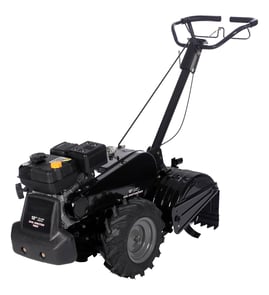


Where is the model number on a tiller?
On the Craftsman rear-tine tiller model 917293482, the model number is shown in the owner documentation as “TILLER 917.293482” on the parts/illustration pages; on the actual machine, the model number is typically printed on a product label located on the tine shield/tine guard area or on the frame near the engine.
Where to look on the tiller (most common spots)
Check these areas first; they are the most likely locations for a readable ID label:
- On the tine shield or tine guard (near the tines)
- On the main frame rail (left or right side)
- Near the engine mounting area
- On or near the handle support/control panel area
- Occasionally near the fuel tank area (on some builds)
What the label usually looks like
Most tiller ID labels include a few key fields. Use the model number to match parts correctly.
| Label field | What it’s used for | Example for this tiller |
|---|---|---|
| Model number | Correct parts lookup | 917293482 |
| Serial number | Identifies your exact unit | Varies by unit |
| Engine model | Engine parts reference | Often listed separately |
Tips if the label is hard to read
Dirt, sun fading, and fuel residue can make the tag tough to spot. These steps help quickly:
- Wipe the area with a damp rag and mild cleaner; avoid soaking decals
- Use a flashlight at a low angle to make faded printing stand out
- Take a close-up photo and zoom in to read small characters
- Compare what you find to the model format shown in the 917293482 owner’s manual
Why it matters
We use the model number to match the correct Craftsman rear-tine tiller parts and diagrams. Even small model-number differences can change items like the drive belt, clutch cable, or tine shield hardware.
Last updated: January 2026
What is the bar on the back of a tiller for?
On the Craftsman 917293482 rear-tine tiller, the bar at the back is the depth stake (often called a drag bar); it controls how deep the tines dig and helps keep the tiller from pulling itself forward too aggressively while you’re tilling.
What the depth stake does
- Sets tilling depth from shallow cultivating to deeper tilling
- Adds resistance so the tines do not “run away” and surge forward
- Helps stabilize the tiller and keep a consistent trench depth
- Can be repositioned for transport so the tines do not scuff the ground
How to adjust it on model 917293482
We adjust the depth stake by moving its pin to a different hole on the stake.
- Release the depth stake pin.
- Move the depth stake up for deeper tilling (more bite).
- Move the depth stake down for shallower tilling or transport.
- Reinsert the pin fully to lock the stake.
For the exact hole positions and operating steps, use the 917293482 owner's manual.
Quick guide: what to expect after an adjustment
| Depth stake position | Typical result | Best for |
|---|---|---|
| Higher (less stake in ground) | Deeper tilling, more forward pull | Breaking new ground, deep soil prep |
| Lower (more stake in ground) | Shallower tilling, more control | Cultivating, weeding between rows |
| Transport position | Tines stay up, easier to move | Moving around the yard/storage |
Why it matters
Depth control is a safety and performance issue. If you try to till too deep too fast, the tines can catch and the tiller can lurch forward; the depth stake helps you manage bite and maintain control.
Last updated: January 2026
What tiller is made in the USA?
If you’re shopping specifically for a rear-tine tiller like the Craftsman 917293482, the country of manufacture is not a reliable way to identify the correct parts or service steps; we recommend matching by model number and using the Craftsman 917293482 owner’s manual for maintenance and safety guidance.
How to identify a USA-made tiller (practical checks)
Manufacturing location varies by brand, model, and production run, so the most dependable approach is to verify it on the machine and its documentation.
- Check the product data plate or decal on the frame for “Made in …”
- Look for the engine label separately (engine origin can differ from the tiller)
- Confirm the exact model number and serial number before buying parts
- Review the manual and packaging information that came with the unit
- If you’re comparing brands, verify the claim on the manufacturer’s current product page
Why model number matters more than “Made in USA”
For repairs and maintenance, the model number determines the correct belt, tines, and hardware. For example, the Craftsman 917293482 manual calls out routine service items (like belts and tines) as normal-wear components.
| What you’re trying to do | Best identifier to use | Example for this model |
|---|---|---|
| Order the right replacement parts | Model number | 917293482 |
| Replace a wear item | Exact part ID and description | Husqvarna rear-tine tiller drive belt 591372401 |
| Follow safe operating steps | Manual instructions | Craftsman 917293482 owner’s manual |
Why it matters
A “Made in USA” claim can help with brand preference, but it does not guarantee parts interchangeability. Using the correct model number prevents wrong-part returns and helps keep your tiller operating safely and smoothly.
Last updated: January 2026
Why won't the tines on my garden tiller turn?
If the engine runs but the tines will not turn on your Craftsman 917293482 rear-tine tiller, the usual causes are an unengaged tine control, a V-belt that is loose or off the pulleys, or a drive control cable that is out of adjustment. Use the 917293482 owner's manual to confirm the correct control positions and adjustment steps.
Quick checks first (no disassembly)
- Make sure the tine/drive control bar is fully engaged and held against the handle.
- Verify the shift lever is set for operation, not a transport position where the tiller can roll while tines do not turn.
- Look for debris (vines, long grass) wrapped around the tine shaft that can slow or stop tine rotation.
- Check the belt area for a belt that is visibly slack or has jumped off a pulley.
Most likely mechanical causes
- Belt off, worn, or slipping: A belt that is off the pulley(s), glazed, cracked, or stretched will not transfer power to the transmission.
- Drive control cable out of adjustment: If the cable does not pull the idler far enough, the belt never tightens enough to drive the tines.
- Pulley or idler alignment issue: Bent guides or misaligned pulleys can let the belt walk off.
Helpful parts to consider:
Symptom-to-cause guide
| What you notice | Most likely cause | What to do |
|---|---|---|
| Engine runs, tines never move | Control not engaged or belt off | Recheck controls; inspect belt routing |
| Squealing or rubber smell | Belt slipping | Replace belt; check pulley alignment |
| Tines stop under load | Low belt tension | Adjust cable; verify idler movement |
Why it matters
The belt and idler system must create enough tension to transfer engine power into the transmission. When tension is low or the belt is off the pulleys, the engine runs normally but the tine drive never engages.
Last updated: January 2026