Owner’s manual
 Error Codes


What is the most common problem with a GE refrigerator?
The most common problem we see with GE refrigerators like model DSS25KSRDSS is a cooling complaint (food not staying cold enough or temperatures swinging). In many cases, the root cause is airflow or defrost related, and the first wins are checking settings, cleaning coils, and confirming fans are running per the DSS25KSRDSS owner's manual.
These are the issues that most often create warm fridge temps, soft ice, or thawing in the freezer:
- Dirty condenser coil restricting heat release
- Condenser fan not running (no airflow under/behind the unit)
- Evaporator fan not running (poor airflow inside the freezer)
- Defrost system problem causing frost buildup (heater, thermostat, sensor)
- Door gasket leak or frequent door openings causing moisture and frost
- Water filter or water supply restriction affecting ice and water flow (separate from cooling)
Start here before replacing anything:
- Verify both temperature controls are set correctly (not set to “0” or too warm)
- Listen for normal operation; the manual notes gurgling and dripping sounds can occur during defrost
- If the refrigerator seems “off,” allow about 30 minutes for a defrost cycle to finish before troubleshooting further
- Make sure the power cord is fully seated and the breaker is not tripped
- Check for heavy frost on the freezer back wall (a strong sign of a defrost/airflow issue)
If a quick check points to a component, these parts are commonly involved on this model family:
| Symptom | Most likely area | Example part to consider |
|---|---|---|
| Freezer cold, fresh food warm | Airflow from freezer to fridge | Evaporator fan motor |
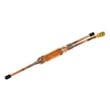
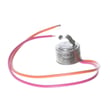
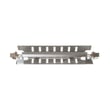
| Frost blanket on freezer back wall | Defrost system | Refrigerator defrost heater WR51X10055 or defrost thermostat |
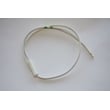
| Temps fluctuate or read wrong | Temperature sensing | GE profile refrigerator temperature sensor WR55X10025 |
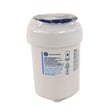
| No water or slow ice production | Water supply or filtration | Refrigerator water filter MWFP |
Cooling problems usually get worse over time. Catching an airflow restriction (like dirty coils) or a defrost issue early helps protect food, reduces compressor run time, and prevents ice buildup that can block vents.
Last updated: January 2026
How wide is a 25.6 cubic foot refrigerator?
Most 25.6 cu. ft. side-by-side refrigerators are about 36 inches wide; for the GE DSS25KSRDSS, plan on a 36-inch cabinet opening and confirm the exact cutout and door-clearance requirements in the DSS25KSRDSS owner’s manual.
A “25.6 cu. ft.” capacity does not guarantee one exact width, but side-by-side designs in this size class are commonly built for standard 36-inch spaces.
- Typical exterior width: about 35 3/4 to 36 inches
- Typical required opening: 36 inches or slightly more (for leveling and airflow)
- Door swing and handle clearance can require extra side clearance
- If your entryway is tight, door removal may be needed during moving
| What you’re measuring | Typical value for 25.6 cu. ft. side-by-side | Why it can vary |
|---|---|---|
| Cabinet width | ~36 in. | Brand platform and insulation thickness |
| Required opening | 36 in. or a bit more | Leveling, airflow, trim |
| “Fits through” width | Under 36 in. only if doors removed | Door/hinge geometry |
Use a tape measure and check three points (front, middle, back) because walls and cabinets are rarely perfectly square.
- Measure the opening width between cabinets or walls
- Measure depth to the wall, including baseboards
- Measure height to the lowest cabinet or soffit
- Check door swing clearance on the hinge side
- Measure entry doors and hallways on the delivery path
A refrigerator that is “36 inches wide” can still be a problem if the opening is tight, the floor is uneven, or the doors cannot swing fully. Planning for clearance helps prevent dents, poor airflow, and installation headaches.
Last updated: January 2026
Are GE side by side refrigerators good?
GE side-by-side refrigerators like model DSS25KSRDSS are a solid choice for everyday reliability and organization; they typically offer strong door storage, adjustable bins and shelves, and convenient ice and water dispensing when equipped. Overall performance depends most on proper temperatures, door sealing, and routine maintenance.
We judge side-by-side refrigerators on consistent cooling, usable storage, and how well the dispenser system holds up over time.
- Storage flexibility: adjustable door bins and shelves help fit tall bottles and small items
- Convenience features: in-door ice and water can reduce trips to the sink
- Temperature stability: steady fridge and freezer temps protect food quality
- Serviceability: common wear parts (filters, valves, sensors) are replaceable
- Daily usability: doors should close and seal fully to prevent warm air leaks
For model-specific features and care details, use the DSS25KSRDSS owner’s manual.
These steps prevent many common complaints like slow ice production, warm temps, and dispenser issues.
- Replace the water filter on schedule; a restricted filter can reduce water flow and ice output
- Confirm doors close completely and gaskets seal all the way around
- Keep air vents clear inside both compartments
- Set and verify temperatures after loading large amounts of food
- If you have dispenser issues, check for frozen lines or low household water pressure
| Symptom | Often involved system | Example part for DSS25KSRDSS |
|---|---|---|
| Slow water flow at dispenser | Filtration | Refrigerator water filter MWFP |
| Warm fridge or temp swings | Temperature sensing | GE profile refrigerator temperature sensor WR55X10025 |
| No ice or intermittent ice | Ice maker system | Refrigerator ice maker WR30X10093 |
A side-by-side can feel “not good” even when nothing is broken if airflow is blocked, doors are not sealing, or the water filter is overdue. Keeping temps stable and the dispenser system flowing normally protects food, reduces frost issues, and improves ice and water performance.
Last updated: January 2026
Why is my GE side by side freezing up?
When a GE DSS25KSRDSS side-by-side refrigerator “freezes up,” the most common cause is an airflow or defrost problem that lets frost build on the evaporator and restrict circulation. Start by verifying temperature control settings and door sealing, then check for signs of a defrost failure.
- Set the fresh food and freezer controls to the recommended mid setting (many GE models start at 5 and 5), then allow 12 to 24 hours to stabilize.
- Make sure doors fully close and nothing is holding them open.
- Look for heavy frost on the freezer back wall (a strong clue of a defrost issue).
- Confirm vents are not blocked by packages, bins, or an overfilled freezer.
- If the water dispenser line is freezing, check for a slow seep at the inlet valve that can keep water sitting in the tube and freezing.
| Symptom you see | Most likely cause | What we do next |
|---|---|---|
| Frost blanket on freezer back panel, warm fresh food | Defrost system problem | Test/inspect defrost heater and defrost thermostat |
| Freezer too cold, items freezing in fresh food | Controls set too cold or airflow imbalance | Warm settings slightly; recheck after 12 hours |
| Water dispenser stops, line frozen | Water valve seeping or low flow | Replace the inlet valve; replace clogged filter |
| Ice clumps or irregular cubes | Freezer temp too warm or door left open | Adjust freezer colder one step; check door seal |
- Refrigerator defrost heater WR51X10055 if the unit is not defrosting and frost keeps returning
- Refrigerator defrost thermostat WR50X10068 if the heater is not being allowed to energize at the right time
- Refrigerator evaporator motor WR60X10307 if airflow is weak and temperatures are uneven
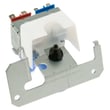
- Refrigerator water valve WR57X33326 if the dispenser line freezes from a slow drip past the valve
- Refrigerator water filter MWFP if water flow is restricted and dispenser performance is inconsistent
A refrigerator that is “freezing up” usually means frost is choking airflow. That can make the freezer run longer, warm the fresh food section, reduce ice production, and eventually cause no-cool symptoms if the evaporator becomes fully blocked.
Use the DSS25KSRDSS owner’s manual to confirm the correct control settings, stabilization times after adjustments, and troubleshooting steps for ice and water symptoms.
Last updated: January 2026