Owner’s manual


What are common problems with Whirlpool duet dryers?
Whirlpool Duet dryers most often fail to heat, stop mid-cycle, make squealing or grinding noises, or run without tumbling. In many cases, the root cause is airflow restriction, a power supply issue, or a worn drive component; start with the simplest checks first.
Quick checks we recommend first
- Confirm the dryer is getting full power (electric models need both legs of the breaker on).
- Clean the lint screen and check the exhaust vent for kinks, crushing, or heavy lint buildup.
- Try a timed dry cycle to rule out a moisture-sensing issue.
- Listen for motor hum, belt slip, or scraping that points to a mechanical problem.
- If the dryer stops early, check for overheating symptoms (very hot cabinet, burning smell).
Most common symptoms and likely causes
| Symptom | Most likely causes | What to do next |
|---|---|---|
| Runs but no heat | Restricted venting, failed thermal fuse, failed heater or gas igniter | Verify airflow first; then test heat circuit components |
| Won’t start | Door switch, start switch, control issue, blown fuse | Check door closure and power; then test switches |
| Drum won’t turn | Broken belt, worn idler pulley, seized drum rollers | Inspect belt path and drum support parts |
| Loud squeal or thump | Worn rollers, idler, belt, or blower wheel | Identify noise location and inspect rotating parts |
| Stops mid-cycle | Overheating from poor venting, motor overheating, control issue | Improve airflow; check for recurring over-temp shutdown |
Why airflow matters so much on Duet dryers
A partially blocked vent can cause long dry times, overheating, and repeated shutdowns. Fixing venting often restores normal heat and cycle completion without replacing parts.
Model note for this page
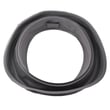
This Sears PartsDirect page is for the Whirlpool washer model GHW9400PW4, not a Duet dryer. For washer-related troubleshooting (leaks, door won’t lock, vibration), use the GHW9400PW4 owner's manual. If your front-load washer is leaking at the door, a common wear item is the washer door boot WP8182119.
Last updated: February 2026
What is the capacity of ghw9400pw4?
The Whirlpool GHW9400PW4 washer has a 3.8 cu. ft. capacity, which is the usable tub volume for washing. This capacity supports medium to large loads while still needing proper loading and cycle selection for best cleaning and spin performance.
How that capacity translates to real-world loads
A 3.8 cu. ft. front-load washer like the GHW9400PW4 typically handles:
- Everyday mixed loads (towels, jeans, shirts) without overfilling
- Queen bedding (usually 1 comforter or duvet, depending on thickness)
- Multiple bath towels in one load (avoid packing the drum tight)
- Bulky items best washed one at a time to keep the drum balanced
Quick capacity guide
| Load type | What to do | Why |
|---|---|---|
| Regular clothing | Fill loosely to about 3/4 full | Allows tumbling for better cleaning |
| Towels | Mix sizes, do not pack tight | Reduces vibration and improves spin |
| Bedding | Wash 1 bulky item at a time | Helps prevent out-of-balance and “walk” |
Why it matters
Capacity affects cleaning, rinsing, and spin results. Overloading a front-load washer can cause poor tumbling, leftover detergent, and extra vibration. Underloading can also reduce performance on some cycles.
Tips to get the best performance from your GHW9400PW4
- Use HE detergent and measure carefully (too much can cause oversudsing)
- Load items loosely; do not compress laundry into the drum
- Balance heavy items (for example, add a few smaller towels with a large towel load)
- Keep the washer level to reduce noise and movement (the manual recommends a level floor and proper clearances)
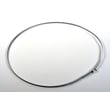
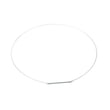
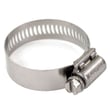
- If you notice leaks at the door, inspect the door seal and clamp; common replacements include the washer door boot WP8182119 and the washer door boot spring clamp WP8182210
For cycle and loading guidance specific to this model, follow the owner's manual.
Last updated: February 2026
What is the life expectancy of a whirlpool washing machine?
Most Whirlpool washing machines, including the Whirlpool GHW9400PW4, typically last 10 to 14 years with normal household use and basic maintenance. Consistent cleaning, correct detergent use (especially HE detergent for front-loaders), and avoiding chronic overloading are the biggest factors in reaching that range.
Typical lifespan and what affects it
A washer’s life is mostly determined by how hard it works (load size and frequency) and how well it is maintained.
- Load habits: frequent heavy loads and unbalanced loads shorten bearing, suspension, and drive life
- Detergent use: too much detergent can cause residue, odors, and extra strain on draining
- Moisture control: leaving the door closed traps moisture and speeds up mold and boot wear
- Water quality: hard water can increase scale and soap buildup
- Small leaks: slow leaks can damage components over time
Quick maintenance routine (front-load friendly)
These steps help a Whirlpool front-load washer like the GHW9400PW4 reach the 10 to 14 year range.
- Wipe the door glass and gasket after the last load of the day
- Leave the door slightly open between loads to dry the tub
- Run a monthly cleaning cycle (or hot cycle) to reduce residue
- Use the correct amount of HE detergent; reduce for soft water
- Check pockets to prevent coins and debris from damaging the pump
Parts that commonly signal “end-of-life” symptoms
When these parts wear, you may see leaks, vibration, or door-lock issues. Replacing a wear part can extend the washer’s usable life.
| Symptom | Common wear area | Example part for GHW9400PW4 |
|---|---|---|
| Water leaking at the door | Door boot (gasket) | Washer door boot WP8182119 |
| Door won’t lock or cycle won’t start | Door lock system | Washer door lock assembly WP8182634 |
| Excessive shaking or banging | Suspension/damping | Washer shock absorber W10822553 |
Why it matters
A washer that is maintained and repaired early (before leaks or severe vibration) usually costs less to keep running and avoids secondary damage to the tub, motor control, and wiring.
For model-specific care and cleaning steps, follow the owner's manual.
Last updated: February 2026