Installation guide
 Owner’s manual
 Error Codes


Are Whirlpool washer parts interchangeable?
For the Whirlpool WTW7340XW0 washer, we recommend using Whirlpool FSP (Factory Specified Parts) replacements whenever you service the machine. Parts are not universally interchangeable across Whirlpool washers because fit, wiring, and calibration can vary by model and design.
What “interchangeable” really means
Two parts can look similar but still be wrong for your washer. Interchangeability depends on the exact model match, not just the brand name.
Common reasons a “close” part fails to work:
- Different electrical connectors or wire harness pinouts
- Different mounting points, shaft sizes, or splines
- Control board software expectations (sensors, lid lock timing, motor feedback)
- Updated engineering revisions that require a matching kit
- Different water flow rates or pressure sensing ranges
Best way to confirm a part fits WTW7340XW0
Use the model number WTW7340XW0 to match the exact replacement part, then cross-check the part description and any substitution notes.
A few model-matched examples from this parts list:
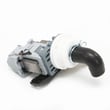
- If you have a no-drain issue, start with the water pump W10536347
- If the washer will not lock or start, check the washer lid lock WPW10619844
Quick compatibility checklist
| Check | What to match | Why it matters |
|---|---|---|
| Model number | WTW7340XW0 | Ensures correct design family |
| Part ID | Exact ID (example: WPW10619844) | Prevents wrong revision/connector |
| Symptom | Drain, spin, fill, lock | Avoids replacing the wrong system |
| Install steps | Follow the WTW7340XW0 owner’s manual | Prevents setup and diagnostic mistakes |
Why it matters
Using the correct Whirlpool FSP replacement part helps the washer fit right and work right, and it reduces repeat failures caused by mismatched connectors, tolerances, or sensor feedback.
Last updated: February 2026
How long should a Whirlpool Cabrio washer last?
A Whirlpool Cabrio-style top-load washer like model WTW7340XW0 typically lasts 10 to 15 years with normal household use and basic maintenance. Consistent HE detergent use, avoiding overloads, and fixing early symptoms (leaks, vibration, drain issues) help it reach the upper end of that range.
Typical lifespan and what to expect
Most owners see a predictable pattern over time:
- 0 to 5 years: Mostly maintenance and minor adjustments (leveling, hose screens, cleaning)
- 5 to 10 years: Higher chance of wear items (lid lock, drain pump, suspension) needing service
- 10 to 15 years: Major wear becomes more common (drive components, basket support, electronics)
| Usage pattern | Typical lifespan | What shortens it fastest |
|---|---|---|
| Light (few loads/week) | 12 to 15 years | Long periods of non-use, corrosion, musty buildup |
| Average (most households) | 10 to 13 years | Overloading, too much detergent, poor leveling |
| Heavy (daily loads) | 8 to 11 years | Chronic unbalanced loads, repeated drain/spin strain |
Maintenance habits that extend life
We recommend these habits because they directly match common failure causes noted in the troubleshooting guidance:
- Use HE detergent and use less than you think you need (often about half the bottle’s “medium load” amount)
- Load items loosely and evenly around the basket wall to reduce out-of-balance spinning
- Keep the washer level with feet firmly on the floor to prevent “walking” and vibration
- Do not add extra water; it can reduce cleaning performance and contribute to poor agitation
- Address “won’t drain” or “still wet” symptoms early to avoid repeated strain on the drain system
Parts that commonly affect longevity on this model
If performance problems show up, these are frequent repair points on WTW7340XW0:
- Washer lid lock WPW10619844 (won’t start, stops mid-cycle, lid won’t lock)
- Water pump W10536347 (won’t drain, clothes still wet)
- Suspension W10247710 (banging, excessive vibration, off-balance shutdowns)
Why it matters
A washer that is overloaded, unlevel, or using too much detergent tends to vibrate more, drain poorly, and stop mid-cycle. Those conditions accelerate wear on mechanical parts and can turn a small issue into a bigger repair.
For model-specific operating and leveling guidance, use the WTW7340XW0 owner’s manual.
Last updated: February 2026
Is 4.8 cubic feet a large capacity washer?
Yes. A 4.8 cu. ft. washer is considered large capacity for most households; it gives you enough room for bigger loads and bulky items while still washing efficiently. For Whirlpool top-load high-efficiency designs like model WTW7340XW0, proper loading matters as much as tub size (see the WTW7340XW0 use and care guide).
What “large capacity” means in real use
Most shoppers consider these ranges:
| Washer capacity | Common label | Best for |
|---|---|---|
| 3.5 to 4.4 cu. ft. | Standard | 1 to 3 people, everyday loads |
| 4.5 to 4.9 cu. ft. | Large | Families, towels, bedding |
| 5.0+ cu. ft. | Extra-large | Very bulky items, fewer loads |
How to get the most from 4.8 cu. ft. on WTW7340XW0
This Whirlpool Cabrio-style, low-water impeller washer senses the load and adjusts water level automatically, so loading technique directly affects cleaning and balance.
- Load items evenly around the basket wall (not in a tight pile in the center).
- Keep the load at or below the recommended maximum load height.
- Use only HE detergent; too much can cause excess suds and poor rinsing.
- For bulky items, mix sizes when possible (for example, sheets plus a few towels).
- If the washer shows an unbalanced or overloaded condition, remove a few items and restart.
Why it matters
A “large capacity” tub helps you wash more at once, but overfilling can trigger out-of-balance corrections, reduce spin performance, and leave loads wetter. Correct loading and HE detergent use help the washer sense properly, clean better, and spin out more water.
Quick troubleshooting if big loads act up
If large loads are not spinning out well or the washer pauses:
- Redistribute the load and restart.
- Reduce the load size (especially with heavy, water-absorbing items).
- Confirm both hot and cold faucets are fully on.
- Check inlet hose screens for clogs and hoses for kinks.
- Verify the drain hose is installed correctly (standpipe depth and routing).
Last updated: February 2026
What is the drive motor tachometer error?
On the Whirlpool WTW7340XW0 washer, a drive motor tachometer error means the control is not getting a reliable motor speed (RPM) signal, so the washer may stop, drain, or end the cycle to prevent damage or poor washing performance.
What you’ll usually notice
- The washer won’t spin, or it starts and stops during spin
- The cycle pauses and shows an F-type error code
- Clothes come out wetter than normal
- You may hear the motor ramp up, then shut down
- The washer may try to rebalance or restart the spin
Common causes (most likely first)
| Area | What can go wrong | What to check first |
|---|---|---|
| Drive system | Loose or slipping connection between basket and drive | Worn hub splines, stripped hub |
| Motor sensing | Motor speed feedback is missing or erratic | Sensor connection, damaged wiring |
| Motor drive components | Motor can’t maintain commanded speed | Rotor/stator issues, loose fasteners |
| Load conditions | Overload or severe out-of-balance interrupts spin | Reduce load size, redistribute items |
Quick checks we recommend before replacing parts
- Unplug the washer for 1 minute, then restore power and retry a Drain/Spin.
- Reduce the load size; the manual notes overload and unbalanced conditions can stop operation and trigger system errors.
- Make sure you are using HE detergent and not over-dosing; excess suds can interfere with normal operation.
- If the washer won’t drain or struggles to reach spin, check for a drain restriction (a slow drain can prevent a stable high-speed spin).
Parts that commonly relate to motor speed faults
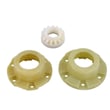
- If the basket slips during spin, the hub W10820039 is a common wear item on this style of Whirlpool top-load washer.
- If the washer won’t drain well enough to spin, the water pump W10536347 is a key suspect.
- If the lid won’t lock consistently, address that first; the washer may not spin without a solid lock (see WTW7340XW0 owner’s manual).
Why it matters
The tachometer signal is how the control confirms the motor is actually turning at the correct speed. When that feedback is wrong, the washer cannot control agitation and spin safely, so it interrupts the cycle.
Last updated: February 2026
What is the most common problem with whirlpool washers?
For Whirlpool washers like model WTW7340XW0, the most common problems we see are “won’t drain or spin,” “won’t start/fill,” and excessive vibration from an unbalanced or overloaded load. Many of these are caused by loading, detergent, or drain hose setup issues outlined in the WTW7340XW0 owner's manual.
Most common issues (and what usually fixes them)
- Washer won’t drain or spin; clothes stay wet: Check for oversudsing (too much or non-HE detergent), an overloaded tub, or a drain hose installed incorrectly.
- Washer won’t run or fill: Confirm both hot and cold faucets are on and both inlet hoses are flowing to the inlet valve.
- Vibration, rocking, or “walking”: Level the washer so all feet firmly contact the floor; tighten the jam nuts and load items evenly around the basket wall.
- Unbalanced or overloaded messages: Load dry items in loose heaps and avoid adding extra water.
- Persistent drain problems: A failing drain pump is a common repair item; see water pump W10536347 if the pump is noisy, intermittent, or not moving water.
Quick checks we recommend first
- Use only HE detergent and measure carefully; too many suds can prevent proper draining and spinning.
- Reload the tub: dry items only, evenly around the basket wall, and do not overfill.
- Do not add extra water after the cycle starts; it can reduce cleaning and contribute to imbalance.
- Verify drain hose setup: the hose should not extend too far into the standpipe (a common cause of drain issues).
- Level the washer using the steps in the WTW7340XW0 installation guide.
Symptom-to-likely-cause guide
| Symptom | Most likely cause | Best first action |
|---|---|---|
| Won’t drain/spin; load still wet | Oversudsing, overload, drain hose issue | Rinse & Spin (no detergent), reduce load, check hose |
| Excessive shaking | Unbalanced load, leveling issue | Rebalance load, level feet, tighten jam nuts |
| Won’t fill | Water supply issue | Turn on both faucets, check hose flow |
| Stops mid-cycle | Normal sensing or overload/suds | Reduce load, correct detergent amount |
Why it matters
Drain, spin, and vibration complaints often come from setup and usage issues (HE detergent, load size, leveling). Fixing those first prevents repeat problems and helps protect parts like the suspension and drain system.
Last updated: February 2026