Owner’s manual



Do you leave the filter in a wet dry vac when vacuuming water?
For the Craftsman 113177110 2-gallon wet/dry vacuum, we recommend removing the filter for wet pickups. The owner’s manual notes that filter removal is recommended when vacuuming liquids, and running with a wet filter can quickly clog it and reduce suction (and make it hard to clean). See the 113177110 owner’s manual.
What to do before vacuuming water
- Turn the vac OFF and unplug it.
- Remove the power head and take off the dry filter (and any dust bag, if used).
- Confirm the float mechanism moves freely (it shuts off airflow when the drum fills).
- Reinstall the power head securely so you do not create an air leak.
- Vacuum liquids; when suction stops and motor pitch rises, empty the drum.
Wet vs. dry setup (quick comparison)
| Pickup type | Filter installed? | What you will notice if set up wrong |
|---|---|---|
| Dry debris (dust, sawdust) | Yes | Dust can blow out the blower port; motor can ingest debris |
| Liquids (water) | No (recommended) | Filter can waterlog, clog fast, and suction drops |
Why it matters
Using the correct setup protects airflow and helps prevent performance problems. On model 113177110, the float is designed to stop airflow at a preset liquid level; continuing to run the motor with the float raised can damage the vac.
Parts that commonly come up with wet pickup
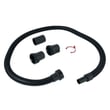
If you need to replace a worn attachment or improve reach, check compatible accessories such as the wet/dry vacuum hose, 1-1/4-in x 6-ft 551013109.
Last updated: January 2026
How do you remove the filter from a Craftsman wet dry vac?
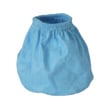
To remove the filter on the Craftsman 113177110 2-gallon wet/dry vacuum, unplug the vac, remove the power head (top), then stretch the retainer band off its plastic posts and slide the filter bag off the filter cage. Handle the filter carefully to avoid tears.
Step-by-step: filter removal on model 113177110
- Turn the switch OFF and unplug the power cord.
- Release the side latches and lift off the power head assembly.
- Turn the lid upside down so you can access the filter area.
- Stretch the retainer band off the plastic posts.
- Pull the filter bag straight off the filter cage.
- If you were vacuuming liquids, keep the filter removed until you switch back to dry pickup.
For diagrams and the exact filter and retainer band setup, use the 113177110 owner’s manual.
Reinstalling the filter correctly (to prevent dust blow-by)
When you are ready for dry pickup again, make sure the filter is seated and sealed:
| What to check | What “correct” looks like |
|---|---|
| Filter position | Filter fully covers the filter cage |
| Retainer band | Band sits close to the lid with no gaps |
| Filter condition | No holes or tears; replace if damaged |
Why it matters
A loose, wet, or torn filter can clog quickly, reduce suction, and allow fine dust to bypass the filter and blow out of the blower port. Keeping the filter installed for dry pickup also helps protect the blower wheel and motor.
Last updated: January 2026
What is the list of vacuum cleaner parts?
For the Craftsman 113177110 2-gallon wet/dry vacuum, the core parts list is simple: a power head (motor housing), dust drum, float and cage, filter with retainer band, and a hose, plus small cleaning accessories. See the 113177110 owner's manual for the exact component names and diagrams.
Core parts on Craftsman 113177110
These are the primary assemblies called out for this model:
- Power head (motor housing and switch)
- Dust drum (2-gallon tank)
- Filter and retainer band (for dry pickup)
- Float and float cage (shuts off airflow during wet pickup)
- Hose (connects to vacuum port or blowing port)
Common accessories and add-ons
This model uses 1-1/4 inch accessories. If you need replacements or extra tools, these are typical:
- Car nozzle
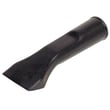
- Crevice tool
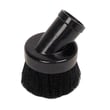
- Dusting brush
- Hose adapter (to fit different port sizes)
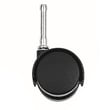
- Caster wheel (if your unit uses a wheeled base)
Model-matched parts you can shop by name
Here are examples of compatible parts listed for Craftsman 113177110:
| What it is | What it does | Example for this model |
|---|---|---|
| Hose | Carries airflow and debris | Wet/dry vacuum hose, 1-1/4-in x 6-ft 551013109 |
| Crevice tool | Reaches tight spaces | Wet/dry vacuum crevice tool 551012109 |
| Car nozzle | Wide pickup for interiors | Wet/dry vacuum car nozzle 17868 |
Why it matters
Using the correct filter setup, hose size (1-1/4 inch), and wet-pickup float system helps your Craftsman wet/dry vacuum maintain suction, avoid dust blow-by, and prevent liquid overfill from reaching the motor.
Last updated: January 2026
Where to find model number on Craftsman Wet Dry Vac?
On the Craftsman wet/dry vacuum model 113177110, the model number is typically printed on the serial label on the right side of the vac top (power head area). Use that exact model number when ordering parts or checking the correct owner information in the 113177110 owner’s manual.
Where to look on model 113177110
Check these common label locations on this specific 2-gallon Craftsman wet/dry vac:
- Right side of the vac top (power head), near the handle area
- On or near the carry handle (some labels include model and serial together)
- Along the upper housing where the latches meet the dust drum
- Near the cord wrap area on the power head
Tips to read the label clearly
If the label is dusty or worn, these steps usually help:
- Unplug the vac before handling it closely
- Wipe the label gently with a damp cloth and mild soap, then dry it
- Use a flashlight at an angle to make faded printing easier to see
- Take a photo and zoom in to read the characters
What to write down (and why)
For parts and service, we recommend recording the following exactly as shown:
| Label item | Why it matters |
|---|---|
| Model number (113177110) | Ensures diagrams and compatible parts match your vac |
| Serial number (if present) | Helps identify production variations on some units |
| Part number (when ordering) | Prevents ordering by description alone |
Why it matters
Craftsman model numbers can look similar across different wet/dry vac sizes and generations. Using the exact 113177110 from the label helps you avoid mismatched accessories like a hose, nozzle, or adapter.
Last updated: January 2026
Why do shop vacuums lose suction?
Shop vacuums usually lose suction because airflow is restricted or leaking. On the Craftsman model 113177110 (2-gallon wet/dry vacuum), the most common causes are a clogged filter, a clogged hose, or an air leak where the power head seals to the dust drum; see the troubleshooting section in the 113177110 owner’s manual.
Most common causes (and what to check first)
- Clogged filter: Fine dust loads the filter quickly and reduces airflow.
- Clogged hose or nozzle: Debris can lodge in the hose bends or at the port.
- Air leak at the lid/drum seal: If the power head is not latched evenly, suction drops.
- Wet filter used for dry pickup: A damp filter clogs fast and is hard to clean.
- Float shutoff activated (wet pickup): When the drum fills, the float rises and suction stops.
Quick fix checklist for model 113177110
- Unplug the vacuum.
- Check the hose for blockage: Remove the hose and clear debris end-to-end. If your hose is cracked, kinked, or collapsing, replace it with the exact compatible wet/dry vacuum hose, 1-1/4-in x 6-ft 551013109.
- Inspect the filter and retainer band: Make sure the filter fully covers the filter cage and the retainer band is snug with no gaps.
- Confirm the latches are fully engaged: Reseat the power head on the dust drum and latch both sides evenly.
- For wet pickup: Empty the drum if suction stops suddenly; the float may have shut off airflow.
Symptoms to cause guide
| What you notice | Likely cause | What to do |
|---|---|---|
| Weak suction, still runs | Filter clogged | Clean or replace filter; reinstall correctly |
| Sudden suction stop during wet pickup | Float raised | Turn off, unplug, empty drum |
| Whistling or suction varies when you move the lid | Air leak | Reseat power head; latch evenly |
| No suction at nozzle but strong at port | Hose/nozzle clog | Clear hose/nozzle obstruction |
Why it matters
Low suction is almost always an airflow problem. Fixing the restriction or leak restores performance and helps protect the motor from running at higher pitch and reduced cooling airflow.
Last updated: January 2026