Owner’s manual
 Error Codes



What is the most common problem with an LG refrigerator?
Cooling problems are the most common issue we see with LG refrigerators, including the LG LFX28968ST; symptoms often include warm fridge/freezer temperatures, longer run times, and unusual noises. Many “not cooling” complaints trace back to airflow restrictions, dirty condenser coils, or a failing sealed-system component.
Start with the simple, high-impact checks before assuming a major failure. Use the troubleshooting steps in the LFX28968ST owner’s manual to match symptoms to likely causes.
- Confirm the control settings are not set to OFF or a store display mode
- Make sure doors close fully and gaskets seal all the way around
- Check that air vents inside the compartments are not blocked by food packages
- Clean dust from the condenser cover and vents (do not remove sealed panels)
- Allow up to 24 hours to stabilize after a move or power outage
| Symptom | Most common cause | What to do next |
|---|---|---|
| Fridge and freezer both warm | Cooling system not removing heat | Check airflow and condenser cleanliness; then consider compressor-related diagnosis |
| Freezer cold but fridge warm | Poor airflow to fresh-food section | Clear vents, check for frost buildup, verify fans are running |
| Clicking, buzzing, or high-pitched running sounds | Normal cycling or compressor start issues | Compare to “normal sounds”; if cooling is weak, test start components |
| Ice maker or dispenser issues | Water supply, filter restriction, or low pressure | Verify shutoff valve open, replace filter, confirm pressure |
If basic airflow and cleaning steps do not restore cooling, these model-compatible parts are commonly involved in “not cooling” repairs:
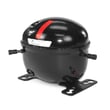
- Refrigerator compressor TCA38091801 (sealed-system cooling component)
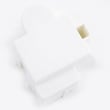
- Refrigerator compressor start relay EBG60663230 (helps the compressor start)
A refrigerator that is even a few degrees too warm can spoil food quickly and also force the compressor to run longer, increasing energy use. Catching airflow and maintenance issues early can prevent bigger repairs.
Last updated: January 2026
What is the lifespan of an LG refrigerator?
An LG refrigerator like model LFX28968ST typically lasts 10 to 15 years with normal household use. Lifespan depends most on how hard the compressor runs, how clean the condenser area stays, and whether door seals and airflow stay in good shape (see the LFX28968ST owner’s manual).
- Condenser coil cleanliness: dust buildup makes the compressor run longer and hotter.
- Door gasket condition: air leaks cause longer run times and temperature swings.
- Room conditions: very warm rooms increase run time; very cold rooms can affect operation.
- Usage habits: frequent door openings and overpacking reduce airflow.
- Water/ice system upkeep: timely filter changes help maintain flow and ice production.
The LFX28968ST manual calls out routine cleaning and filter replacement as key maintenance items.
| Maintenance item | Practical interval | Why it matters |
|---|---|---|
| Clean condenser cover/vents | Every 6 to 12 months | Reduces compressor run time and heat |
| Replace water filter | About every 6 months | Helps dispenser flow and ice quality |
| Check/clean door gaskets | Every 3 to 6 months | Prevents warm air leaks and frost |
| Keep air vents clear inside | Ongoing | Maintains even cooling |
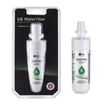
If you’re already seeing weak water flow or smaller ice cubes, replacing the LG kenmore refrigerator water filter ADQ36006101 on schedule can help reduce strain on the water system.
A refrigerator’s most expensive wear items (especially the sealed system and compressor) tend to fail sooner when the unit runs hot, runs constantly, or can’t hold temperature due to airflow restrictions or door leaks.
Last updated: January 2026
Why is my LG refrigerator leaking from the bottom?
A leak from the bottom of your LG LFX28968ST is most often caused by a clogged or frozen defrost drain that overflows into the base area, or a water-supply leak tied to the ice maker/dispenser plumbing. Use the LFX28968ST owner’s manual to identify access panels and safe disassembly steps.
- Turn off the ice maker for 24 hours; if the leak stops, the issue is likely in the water/ice system.
- Look for ice on the freezer floor; that strongly points to a defrost drain restriction.
- Check for drips after dispensing water/ice; that points to a dispenser line or connection.
- Inspect the back of the unit for a slow drip from the water inlet area.
- Confirm the refrigerator is level; poor leveling can change where water runs and worsen overflow.
During defrost, meltwater should flow to the drain pan. If the drain is blocked, water can overflow and end up at the bottom.
What to do
- Unplug the refrigerator.
- Remove freezer bins/drawer as needed and look for standing water or ice.
- Melt ice with warm water (never use sharp tools).
- Flush the drain opening with warm water until it flows freely.
Leaks can come from cracked tubing, loose fittings, or a seeping inlet valve.
Parts to consider if you confirm a water-supply leak
| What you notice | Most likely cause | Best next step |
|---|---|---|
| Ice sheet on freezer floor | Defrost drain clogged/frozen | Clear/flush the drain path |
| Leak after dispensing water | Dispenser tubing/fitting leak | Inspect tubing and connections |
| Leak only when ice maker is on | Inlet valve or supply tubing leak | Turn off ice maker, inspect valve/tubing |
| Random puddles near front | Drain overflow or dispenser drip | Check drain path and dispenser area |
Bottom leaks can damage flooring and can also create ice buildup that interferes with freezer drawer operation and airflow.
Last updated: January 2026