Owner’s manual
 View engine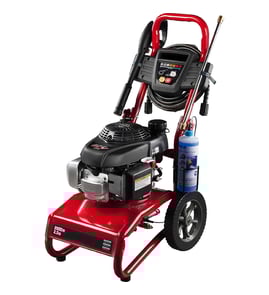



Can I use 10W30 in my pressure washer?
Yes, you can use 10W30 in your Craftsman pressure washer model 580752710 for the engine crankcase as long as you fill it to the correct level and keep the unit level when checking. Our key rule is simple: use the correct oil in the correct place, and do not overfill.
Your pressure washer has two separate lubrication needs: the engine and the pump. The manual specifically calls out checking that oil has been added to the proper level in the engine crankcase before starting. For the pump, use the pump oil type specified for the pump design.
- Engine crankcase: 10W30 is commonly acceptable for small gas engines in many temperatures.
- Pump: use dedicated pump oil (not engine oil) when your pump requires oil.
- Never overfill: too much oil can cause foaming and poor lubrication.
- Check on level ground: oil readings change if the unit is tilted.
- Recheck after first run: oil level can settle after initial operation.
For the model-specific pre-start checklist and oil check guidance, use the 580752710 owner’s manual.
| Location | What 10W30 is for | What to avoid |
|---|---|---|
| Engine crankcase | Acceptable in many conditions | Overfilling, checking while tilted |
| Pump (if oil-lubricated) | Not the default choice | Using engine oil instead of pump oil |
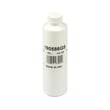
If you need pump lubricant for maintenance, use pressure washer pump oil 190586GS.
Correct oil viscosity and correct fill level protect the engine and pump from heat and wear. The manual’s “checklist before starting” emphasizes oil level because running low can quickly damage internal components, and overfilling can reduce lubrication quality.
If you are doing seasonal storage, follow the long-term storage steps in the 580752710 owner’s manual so the engine and pump are protected between uses.
Last updated: February 2026
What PSI should my pressure washer be?
For the Craftsman 580752710 gas pressure washer, the maximum outlet pressure is 2,550 PSI. That level is ideal for many homeowner jobs; you control the effective cleaning pressure by using the correct spray nozzle and keeping a safe distance from the surface (not by trying to “run it at max” all the time). See the 580752710 owner's manual for operating and safety details.
PSI (pounds per square inch) is the water pressure at the pump outlet. On the 580752710, your real-world cleaning pressure changes based on nozzle selection, spray pattern, and how close you hold the wand.
| Spec (Craftsman 580752710) | Value | Why it matters |
|---|---|---|
| Max outlet pressure | 2,550 PSI | Upper limit of the pump’s pressure capability |
| Max flow rate | 2.3 GPM | Higher flow helps rinse faster and improves cleaning efficiency |
| Water supply temperature | Up to 100°F | Hotter supply water can damage the pump |
We recommend matching pressure to the surface to avoid damage (especially on wood, paint, and siding).
- Cars, patio furniture, grills: lower pressure, wider fan pattern, more distance
- Decks and fences: moderate pressure; keep the wand moving to prevent gouging
- Concrete and driveways: higher pressure is useful; use a consistent pattern
- Siding: use lower pressure and the correct tip; avoid forcing water behind panels
- Stains and mildew: use detergent as directed, then rinse with appropriate pressure
For spray pattern and tip selection guidance, use choosing the correct spray tip for a pressure washer.
These items commonly affect pressure on a gas pressure washer:
- Verify the garden hose supply is at least 20 PSI at the pressure washer end and provides strong flow
- Confirm the high-pressure hose is not kinked or damaged; replace if cut, bulging, or leaking
- Purge air from the pump by squeezing the trigger before starting work
- Inspect and clean the inlet screen if water flow is restricted
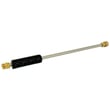
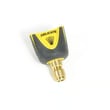
- If the spray nozzle is worn or clogged, replace it (for example, nozzle 195983XGS)
Using more PSI than the surface can handle can etch concrete, shred wood fibers, and strip paint. Using too little PSI (or the wrong nozzle) wastes time and can make you overwork the pump and engine.
Last updated: February 2026
Is it worth repairing a pressure washer?
For the Craftsman 580752710 gas pressure washer, repairing is usually worth it when the engine and pump are basically sound and the problem is limited to wear items (hose, nozzle, seals) or routine maintenance. Regular upkeep extends service life and helps you avoid repeat failures; see the 580752710 owner's manual for the maintenance schedule and safety steps.
Repair is typically the better choice when you have a clear, fixable symptom and the unit still builds pressure with a good water supply.
- The issue is a common wear part (spray tip/nozzle, hose, O-rings, filters)
- The washer runs but pressure is weak or surging (often nozzle restriction or a valve issue)
- You can complete routine maintenance (oil changes, air filter, spark plug) on schedule
- The frame, pump, and engine mounts are intact (no major structural damage)
- You need the same PSI performance without buying a whole new machine
If multiple major systems are failing at once, replacement can be more practical.
- Engine has persistent power loss, heavy smoke, or won’t stay running after tune-up basics
- Pump was run without water and now won’t build pressure (internal pump damage is common)
- Repair requires multiple high-cost assemblies at the same time
The manual’s troubleshooting and maintenance guidance helps you avoid replacing parts that are still good.
| What you see | What to check first | Typical fix |
|---|---|---|
| Low/uneven pressure | Clogged nozzle, inlet screen, in-line filter | Clean/back-flush nozzle; clear screens |
| Leaks at connections | Worn O-ring or seal | Replace O-ring or seal (no sealant) |
| Hose damage/leak | High-pressure hose condition | Replace hose (do not repair) |
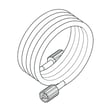
If your hose is leaking or damaged, replace it rather than patching it; the manual specifically warns against repairing high-pressure hoses. The model’s listed replacement option is the hose 84006753.
A pressure washer is a high-pressure system; fixing leaks correctly (O-rings/seals, not sealant) and keeping up with oil and filter maintenance improves performance and reduces the chance of pump damage.
Last updated: February 2026
What is the most common problem with pressure washers?
Low or no pressure is the most common pressure washer problem, and on the Craftsman 580752710 it is usually caused by a nozzle restriction, a water-supply issue, or a hose problem (kink, leak, or blockage). Our first checks follow the troubleshooting chart in the 580752710 owner's manual.
- Confirm the water supply is strong and steady; use cool water (the manual specifies not to exceed 100°F).
- Check the inlet for blockage and clean the inlet hose strainer.
- Inspect the high-pressure hose for kinks, cuts, leaks, or internal blockage.
- Make sure the spray gun is not leaking and all fittings are tight.
- Remove and clean the spray tip; a partially clogged tip is a top cause of low pressure.
| Symptom | Most common cause | What we do first |
|---|---|---|
| Low or no pressure | Nozzle obstructed or wrong nozzle installed | Clean/replace the nozzle; verify correct spray tip |
| Pressure surges or chatters | Inadequate water supply or inlet restriction | Improve water flow; clear inlet; clean strainer |
| Low water volume | Kinked/leaking inlet hose or blocked high-pressure hose | Straighten/replace hoses; check for leaks |
| Unit seems to “act up” after idling | Pump water overheats when trigger is not used | Avoid idling; use trigger regularly so water circulates |
If cleaning does not restore pressure, these model-matched parts are often involved:
- Nozzle 195983XGS (a worn or restricted spray tip reduces pressure)
- Hose 84006753 (a leaking or internally damaged high-pressure hose can drop pressure)
Running with low pressure is not just frustrating; it usually means the pump is not getting proper water flow. That can lead to overheating and erratic performance, especially if the engine runs while the spray gun trigger is not being pressed for several minutes.
Last updated: February 2026
How much does it cost to get a pressure washer fixed?
For a Craftsman gas pressure washer model 580752710, most repairs land in the $20 to $200 range for common leaks, clogs, and valve issues; bigger failures like a damaged pump can push the total to $200 to $500 when parts and labor are included. Use the 580752710 owner's manual to confirm the correct troubleshooting steps before buying parts.
Costs vary by shop rates and what failed, but these ranges are common for gas pressure washers:
- $20 to $50: O-ring or seal leaks, minor fittings, basic tune-up items
- $50 to $150: Clogged nozzle cleanup, hose or gun leak repairs, check valve service
- $100 to $200: Unloader valve or pump valve repairs
- $200 to $500: Pump replacement (often the biggest single repair)
| Repair type | What you usually notice | Typical total cost |
|---|---|---|
| Leak at connections | Drips at hose, gun, wand | $20 to $100 |
| No/low pressure | Weak spray, surging | $50 to $200 |
| Pump replacement | No pressure, loud pump, water in oil | $200 to $500 |
We recommend doing these quick checks before paying for service:
- Verify the water supply meets the manual’s guidance (steady flow and adequate pressure)
- Purge air by squeezing the trigger with water on before starting
- Inspect the high-pressure hose for leaks or bulges; consider the hose 84006753 if yours is damaged
- Clean the spray tip and back-flush the nozzle extension (a clogged nozzle can mimic pump failure)
- Replace leaking O-rings (never use sealant on leaking connections)
A pressure washer can be “expensive to fix” mainly when the pump runs without water or the unit is not maintained. Following the maintenance schedule and storage steps in the manual helps prevent pump damage and keeps repair costs closer to the low end.
Last updated: February 2026
What kind of gas goes in a Craftsman 3000 PSI pressure washer?
For the Craftsman pressure washer model 580752710, we use clean, fresh unleaded gasoline; 87 octane (87 AKI) or higher is the right choice for normal operation. For safe fueling steps and startup checks, follow the 580752710 owner's manual.
Use standard pump gas that is fresh and uncontaminated. Avoid fuel choices that commonly cause hard starting, surging, or carburetor issues.
- Use unleaded gasoline, 87 octane (AKI) minimum
- Buy fuel in small quantities so it stays fresh
- Avoid stale gas (old fuel is a top cause of no-start complaints)
- Avoid mixed fuel (do not add 2-cycle oil unless your engine specifically calls for it)
- Wipe up spills and keep fuel away from ignition sources
The manual’s startup guidance emphasizes correct setup and safe operation before pulling the starter rope.
- Place the unit outdoors with at least 5 ft of clearance on all sides
- Confirm the unit is level
- Verify the high-pressure hose is tight at the pump and spray gun
- Connect a proper water supply (manual notes not to exceed 100°F water temperature)
- Check for hose damage; replace a worn hose with the correct hose 84006753
| Symptom | Most common fuel-related cause | What to do first |
|---|---|---|
| Won’t start after storage | Stale fuel or varnish in carburetor | Drain old fuel; refill with fresh 87+ octane |
| Starts then dies | Water in fuel or restricted fuel flow | Replace fuel with fresh; check fuel cap vent |
| Surges at idle | Old fuel, dirty carburetor passages | Fresh fuel; then carburetor cleaning if needed |
Using fresh 87+ octane unleaded fuel helps the engine run at the intended governed speed, which supports steady pump output and consistent cleaning performance. It also reduces deposits that lead to starting and power problems.
Last updated: February 2026