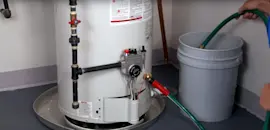
Owner’s manual
 Error Codes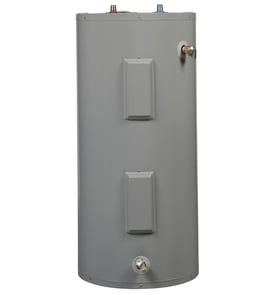


How do I read my water heater model number?
On Kenmore water heater model 153321540, the model number is printed on the model rating plate on the tank. Use the full model number exactly as shown (plus the serial number) when ordering parts or checking electrical ratings; it prevents mismatches.
Where to find the model number on the tank
Look for the model rating plate in these common locations:
- On the tank above an access panel (often above the lower access panel)
- Near the bottom access panel where voltage information is listed
- On a label that also shows the serial number and electrical specs
For diagrams and label examples, use the 153321540 owner's manual.
What to write down (and why)
When we help match parts like a thermostat, heating element, or relief valve, these details matter:
- Model number (example: 153321540)
- Serial number (identifies production run)
- Voltage listed on the rating plate (use only the voltage shown)
- Any “converted” note for element wattage (some units can be converted)
Quick checklist
| Item | What it’s used for | Where it’s found |
|---|---|---|
| Model number | Correct parts list and diagrams | Model rating plate |
| Serial number | Confirms exact build | Same rating plate |
| Voltage | Safe, correct electrical supply | Rating plate near access panel |
Why it matters
The model rating plate is more than an ID label; it also confirms electrical requirements. Using the correct model number helps us match the right water heater parts (like an element gasket, thermostat bracket, or drain valve) and avoid ordering a part that will not fit.
Last updated: January 2026
What is the life expectancy of a Kenmore water heater?
Most Kenmore electric water heaters, including model 153321540, typically last 8 to 12 years in normal residential use. Regular maintenance (flushing sediment and replacing the anode rod when needed) helps you reach the upper end of that range; see the 153321540 owner's manual for model-specific guidance.
Typical lifespan and what affects it
A water heater’s service life depends more on water conditions and maintenance than the brand name on the tank.
- Water hardness and sediment: heavy mineral buildup makes elements work harder.
- Anode rod condition: a depleted anode speeds up tank corrosion.
- Temperature setting: higher settings increase stress on components.
- Usage level: large households cycle the heater more often.
- Leak history: recurring seepage at fittings or valves often signals end-of-life.
Maintenance that extends life
These are the highest-impact steps we recommend for an electric tank-style unit like the Kenmore 153321540:
- Flush a few gallons from the drain valve periodically to reduce sediment.
- Inspect and replace the anode rod on schedule (common interval: every 3 to 5 years).
- Check for moisture at the element gasket and access panels.
- Keep thermostat settings consistent (many homes run best around 120°F).
- Address slow leaks quickly to prevent corrosion and insulation damage.
Common “end of life” symptoms vs repairable issues
| What you notice | Often repairable? | Common next step |
|---|---|---|
| No hot water | Yes | Test/replace thermostat or heating element |
| Hot water runs out fast | Often | Check lower element and sediment |
| Rumbling/popping | Often | Flush tank; inspect elements |
| Water around base of tank | No (tank failure) | Plan replacement |
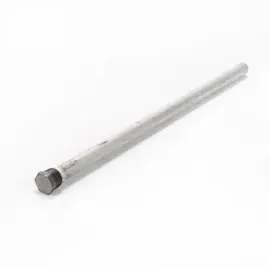
If you’re troubleshooting heating performance, the element 100108346 and anode rod 100108660 are two of the most commonly serviced items for this model family.
Why it matters
Knowing the expected 8 to 12 year lifespan helps you decide whether to invest in parts like a thermostat, heating element, or drain valve, or to plan a replacement before a sudden leak disrupts hot water service.
Last updated: January 2026
How to tell if an electric water heater element is bad?
On a Kenmore 153321540 electric water heater, a bad heating element usually shows up as no hot water, lukewarm water, or very slow recovery. The most reliable way to confirm is to turn power OFF and test the element with a multimeter for proper resistance and continuity, as outlined in the 153321540 owner's manual.
Quick symptoms checklist
- No hot water (or hot water runs out unusually fast)
- Water is only lukewarm even after a long wait
- Breaker trips or the heater stops heating intermittently
- Popping or sizzling sounds (often from sediment on the element)
- Visible signs of overheating at wiring or terminals behind the access panel
How we test an element (safe, practical steps)
- Shut off power at the breaker before removing any access panels (shock hazard).
- Remove the access panel and insulation to reach the element terminals.
- Label and disconnect the two wires from the element.
- Set a multimeter to ohms and measure across the two element screws.
- Check for a short to ground by measuring from each screw to the metal tank (should not show continuity).
What the meter results mean
| Test result | What it usually indicates | What to do next |
|---|---|---|
| No continuity (open circuit) | Burned-out element | Replace the element and gasket |
| Very low resistance | Shorted element | Replace the element |
| Normal resistance range | Element may be OK | Check thermostats, wiring, and power supply |
Parts that commonly get replaced with the element
When you replace an element, we typically recommend replacing the seal to prevent leaks.
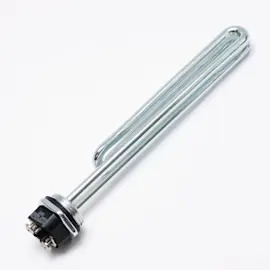
- Element 100108346 (heating element)
- Water heater heating element gasket 100108379 (element gasket)
- Inspect the upper thermostat and wiring connections for heat damage
Why it matters
A failed element can leave you without hot water, and a leaking gasket after service can cause water damage. The manual also stresses never energizing the heater until the tank is completely full of water, which helps prevent immediate element burnout.
Last updated: January 2026