Installation guide
 Owner’s manual
 Error Codes

How to identify a Kenmore washer model?
For Kenmore washer model 11024902202, we identify the model by finding the model and serial number label. On this style of top-load washer, the label is located under the washer lid, and it lists the complete model number and serial number you can use to match parts and manuals.
Where to look on model 11024902202
Check these common label locations in this order:
- Under the washer lid (most common for this model)
- Along the lid opening on the top rim of the cabinet
- On the back of the control console (if not under the lid)
- On the side of the main cabinet near the bottom edge
For the exact wording and “Product Record” section, use the 11024902202 owner’s manual.
What to write down (and why)
Record the details exactly as shown on the label:
- Model number (example format: 110.XXXXXXXX)
- Serial number
- Purchase date (if available)
Quick checklist
| Item | What it’s used for | Tip |
|---|---|---|
| Model number | Matching the correct parts diagrams | Copy every digit (no spaces) |
| Serial number | Identifying production series and revisions | Take a clear photo |
| Purchase date | Maintenance and service history | Check your receipt if needed |
Why it matters
Kenmore washers can look similar across multiple series, but parts like a lid switch, drain pump, or motor coupling can vary by model. Using the exact model number helps us match the correct replacement parts and installation instructions the first time.
Last updated: February 2026
What is the average lifespan of a Kenmore washer?
Most Kenmore washers last 10 to 15 years with normal household use and basic maintenance. For Kenmore model 11024902202, keeping loads balanced, using the right detergent amount, and fixing small issues early helps you stay closer to the high end of that range; see the 11024902202 owner's manual.
Typical lifespan and what changes it
A washer’s life is mostly driven by how hard it works and how well it’s maintained.
- Load size and balance: frequent overloading and out-of-balance loads shorten life.
- Water quality: hard water can increase residue and wear.
- Usage frequency: multiple loads per day wears drive and drain components faster.
- Ventilation and moisture: damp laundry areas can speed corrosion on metal parts.
- Fast repairs: replacing a worn part early prevents bigger failures.
Signs it’s nearing end of life
If you see these repeatedly, it’s often time to repair strategically or plan for replacement.
- Loud grinding or repeated slipping during agitation or spin
- Frequent no-spin or no-drain symptoms
- Persistent leaks from the tub area or hoses
- Burning smell, slow start, or intermittent motor operation
- Increasing vibration even after leveling and load balancing
Common wear items that can extend service life
On many Kenmore top-load designs like model 11024902202, these parts are often involved when performance drops.
| Symptom | Commonly involved part | Example part for this model |
|---|---|---|
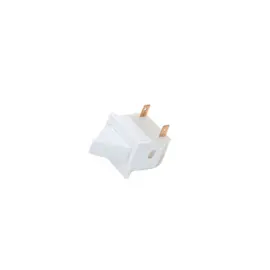
| Won’t spin or stops when lid opens | Lid safety circuit | Washer lid switch WP3949238 |
| Won’t drain or drains slowly | Drain pump | Washer drain pump WP3363394 |
| Agitator doesn’t move clothes well | Agitator drive dogs | Agitator dog 80040 |
| Motor runs but basket won’t move | Motor-to-transmission coupling | Washer motor coupling 285753A |
Why it matters
Knowing the 10 to 15 year average helps you decide whether to invest in a major repair (like a gearcase) or focus on lower-cost fixes (like a lid switch or drain pump) that can keep the washer reliable for years.
Last updated: February 2026
How many cubic feet is a Kenmore model 11024902202 washer?
The Kenmore washer model 11024902202 is typically about 3.2 cu. ft. in capacity for this 110-series, direct-drive style top-load design. For the exact rated capacity for your specific unit, we recommend confirming it in the 11024902202 owner's manual.
How to confirm capacity for your exact washer
Capacity is sometimes listed in the specifications section, or indirectly by basket size and load guidance.
- Check the model/serial label under the lid to confirm you are working with 11024902202
- Look for a “Specifications” or “Features” section in the 11024902202 owner's manual
- Compare your basket size and typical load size guidance (small, medium, large)
- If your washer has been repaired with a different basket, capacity can effectively change
- Use the installation spacing guidance as a cross-check that you have the correct platform and cabinet style (see the 11024902202 installation guide)
What 3.2 cu. ft. means in real use
A 3.2 cu. ft. top-load washer is a standard-capacity machine. It handles everyday loads well, but overfilling can reduce cleaning and cause out-of-balance spinning.
Typical load examples
- Bath towels: about 6 to 8 towels
- Jeans: about 8 to 10 pairs
- Queen sheets: 1 set (wash bulky items on appropriate cycles)
Quick comparison table
| Washer capacity | Common label | Best for |
|---|---|---|
| 3.0 to 3.5 cu. ft. | Standard | Daily mixed loads, towels |
| 3.6 to 4.5 cu. ft. | Large | Bigger families, bulkier loads |
| 4.6+ cu. ft. | Extra-large | Comforters, very large loads |
Why it matters
Knowing capacity helps you choose the right load size, detergent amount, and cycle settings. That reduces vibration, improves cleaning, and helps protect drive components like the washer motor coupling 285753A and washer lid switch WP3949238.
Last updated: February 2026
Is it worth repairing a Kenmore washing machine?
Yes, it’s usually worth repairing a Kenmore washer when the fix is a common wear part and the machine is otherwise in good condition. For Kenmore model 11024902202, many frequent problems are solved with straightforward parts like a lid switch, drain pump, or motor coupling; our 11024902202 owner's manual helps you confirm symptoms and safe checks.
Quick rule of thumb (repair vs. replace)
- Repair when the washer still fills, drains, and the tub is solid (no major rust-through or severe leaks).
- Repair when the issue points to a single failed part (no-spin, no-drain, won’t start).
- Replace when multiple major systems are failing at once (drive system plus leaks plus electrical issues).
- Repair when the cost is clearly less than a comparable replacement washer.
- Repair when you can do the work safely and follow the procedures in the manual.
Common, “worth it” repairs on this model
These are typical fixes that often restore full operation without replacing the washer:
- No spin or won’t run: washer lid switch WP3949238
- Won’t drain or drains slowly: washer drain pump WP3363394
- Agitates but won’t spin (or vice versa), loud grinding: washer motor coupling 285753A
- Weak agitation: agitator dog 80040
Cost and effort comparison
| Symptom | Likely area | Typical DIY difficulty | Why it’s often worth it |
|---|---|---|---|
| Won’t start/spin with lid closed | Lid switch | Low | Fast, targeted fix |
| Won’t drain | Drain pump or hose | Low to medium | Prevents water left in tub |
| No agitation/spin with motor running | Motor coupling | Medium | Common wear item |
| Poor agitation | Agitator dogs | Low | Inexpensive, quick repair |
Why it matters
Repairing a solid, older direct-drive style Kenmore washer can be a smart value because many failures are mechanical wear items. The manual also emphasizes basic safety practices (for example, don’t reach into a moving tub/agitator and follow recommended service instructions), which helps you avoid turning a simple repair into a bigger problem.
Last updated: February 2026