Installation guide
 Owner’s manual
 Error Codes


What is the most expensive part to replace on a washing machine?
On an Estate ETW4300SQ0 washer, the most expensive repairs are typically major drive-system or tub-related components, such as the gear case (transmission) or the spin basket. Control components and the drive motor can also be high-cost parts, especially when labor is included.
- Gear case / transmission: often one of the highest part costs on many top-load washers
- Spin basket / tub components: expensive parts and time-consuming teardown
- Drive motor: a higher-priced electrical/mechanical component
- Timer or control: can be costly depending on design and availability
- Lid and cabinet components: usually not common, but can be pricey when replaced as assemblies
| Part type | Example part for this model | Why it can be expensive |
|---|---|---|
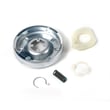
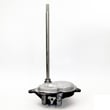
| Gear case component | Pinion 3360629 | Major drive-system part; labor-intensive access |
| Drive motor | Washer drive motor WP661600 | High-value component; diagnosis matters |
| Control/timer | Washer timer WP8572976 | Electrical part; replacement cost can be significant |
| Spin basket | Basket W10389329 | Large assembly; lots of disassembly |
- Confirm the symptom (no spin, no drain, loud grinding, burning smell, leaks).
- Check for simple causes first (unbalanced load, kinked drain hose, loose connections).
- Use the troubleshooting steps and safety guidance in the ETW4300SQ0 owner's manual.
- If the washer will not spin or drain, start with common wear items like the lid switch and drain pump.
- Price out both the part and the time/tools needed; some repairs require significant teardown.
Big-ticket parts (gear case, basket, motor, timer) can push the total repair cost into the “replace vs. repair” range. A quick, accurate diagnosis helps you avoid swapping an expensive part when a simpler fix (like a switch, pump, or coupling) is the real cause.
Last updated: February 2026
What are the parts of a washer called?
A washer is made up of water-handling parts (fill, wash, drain) and drive parts (agitate, spin, stop). On the Estate ETW4300SQ0, the most commonly referenced components include the water inlet valve, tub/basket, agitator, drain pump, lid switch, motor, and timer (or control components). See the ETW4300SQ0 owner's manual for the component names used for your exact model.
Here are the names you will see most often when troubleshooting leaks, no-drain, or no-spin issues:
- Water inlet valve: lets hot and cold water into the washer
- Fill hoses and hose washers: connect the washer to the faucets and help prevent leaks
- Tub and spin basket: hold the wash water and clothes; the basket spins to extract water
- Agitator: moves clothes through water and detergent during wash
- Drain pump: pumps water out through the drain hose
- Lid switch assembly: confirms the lid is closed so the washer can spin safely
- Drive motor and coupling: transfers motor power into agitation and spin
- Clutch, brake, gear case/drive tube: help the washer shift, spin, and stop smoothly
- Timer: controls cycle steps on many top-load designs
These are examples of real, serviceable parts for this model that match common symptoms:
| Symptom | Common part name | Example part for this model |
|---|---|---|
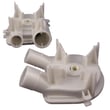
| Won’t drain | Drain pump | Washer drain pump WP3363394 |
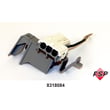
| Won’t spin or stops when lid opens | Lid switch assembly | Washer lid switch assembly WP8318084 |
| Agitator doesn’t move properly | Agitator dog | Agitator dog 80040 |
| Motor runs but washer won’t agitate/spin | Coupling | Coupling 285753A |
Using the correct part names helps you match symptoms to the right diagrams and parts list, and it prevents ordering the wrong item (for example, confusing a drain pump problem with a lid switch or coupling issue).
Our installation and use guidance for this style of washer focuses on preventing injury and leaks:
- Unplug the washer before inspecting internal components
- Do not reach into the tub or agitator area if anything is moving
- Make sure fill hoses are tight and hose washers are seated to reduce leaking
- Confirm the drain setup can handle high flow (typical guidance is about 17 gal/min)
- Level the washer and balance loads to reduce noise and vibration
Last updated: February 2026
What are the things in a washing machine drum called?
In an Estate ETW4300SQ0 top-load washer, the “things in the drum” are usually the agitator (the center post that moves clothes) and the wash basket (the perforated inner tub that holds the load). The basket sits inside an outer tub that holds water.
- Agitator: the center post that moves clothes through water and detergent
- Agitator dogs: small pawls inside the agitator that help the upper portion “ratchet” and pull clothes down
- Wash basket (inner tub): the perforated metal drum that spins
- Outer tub: the non-perforated tub around the basket that contains water
- Drive block / drive tube: parts that transfer spin from the drive system to the basket
If the agitator is loose, not moving correctly, or “clicking,” the agitator dog 80040 is a common wear item to check first.
| What you notice in the washer | Common name | What it does |
|---|---|---|
| Tall center post | Agitator | Moves clothes for cleaning |
| Top section slips or won’t “grab” | Agitator dogs | Helps the agitator’s upper section rotate properly |
| Perforated drum walls | Wash basket | Holds clothes and spins out water |
| Solid tub you don’t usually see | Outer tub | Holds wash water and supports the basket |
Using the right name helps you match symptoms to the right repair. For example, poor rollover or clothes staying on top often points to worn agitator dogs, while a basket that will not spin can involve the drive block, clutch, or lid switch.
We list the component names and safety notes for your washer in the ETW4300SQ0 owner’s manual.
Last updated: February 2026
What is the centerpiece of a washing machine called?
In an Estate washer like model ETW4300SQ0, the centerpiece in the middle of the wash basket is typically called the agitator. It moves back and forth to circulate clothes through the wash water and help lift and remove soil.
An agitator is the central post with fins or vanes that creates wash action by moving the load through water and detergent.
- Provides the primary wash motion during the wash portion of the cycle
- Helps roll clothes from the outside of the basket toward the center
- Can make normal clicking or gear-engagement sounds during operation
- Sits higher than the highest water level (that is normal for this design)
- Differs from an impeller, which is a low-profile plate at the bottom of the basket
If the “centerpiece” is present but performance is poor, these are common issues on top-load agitator washers:
| Symptom | What it often points to | Example part for ETW4300SQ0 |
|---|---|---|
| Agitator moves one way or feels loose at the top | Normal operation on many designs | Check ETW4300SQ0 owner’s manual |
| Upper agitator “ratchets” but won’t pull clothes down | Worn agitator dogs | Agitator dog 80040 |
| Washer will not agitate or spin with lid open | Lid switch circuit not made | Washer lid switch assembly WP8318084 |
Knowing the correct name (agitator) helps you match the right diagrams, troubleshooting steps, and replacement parts, especially when diagnosing “won’t agitate,” weak wash action, or unusual noises.
- Confirm your washer uses an agitator by checking the basket diagram in the ETW4300SQ0 owner’s manual
- If wash action is weak, inspect the agitator dogs for wear (common on this style)
- If the washer will not agitate at all, verify the lid closes and the lid switch is working
- If you hear clicking during wash, note that some clicking can be normal gear engagement
Last updated: February 2026