Installation guide
 Owner’s manual
 Error Codes



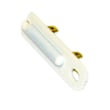
How do I know if my Kenmore dryer thermal fuse is blown?
If your Kenmore dryer model 11066652500 won’t start at all, or it runs but has no heat, a blown thermal fuse (or a related safety fuse/thermostat) is a top suspect. The sure way to confirm is a continuity test with a multimeter after disconnecting power; we also recommend checking airflow restrictions first.
Quick symptoms to look for
- Dryer won’t run even though the door is closed and a cycle is selected.
- Dryer tumbles but doesn’t heat (common on electric dryers when one side of power is lost, so verify power too).
- Dryer stops mid-cycle and won’t restart until it cools (often points to overheating/airflow issues).
- Burning smell or very hot cabinet (overheating condition that can open a safety fuse).
Confirm it with a multimeter (best test)
- Unplug the dryer or shut off the breaker(s).
- Access the fuse area (location varies by design; use the 11066652500 owner's manual for access guidance and safety notes).
- Remove at least one wire from the fuse terminal.
- Test for continuity across the fuse.
What the meter reading means
| Meter result | What it indicates | What to do next |
|---|---|---|
| Beep or near 0 ohms | Fuse is good | Keep troubleshooting heat/no-start causes |
| No beep or OL/infinite | Fuse is blown (open) | Replace the failed safety part and fix the overheating cause |
Fix the cause before replacing parts
A thermal fuse usually opens because the dryer overheated. Before installing new parts, we recommend:
- Clean the lint screen and housing.
- Inspect the vent hose for kinks or crushing.
- Check the outside vent hood for blockage.
- Confirm strong airflow at the outlet.
- Avoid long, restrictive vent runs when possible.
Parts that are commonly involved
If testing shows an open safety device, these are common related items on this Kenmore platform:
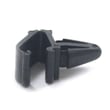
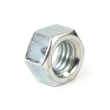
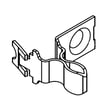
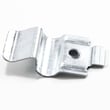
- Dryer thermal cut-off fuse kit 279816 (often replaced as a set when overheating occurs)
- Dryer operating thermostat WP3387134
- Dryer high-limit thermostat WP3977767
Why it matters
Replacing a blown fuse without correcting airflow or overheating can cause the new fuse to open again quickly. Good venting protects the heating system, improves dry times, and reduces nuisance shutdowns.
Last updated: February 2026
How do I tell what model my Kenmore dryer is?
Your Kenmore dryer’s model number is printed on the model and serial number label; on model 11066652500, it’s located at the top inside the dryer door well. Once you have that full number, we can match the correct parts, diagrams, and specifications.
Where to look on Kenmore model 11066652500
Check these common label locations in this order:
- Top inside the dryer door well (most common for this model)
- Inside the door opening around the frame
- Back panel (rear of the cabinet)
- Near the lint screen housing (varies by design)
If the label is hard to read, wipe it gently with a damp cloth and use a flashlight at an angle.
What the model number looks like (and why it matters)
Kenmore model numbers are usually all digits. For this dryer, the full model number is 11066652500 (often shown with a prefix like 110. on some labels and paperwork).
Quick guide
| What you see | What it tells us | What to do next |
|---|---|---|
| 11066652500 | Exact model ID for your dryer | Use it to select exact-fit parts |
| 110.XXXXXXX | Same family prefix, not the full ID | Record all digits after 110. |
| Serial number | Production identifier | Keep it for service records |
Tips to record it correctly
- Write the model number exactly as shown (all digits, no spaces)
- Take a clear photo of the label for future reference
- Record the serial number and purchase date in your paperwork
Why it matters
Using the exact model number prevents ordering the wrong items (like a drum belt, door switch, or heating part) and helps confirm fit for common replacements such as the dryer drum belt 341241. For operating and identification details, use the 11066652500 owner's manual.
Last updated: February 2026
What is the average lifespan of 11066652500?
A Kenmore dryer like model 11066652500 typically lasts 13 years with normal household use. Keeping airflow strong (clean lint system and venting) and replacing wear items early helps this dryer reach its full service life.
What affects lifespan most
- Vent restriction and overheating (most common life-shortener)
- Heavy loads and frequent cycles (more wear on belt, rollers, motor)
- Poor maintenance of lint screen and lint chute
- Running with squealing or thumping noises (accelerates drum support wear)
- Power issues (surges, loose outlet, intermittent heat)
Maintenance that adds years
Use these habits to reduce strain on the heater, motor, and drum system:
- Clean the lint screen before every load; replace a damaged screen if it no longer seals well
- Vacuum lint from the lint chute and blower area periodically
- Keep the exhaust duct short, smooth, and not crushed behind the dryer
- Avoid overloading; it stretches the belt and stresses drum rollers
- Address heat problems quickly to prevent thermal fuse trips
Common wear parts and what they do
| Symptom | Likely wear area | Example part for this model |
|---|---|---|
| Drum not turning, motor runs | Belt or idler | Dryer drum belt 341241 |
| Squealing, thumping | Drum support components | Dryer repair kit 4392065 |
| No heat or shuts off from overheating | Thermal safety parts | Dryer thermal cut-off fuse kit 279816 |
Why it matters
A dryer that runs hot because of restricted airflow can shorten the life of the heating circuit and safety thermostats. Preventing overheating is the single best way to protect the heater box, motor, and wiring over the long term.
For model-specific maintenance intervals and cleaning points, follow the 11066652500 owner's manual.
Last updated: March 2026