Owner’s manual
 Error Codes


Is it worth replacing a heating element in a Samsung dryer?
Yes, it’s usually worth replacing the heating element in your Samsung DV5471AEW when the dryer still tumbles normally and the rest of the machine is in good condition. A failed element commonly causes no heat or very long dry times; replacing it restores normal drying without replacing the whole dryer.
When replacement makes sense
We typically recommend replacing the heating element when these conditions are true:
- The drum turns and airflow feels strong, but clothes stay damp or take multiple cycles
- The dryer runs but produces little to no heat
- The unit is otherwise reliable (no major motor noise, no burning smell, no repeated shutdowns)
- You can confirm the element is open (no continuity) during a basic electrical test
- You also address the root cause, especially restricted venting
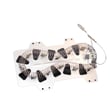
A common replacement for this model is the Samsung dryer heating element DC47-00019A.
Check these first (often the real cause)
Before you order parts, we recommend these quick checks because poor airflow can overheat and damage heating components:
- Clean the lint screen and lint housing
- Inspect the vent hose for kinks, crushing, or heavy lint buildup
- Verify the exterior vent hood opens fully while the dryer runs
- Avoid overloading; packed loads dry slowly and run hotter
- Confirm the correct cycle and dryness setting for the fabric type
For operating tips that reduce dry time and heat stress, use how to use your clothes dryer efficiently.
Parts that are commonly replaced together
If the element failed from overheating or age, these parts are often checked or replaced at the same time:
| Symptom | Common part to check | Example part for DV5471AEW |
|---|---|---|
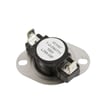
| No heat or heat cuts out | High-limit thermostat | DC47-00018A |
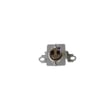
| No heat after overheating event | Thermal cut-off fuse | DC47-00015A or DC96-00887A |
| Erratic temps, long dry times | Thermistor | DC32-00007A |
(We match parts by model to help ensure fit; confirm locations and access steps in the owner's manual.)
Why it matters
A weak or failed heating circuit forces longer run times, higher energy use, and more wear on the drum belt, motor, and rollers. Restoring proper heat and airflow helps your DV5471AEW dry faster and run cooler.
Last updated: February 2026
How to tell if Samsung dryer thermal fuse is bad?
A bad thermal fuse in your Samsung DV5471AEW dryer is typically “open” (no continuity), which makes the dryer stop heating or stop running to prevent overheating. We confirm it by safely accessing the fuse and testing it with a multimeter; if it reads open, replace it.
What you’ll notice when the thermal fuse is bad
Common symptoms on DV5471AEW-STYLE Samsung dryers include:
- Dryer won’t start (some designs cut power to the motor circuit)
- Dryer runs but won’t heat (some designs cut power to the heater circuit)
- Cycle stops early or acts “dead” after a few minutes
- Burning smell or very hot cabinet before it failed (often caused by restricted venting)
How to test the thermal fuse (quick, accurate method)
- Unplug the dryer (electric shock hazard).
- Remove the appropriate panel to access the heater/duct area (panel locations vary by configuration).
- Pull the two wires off the fuse terminals (note their positions).
- Set a multimeter to continuity or ohms.
- Touch a probe to each terminal.
Interpreting the meter reading
| Meter result | What it means | What to do |
|---|---|---|
| 0 to 1 ohm or continuity tone | Fuse is good (closed) | Look for other causes (thermostat, element, airflow) |
| OL, infinite ohms, no tone | Fuse is bad (open) | Replace the fuse and fix the overheating cause |
Parts that are commonly involved on this model
On DV5471AEW, “no heat” or overheating complaints often involve these safety and temperature parts:
- Dryer thermal cut-off fuse, 320-degree f DC47-00015A
- Dryer thermal cut-off fuse DC96-00887A
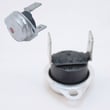
- Dryer high-limit thermostat DC47-00018A
- Samsung dryer heating element DC47-00019A
- Dryer thermistor DC32-00007A
Why the fuse blew (and why it matters)
A thermal fuse usually opens because the dryer overheated. If we replace the fuse without correcting airflow, the new fuse can fail again quickly. The most common root cause is a clogged lint screen, blocked blower housing, crushed vent hose, or a restricted outside vent hood.
Airflow checks we recommend before running the dryer
- Clean the lint screen and the lint screen housing
- Inspect and clean the vent duct from dryer to wall
- Check the outside vent hood flap for sticking or blockage
- Make sure the vent hose is not kinked or crushed
- Vacuum lint buildup inside the cabinet if accessible
Model-specific reference
Use the owner's manual for DV5471AEW to confirm panel removal steps and component locations for your exact configuration.
Last updated: February 2026
What is the average lifespan of a Samsung dryer?
A Samsung dryer like model DV5471AEW lasts 10 to 12 years. The biggest life-shorteners are restricted vent airflow, lint buildup, and repeated overheating; keeping the venting clear and loads reasonable protects the motor, belt, and heating system.
What affects dryer lifespan the most
- Keep the exhaust vent clear and as short and straight as possible
- Clean the lint screen every load; remove residue buildup periodically
- Avoid overloading; it strains the drum belt, rollers, and drive motor
- Fix long dry times early; extended run time accelerates wear
- Address overheating symptoms right away (burning smell, shutting off mid-cycle)
Typical lifespan by component (what usually wears first)
| Component area | Common wear sign | Example replacement part |
|---|---|---|
| Drum support | thumping, squealing, rumbling | Dryer drum support roller DC97-07523B |
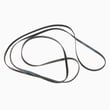
| Drum drive | drum not turning, burning rubber smell | Samsung dryer drum belt 6602-001655 |
| Heating system | no heat or weak heat | Samsung dryer heating element DC47-00019A |
| Temperature sensing | overheating, poor temperature control | Dryer thermistor DC32-00007A |
How we recommend extending life (quick checklist)
- Verify strong airflow at the outside vent hood while the dryer runs.
- Vacuum lint around the lint screen housing and nearby duct connection.
- Stop using the dryer if you hear new squeals or thumps; inspect drum support parts.
- If clothes take longer to dry, clear vent restrictions before replacing parts.
Why it matters
A dryer that runs hot or runs too long wears out the heating circuit and drum support system faster. Good airflow is the simplest way to reduce heat stress, improve drying performance, and extend service life.
For model-specific care, cycle guidance, and maintenance intervals, use the owner's manual.
Last updated: February 2026