Owner’s manual
 Error Codes
How do you reset the alarm on a Kenmore freezer?
Kenmore compact freezers like model 56428502700 commonly do not have a dedicated audible alarm reset button; instead, you stop the warning condition by restoring normal temperature and making sure the door seals fully. Use the operating steps in the 56428502700 owner's manual to confirm your control style and normal startup behavior.
What to do right now
- Close the door firmly and confirm nothing is preventing it from shutting.
- Check the temperature control (thermostat) setting; set it to your normal operating position.
- If you recently loaded food, reduce the load and improve airflow around packages.
- After any adjustment or long door opening, wait several hours for temperatures to recover.
- After a power interruption, keep the door closed as much as possible while the freezer pulls back down.
Common causes that trigger beeping or a warning (and the fix)
| What’s happening | What we do | Why it works |
|---|---|---|
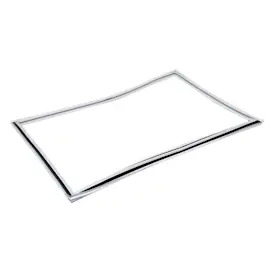
| Door not sealing | Remove obstructions, clean the gasket, reclose door | Stops warm air leaks that raise temperature |
| Warm food added | Limit how much unfrozen food you add at once | Prevents a prolonged warm-up period |
| Recent outage | Keep door closed; let unit run | Helps the freezer recover faster |
| Unit just started | Let it run before loading | Stabilizes cabinet temperature |
Model-relevant operating guidelines
These practices match how this Kenmore freezer is designed to run:
- Wait about 4 hours after starting before loading food.
- Do not freeze more than 3 lb of unfrozen food per cubic foot at one time.
- If power is out for less than 24 hours, keep the door closed to help food stay frozen.
Why it matters
A “reset” that does not hold usually means the freezer is still warm or the door is leaking air. Correcting the cause protects food quality and helps the freezer maintain consistent temperatures.
Last updated: February 2026
How to replace Kenmore freezer thermostat?
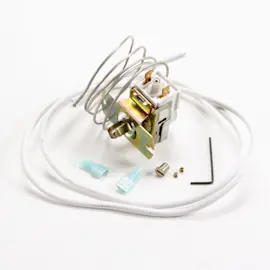
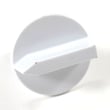
On Kenmore model 56428502700, the temperature control (thermostat) is replaced by disconnecting power, accessing the control/knob area, and moving the wires to the new control one at a time. After installation, set the control mid-range and allow about 4 hours for temperatures to stabilize (per the 56428502700 owner's manual).
Safety and prep
- Unplug the freezer; it uses 120 volts and a grounded 3-prong outlet.
- Protect food in a cooler; keep the door closed as much as possible.
- Use a phone photo to record wire colors and terminal positions.
- Label wires if terminals are not clearly marked.
- Keep screws and small parts in a cup.
Replacement steps (typical for this style of freezer control)
- Disconnect power at the wall outlet.
- Remove the temperature control knob (pull straight off).
- Remove screws holding the control cover/housing.
- Note the capillary tube (thin sensing tube) routing if your control uses one; do not kink it.
- Transfer wires to the new thermostat one wire at a time to the matching terminals.
- Mount the new control and route the sensing tube the same way as the original.
- Reinstall the cover and knob.
- Restore power; set to a mid-range setting.
What “normal” looks like afterward
| Item | What to expect |
|---|---|
| Start-up | Compressor may start after a short delay |
| Temperature change | Gradual improvement; allow about 4 hours before judging results |
| Frost | Frost can build up over time; remove it using the defrosting steps in the manual |
Why it matters
The temperature control cycles the compressor to maintain safe freezer temperatures. Correct wiring and proper sensing-tube placement prevent symptoms like warm temps, constant running, or short cycling.
Last updated: February 2026
Where can I find my Kenmore freezer model number?
For Kenmore model 56428502700, the model and serial number are printed on the model number plate located in the upper corner of the freezer back. We recommend writing both numbers down before ordering parts or troubleshooting; see the owner's manual for the exact label location and recording space.
Common places to check on a freestanding freezer
If you do not see the plate right away, check these typical label locations:
- Upper back corner inside the cabinet (most common for this model)
- Inside wall near the top shelf area
- Side wall near the front opening
- Behind the lower kick plate or toe grille (if equipped)
- Rear exterior panel near the power cord entry
How to use the model number once you find it
Having the correct model number helps us match the right Kenmore compact freezer parts and diagrams.
- Use the full model number exactly as shown (all digits)
- Record the serial number too; it helps identify production details
- When looking up parts, use the part number from the parts list (not an illustration number)
Quick reference: model vs. serial
| Item | What it tells you | Used for |
|---|---|---|
| Model number | The exact freezer design | Correct parts list and diagrams |
| Serial number | The unit’s production identifier | Service history and version details |
Why it matters
A single digit off can pull up the wrong parts list, which can lead to ordering the wrong door gasket, thermostat, relay, or compressor components for your freestanding freezer.
Last updated: February 2026
Why is my Kenmore upright freezer not freezing?
If your Kenmore compact freezer model 56428502700 is running but not freezing, the most common causes are a warm temperature control setting, heavy frost buildup reducing cooling efficiency, or warm air leaking in through a poor door seal. Use the troubleshooting and operating steps in the owner's manual to confirm settings and correct the root cause.
Quick checks that fix most “not freezing” problems
- Confirm the freezer is plugged into a grounded 3-prong outlet and has steady power.
- Set the temperature control colder, then give it time to respond.
- Keep the door closed as much as possible; frequent openings raise temperature.
- Check that the freezer is level so the door seals evenly.
- Look for frost thicker than 1/4 inch; defrosting restores efficiency.
- Avoid loading hot food; it can overwhelm cooling.
Step-by-step troubleshooting
1) Verify startup and loading expectations
This model needs time to pull down to temperature. After changing settings or restarting, allow several hours for temperatures to stabilize; the freezer may run constantly while it cools.
2) Check for frost buildup (manual-defrost performance issue)
The manual recommends defrosting when frost reaches about 1/4 inch thick because additional frost reduces operating efficiency.
Safe defrost basics
- Unplug the freezer before defrosting.
- Remove food and keep the door open during defrost.
- Wipe up meltwater and dry the interior before restarting.
3) Confirm the door is sealing and closing fully
A small air leak can keep an upright freezer “cold but not freezing.” Leveling the cabinet helps the door seal properly.
What to expect after you correct the cause
| What you changed | What you should see | Typical wait time |
|---|---|---|
| Colder control setting | Gradual temperature drop | Several hours |
| Defrosted heavy frost | Stronger, more consistent freezing | Same day |
| Improved door seal/level | Less temperature swing, less frost | 24 to 48 hours |
Why it matters
A freezer that is too warm can lead to food spoilage and forces the compressor to run longer than normal. Fixing airflow restrictions (frost) and air leaks (door seal/level) restores consistent freezing and lowers operating cost.
Last updated: February 2026