Installation guide
 Owner’s manual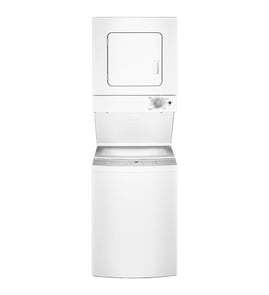


What is the capacity of the Whirlpool wet3300xq1?
The Whirlpool WET3300XQ1 stacked laundry center has a typical capacity of about 2.5 cu. ft. for the washer and about 5.9 cu. ft. for the dryer. For the exact specs and cycle details for your unit, use the WET3300XQ1 owner's manual.
| Appliance | Capacity (approx.) | What it means for loads |
|---|---|---|
| Washer | 2.5 cu. ft. | Best for small to medium loads; avoid overfilling above the top row of holes |
| Dryer | 5.9 cu. ft. | Handles most everyday loads; bulky items may need extra space for airflow |
- Washer: Load loosely; items should move freely during agitation.
- Dryer: Do not pack tightly; airflow is what dries clothes efficiently.
- Balance: Mix large and small items to reduce banging and improve spin.
- Bulky items: Dry one comforter or jacket at a time when possible.
- Cycle choice: Match cycle and heat to fabric type to prevent overdrying.
Capacity affects cleaning and drying performance. Overloading a 2.5 cu. ft. washer can reduce agitation and rinsing, and overloading a 5.9 cu. ft. dryer can restrict airflow, leading to longer dry times and clothes that come out damp.
If you ever see a fault or unusual behavior, the Whirlpool wet and ywet error codes guide helps you interpret common codes used on Whirlpool laundry centers.
Last updated: February 2026
What is the life expectancy of a whirlpool washing machine?
A Whirlpool washing machine typically lasts 10 to 14 years with normal household use and basic maintenance. For your Whirlpool WET3300XQ1 stacked laundry center, good loading habits, correct detergent use, and proper drain and vent setup do the most to reach that lifespan; see the WET3300XQ1 owner's manual.
Most washer failures that shorten lifespan come from chronic overloading, oversudsing, and poor draining or spinning.
- Load size and balance: avoid consistently overstuffing the basket
- Detergent amount: measure carefully to prevent excess suds that can slow draining/spinning
- Drain hose setup: keep the standpipe insertion shallow and the hose height within spec
- Water supply and hoses: replace aging hoses before they leak or burst
- Dryer venting (for laundry centers): good airflow reduces heat stress on shared components
Use these simple routines to reduce wear on the drive system, clutch, and coupling.
- Use the right cycle and spin speed for the load (high spin extracts more water but increases stress)
- Wash small items in garment bags and empty pockets to prevent jams
- If you see heavy suds, run Rinse and Spin with no detergent
- Keep the drain path clear; remove kinks and clogs in the drain hose
- Level the unit to reduce banging and vibration during spin
| Item | Typical expectation | What usually shortens it |
|---|---|---|
| Whirlpool washer (household use) | 10 to 14 years | Overloading, oversudsing, poor draining |
| Washer hoses | Replace about every 5 years | Heat, age, high water pressure |
| Drive components (coupling/clutch) | Often mid-life repairs | Chronic heavy loads, off-balance spinning |
A washer that drains and spins correctly finishes cycles with drier loads, reduces strain on the motor and drive parts, and helps the dryer run shorter cycles. That combination is the most reliable path to getting full life from a stacked laundry center.
Last updated: February 2026
What is the most common problem with whirlpool washers?
For Whirlpool washers like the washer in the Whirlpool WET3300XQ1 stacked laundry center, the most common problems are not draining or not spinning (leaving loads wet) and excess vibration/noise from an unbalanced load or leveling issue. These are often caused by loading, drain hose setup, or too much detergent. See the WET3300XQ1 owner's manual for the model’s troubleshooting checks.
- Washer won’t drain or spin; clothes still wet: drain hose setup issue, suds from too much detergent, or load not loaded as recommended.
- Clicking or metallic noises: items caught in the drain system or something in pockets.
- Gurgling or humming: normal draining, or the washer is in sensing/spin.
- Banging or shaking: unbalanced load, feet not firmly on the floor, or unit not level.
- Washer won’t run or fill: power supply issue (outlet, cord, breaker).
- Confirm power: plug into a grounded outlet; avoid extension cords.
- Fix out-of-balance loads: redistribute items; avoid washing a single heavy item alone.
- Check leveling: feet firmly on the floor, unit level, jam nuts tight.
- Verify drain hose installation:
- Do not seal the drain opening with tape.
- Do not push the hose too far into the standpipe (typical limit is about 4.5 inches).
- Keep the hose end below the maximum height (typical limit is 96 inches).
- Reduce detergent: excess suds can slow or stop draining and spinning; run Rinse and Spin with no detergent to clear suds.
| Symptom | Most likely cause | Best first action |
|---|---|---|
| Loads still wet | Drain hose setup, oversudsing, unbalanced load | Check hose height/insertion; reduce detergent; rebalance |
| Loud banging | Not level, load off-balance | Level the unit; redistribute load |
| Won’t start | Power supply issue | Verify outlet power; reset breaker |
| Poor cleaning | Too much detergent, wrong cycle | Measure detergent; choose correct cycle/soil level |
Drain/spin and vibration issues are the most common because they are strongly affected by everyday factors like load size, detergent amount, and installation details. Correcting those basics prevents repeat problems and helps protect parts such as the drive system and suspension.
For code-related troubleshooting on Whirlpool laundry centers, use Whirlpool wet and ywet error codes.
Last updated: February 2026