Owner’s manual
 Error Codes


What's better, a side-by-side or a French door refrigerator?
For a kitchen like the GE PSHS9PGZBCSS side-by-side refrigerator, a side-by-side is usually the better choice when you want easy, eye-level access to both fresh food and frozen items and you have tighter door-swing clearance. A French door is usually better when you prioritize wide shelves for large platters and party trays.
- Side-by-side: Narrower compartments; great for everyday organization and quick access to freezer items.
- French door: Wide refrigerator shelves; better for large, flat items (pizza boxes, sheet pans).
- Space planning: Side-by-side doors typically need less “reach” to open fully in tight aisles.
- Freezer use: Side-by-side keeps frozen foods at eye level; French door puts the freezer in a bottom drawer.
- Budget and complexity: French door models often cost more and can have more door seals and moving parts to maintain.
| Feature you care about | Side-by-side (like PSHS9PGZBCSS) | French door |
|---|---|---|
| Fits tighter walkways | Often yes | Sometimes harder |
| Stores wide platters | Limited | Strong |
| Freezer access | Eye level | Bottom drawer |
| Organization | Vertical zones | Wide shelves |
- Choose side-by-side if you:
- use the freezer daily
- want balanced fresh and frozen access
- have limited clearance in front of the refrigerator
- Choose French door if you:
- store wide items often
- entertain frequently
- prefer a larger, open refrigerator section
The “better” style is the one that matches your kitchen layout and how you store food. Door clearance, shelf width, and freezer access affect daily convenience more than most feature lists.
For care, features, and layout details specific to your GE unit, use the PSHS9PGZBCSS owner’s manual.
Last updated: January 2026
What is the disadvantage of a side-by-side fridge?
A key disadvantage of a side-by-side refrigerator like GE model PSHS9PGZBCSS is reduced “wide-item” storage; the fresh-food and freezer sections are tall but narrower, so large platters, pizza boxes, and wide bins can be harder to fit compared with French-door or top-freezer designs. See the PSHS9PGZBCSS manual for storage and shelf configuration guidance.
- Narrower shelves limit wide or bulky items (sheet cakes, party trays, pizza boxes).
- Less flexible fresh-food layout for large meal prep containers.
- Freezer items can be harder to organize because space is split into narrower vertical zones.
- Door storage can crowd quickly (condiments, gallon jugs, tall bottles).
- Through-the-door ice and water features can reduce usable door-bin space.
| Layout | Biggest strength | Most common drawback |
|---|---|---|
| Side-by-side | Easy access to both fridge and freezer at eye level | Narrow shelves for wide items |
| French door | Wide fresh-food shelves for platters and boxes | Often needs more clearance for wide doors |
| Top freezer | Simple, efficient layout | Fresh food is lower, more bending |
If you regularly store wide items (meal trays, pizza boxes, large leftovers), the side-by-side format can feel “full” sooner even when total cubic feet is similar. Planning your shelf positions and using door bins strategically helps you get the most usable capacity.
- Keep one shelf area “open” for tall or awkward items.
- Use slim bins to group snacks and small containers front-to-back.
- Reserve door bins for frequently used items to reduce door-open time.
- Avoid overpacking; airflow matters for even temperatures.
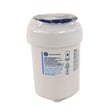
- If you use filtered water/ice, replace the filter on schedule to maintain flow and taste (for this model, see GE refrigerator water filter MWFP).
Last updated: January 2026
How to reset GE side-by-side refrigerator not cooling?
To reset a GE PSHS9PGZBCSS side-by-side refrigerator that is not cooling, we recommend doing a power reset first (unplug for 1 full minute, then restore power). If the unit has a diagnostic/test mode, you can also exit or reset it using the steps in the PSHS9PGZBCSS refrigerator manual.
- Make sure the temperature controls are not set to OFF.
- Unplug the refrigerator (or switch off the breaker) for 60 seconds.
- Plug back in (or turn breaker on).
- Wait 5 to 10 minutes to see if the compressor and fans start.
- Allow 24 hours for temperatures to fully stabilize after any reset.
A reset will not fix a failed cooling component. On the GE PSHS9PGZBCSS, the most common next checks are airflow, frost buildup, and temperature sensing.
- Confirm the condenser area is not blocked by dust or pet hair.
- Listen for the evaporator fan in the freezer; no airflow often points to a fan or control issue.
- Check for heavy frost on the freezer back panel (possible defrost system problem).
- If temperatures seem “wrong” compared to what the display shows, a sensor can be involved.
| Symptom you notice | What it often points to | Example compatible part |
|---|---|---|
| Warm fridge and freezer, unit runs a lot | Poor heat removal or sealed system issue | GE profile refrigerator condenser coil WR84X10022 |
| Freezer cold but fridge warm | Airflow/evaporator area issue | Refrigerator evaporator fan motor WR60X10318 |
| Temps fluctuate or display seems inaccurate | Temperature sensing/control issue | GE profile refrigerator temperature sensor WR55X10025 |
A reset clears temporary control glitches and gets the refrigerator back to normal operation quickly. If cooling does not return, the symptom pattern helps narrow the problem to airflow, defrost, sensors, or the compressor so you can avoid replacing the wrong part.
Last updated: January 2026