 Installation guide
 Owner’s manual


How do I know what model my Kenmore washer is?
For Kenmore washer model 11024632300, the model number is printed on the model and serial number label; on this model it’s located under the washer lid. Use that exact number when ordering parts or looking up troubleshooting steps in the 11024632300 owner’s manual.
Where to look on model 11024632300
On this Kenmore top-load washer, lift the lid and check the label on the underside area near the opening.
- Look for a label that lists Model and Serial
- Record the full model number (for example, 11024632300)
- Record the serial number too (helpful for service and production date)
- Take a clear photo of the label for future reference
- Keep the number with your purchase paperwork
What the model number helps you do
The model number ensures you get the correct diagrams, instructions, and compatible replacement parts.
| What you’re doing | Why the exact model matters | Example for this washer |
|---|---|---|
| Ordering parts | Prevents wrong-fit parts | Lid switch, drain pump, timer |
| Using instructions | Matches your control style and cycle steps | Cycle knob start procedure |
| Troubleshooting | Points to the right symptom checks | Agitation, spin, drain issues |
Quick tips if the label is hard to read
- Wipe the label gently with a damp cloth; dry it right away
- Use your phone flashlight and zoom for faded print
- Copy the number exactly; include all digits (no spaces)
Why it matters
Kenmore model numbers can look similar, but internal components (like the drive system, lid switch, or gear case) can differ by model. Using 11024632300 avoids ordering the wrong part and saves repair time.
Last updated: February 2026
How many cubic feet is a Kenmore Model 110 washer?
Kenmore model 11024632300 is a top-load washer; washers in this Kenmore 110 platform are typically about 3.2 to 3.5 cu. ft. capacity. For the exact capacity for your specific configuration, we recommend confirming it in the 11024632300 owner's manual.
Quick ways to confirm capacity on your washer
- Check the specifications section in the 11024632300 owner's manual.
- Look under the lid for the model and serial label; it confirms you are matching specs to 11024632300.
- Compare your tub size to typical 3.2 to 3.5 cu. ft. top-load tubs (medium to large loads).
- If you are shopping for replacement parts, match parts by model number first, then by symptom.
Typical capacity range for Kenmore 110 top-load washers
These are common real-world ranges for Kenmore 110-series top-load designs like 11024632300.
| Capacity (cu. ft.) | Typical load size | Common use case |
|---|---|---|
| 3.2 | Medium | Everyday mixed loads |
| 3.5 | Medium-large | Towels, jeans, larger family loads |
| 4.0+ | Extra-large | Bulky items more easily (varies by design) |
Why it matters
Capacity affects how much you can wash per cycle and how well the washer agitates and spins. Overloading a smaller-capacity tub can lead to poor cleaning, out-of-balance spinning, and extra wear on drive components.
Related part fit tip (when capacity questions come up)
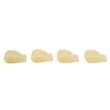
If you are troubleshooting agitation or spin performance (often mistaken for “small capacity”), common wear items on this model family include the agitator dog 80040 and drive components that affect movement.
Last updated: February 2026
How to hard reset a Kenmore Elite washer?
For Kenmore model 11024632300, a “hard reset” is done by removing power long enough to clear the control’s state, then restarting the cycle normally. After power is restored, start the washer using the Cycle Control knob steps in the 11024632300 owner's manual.
Hard reset steps (power reset)
- Turn the washer OFF by pushing in the Cycle Control knob.
- Unplug the washer (or switch OFF the breaker).
- Wait 2 to 5 minutes.
- Restore power (plug back in or turn breaker ON).
- Close the lid, select a cycle, then pull out the Cycle Control knob to start.
If it still will not start, agitate, or spin
These checks solve the most common “reset didn’t work” situations on this style of Kenmore top-load washer:
- Make sure the lid is fully closed; the washer will not agitate or spin with the lid open.
- Avoid extension cords; plug into a proper outlet.
- Allow for normal cycle pauses (some pauses can last about 2 minutes).
- Reduce load size if the washer is overloaded.
- If the washer will not spin, inspect the lid switch; a failed switch often mimics a control problem (see washer lid switch WP3949238).
Quick reference: what a reset can and cannot fix
| Symptom | Reset helps? | What usually fixes it |
|---|---|---|
| Stuck in a pause or won’t respond | Often | Power reset, then restart cycle |
| Won’t agitate/spin with lid open | No | Close lid; check lid switch |
| Won’t drain | Rarely | Check drain hose height/clog; pump issues |
| Excessive vibration | No | Level washer and tighten feet nuts per 11024632300 installation guide |
Why it matters
A power reset clears a temporary “hung” state, but it will not bypass safety interlocks (like the lid switch) or correct installation issues (like an unlevel washer that triggers vibration and out-of-balance problems).
Last updated: February 2026
How to unclog drain hose on Kenmore washer?
To unclog the drain hose on your Kenmore washer model 11024632300, we recommend disconnecting the hose, clearing the blockage, then reinstalling it exactly as specified so it does not kink or leak. Use the drain-hose routing and clamp steps in the 11024632300 installation guide to prevent repeat clogs.
Step-by-step: unclog the drain hose
- Unplug the washer and turn off the water supply.
- Pull the washer forward and place towels or a shallow pan under the hose connection.
- Disconnect the drain hose from the home drain (standpipe or laundry tub) and from the washer outlet.
- Clear the clog:
- Flush the hose with hot water.
- Soak the clogged end in hot water mixed with vinegar for 30 minutes.
- Use a flexible brush or a straightened plastic zip tie to pull out lint, coins, or sludge.
- Rinse until water runs freely, then reinstall the hose.
Reinstall it correctly (prevents leaks and repeat clogs)
The drain hose needs to be secure but not forced into position.
- Keep the hooked end; do not straighten it.
- Rotate the hook to eliminate kinks.
- Do not shove excess hose down into the standpipe.
- Leave an air gap at the standpipe or tub so water cannot siphon back.
- Clamp the straight end at the washer outlet and push the hose on until it reaches the stop (follow the clamp placement shown in the 11024632300 installation guide).
Quick diagnosis: what the symptoms usually mean
| Symptom | Most likely cause | What to check first |
|---|---|---|
| Won’t drain or drains very slowly | Hose clog or kink | Hose routing and internal debris |
| Drains but water returns to tub | No air gap or hose pushed too far in | Standpipe/tub hookup and hose depth |
| Leaks at washer outlet | Loose clamp or hose not fully seated | Clamp position and hose seated to stop |
Why it matters
A partially clogged or kinked drain hose makes the pump work harder, can leave water in the tub, and increases the chance of overflow or leaks. Correct hose routing also helps prevent drain water from flowing back into the washer.
Last updated: February 2026
Is it worth repairing a Kenmore washing machine?
Yes, it’s usually worth repairing a Kenmore washer, especially a proven model like Kenmore 11024632300, when the fix is a common wear part and the machine is otherwise in good shape. If the repair restores reliable wash and spin performance for far less than replacement cost, repairing is the better value; see the 11024632300 owner's manual for safe service guidance.
Quick way to decide (repair vs. replace)
Use these checkpoints to make a clear call:
- Repair when the problem is a typical failure (no spin, no drain, no agitation) tied to a known part.
- Repair when the tub and basket are solid and there’s no persistent leak or severe rust.
- Repair when the washer is stable (no violent shaking) and the transmission area is not oil-soaked.
- Replace when multiple major systems are failing at once (drive, drain, and controls).
- Replace when the cost approaches a large share of a comparable new washer.
Common repairs that are often “worth it” on this model
These are frequent, straightforward fixes on many Kenmore 110 top-load designs:
| Symptom | Likely area | Example part for this model |
|---|---|---|
| Won’t spin or start | Lid safety circuit | Washer lid switch WP3949238 |
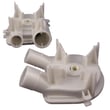
| Won’t drain | Drain pump or blockage | Washer drain pump WP3363394 |
| Agitates poorly or slips | Agitator drive parts | Agitator dog 80040 |
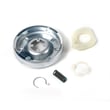
| Loud during spin, weak spin | Drive system wear | Clutch 285785 |
What to check before spending money
- Confirm the complaint: does it fill, agitate, drain, and spin?
- Rule out simple causes: unbalanced load, kinked drain hose, overloaded tub.
- Look for telltales: burning smell (drive), standing water (drain), intermittent operation (lid switch).
- Follow safe service practices: the manual warns against servicing unless you understand the procedure and have the skills.
Why it matters
A targeted repair on the Kenmore 11024632300 can restore full wash performance and extend the life of a durable platform. The best value comes from fixing one clear failure (like a lid switch or drain pump) instead of guessing and replacing multiple parts.
Last updated: February 2026
What is the average lifespan of a Kenmore washer?
A Kenmore washer typically lasts 10 to 15 years. For Kenmore model 11024632300, lifespan depends most on load size, cycle frequency, and basic care; following the maintenance and use guidance in the 11024632300 owner's manual helps you reach the upper end of that range.
Typical lifespan and what affects it
Most washers fall into a predictable wear pattern: performance is strong early on, then common wear parts start needing attention as the machine ages.
- Usage volume: multiple loads per day shortens lifespan faster than a few loads per week
- Overloading: strains the drive system and suspension
- Water quality: hard water speeds up mineral buildup and valve wear
- Drain habits: coins, lint, and small items can damage the drain pump
- Leveling: an unlevel washer increases vibration and accelerates wear
What “wearing out” usually looks like
These symptoms often show up before a washer fully fails:
- Won’t spin or stops mid-cycle
- Agitation is weak or inconsistent
- Loud grinding, squealing, or burning smell
- Leaks under the tub or at the pump
- Excessive vibration or “walking”
Common parts that can extend service life
If your 11024632300 is otherwise in good shape, replacing a few high-wear parts often restores normal washing and spinning.
| Symptom | Common suspect | Example part for this model |
|---|---|---|
| Won’t spin/drain | Lid switch or drain pump | Washer lid switch WP3949238 or washer drain pump WP3363394 |
| Won’t agitate | Motor coupling or agitator dogs | Washer motor coupling 285753A or agitator dog 80040 |
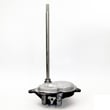
| Spins poorly, smells hot | Clutch or gear case wear | Clutch 285785 or gear case 3360629 |
Why it matters
A realistic lifespan helps you decide whether routine repairs (like a lid switch, drain pump, or motor coupling) make sense versus investing in a replacement. It also helps prevent secondary damage caused by running the washer while it is vibrating, leaking, or failing to drain.
Last updated: February 2026





