Error Codes


How to identify a Kenmore washer model?
Your Kenmore washer model number is printed on the appliance’s rating label. For Kenmore model 11016101691, you’ll typically find that label under the lid (top-load) or around the door opening (front-load); matching the full number ensures you get the correct washer parts.
Where to look on the washer
Check these common model-number label locations first:
- Top-load washers: under the lid, along the rim of the tub opening
- Front-load washers: inside the door opening, on the door frame
- Back panel: near the power cord entry or lower rear cabinet
- Side of cabinet: near the control console area
- Behind the control panel: occasionally on older designs
What the model number looks like (and why it matters)
Kenmore washer model numbers are often long and may start with 110 (as in 11016101691). Using the complete model number helps us match the correct drive system, water inlet parts, and drain components.
Quick ID checklist
- Write the model number exactly as shown (include all digits)
- Also record the serial number (helps with production variations)
- Take a clear photo of the label before ordering parts
- Use the model number when searching for parts like a coupling, drain pump, or gear case
Common parts that depend on the exact model
Even small model-number differences can change which parts fit. Here are examples of parts tied to the 11016101691 platform:
| Part type | What it affects | Example part on this model page |
|---|---|---|
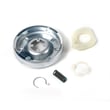
| Drive coupling | Agitation and spin drive connection | Coupling 285753A |
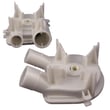
| Drain pump | Draining and spin performance | Washer drain pump WP3363394 |
| Gear case | Spin and agitation transmission | Gear case 3360629 |
Why it matters
The model number is the fastest way to avoid wrong-part returns. It lets us match the correct Kenmore washer parts list for your exact configuration, including the drive train, water fill system, and drain routing.
Last updated: February 2026
What is the average lifespan of a Kenmore washer?
A Kenmore washer typically lasts 10 to 15 years. For your Kenmore model 11016101691, reaching the high end of that range usually comes down to load size, leveling, and fixing early wear items (drain, drive, and suspension components) before they cause bigger damage.
Typical lifespan and what changes it
Most washers fail early from vibration, draining problems, or drive-system wear. These factors have the biggest impact:
- Overloading (stresses the drive system and tub support)
- Out-of-balance loads (wears suspension and can damage the gear case)
- Slow or incomplete draining (can lead to repeated strain and cycle issues)
- Hard water and detergent buildup (can contribute to leaks and poor performance)
- Small leaks left unchecked (can damage bearings, seals, and nearby components)
Parts that commonly affect longevity on this model
If you catch symptoms early, replacing a few common parts can extend service life.
| Symptom | Common cause | Example part for this model |
|---|---|---|
| Washer will not agitate or spin | Worn drive coupling | Coupling 285753A |
| Won’t drain or drains slowly | Clogged or failing pump | Washer drain pump WP3363394 |
| Loud grinding, oil leak, weak spin | Worn transmission/gear case | Gear case 3360629 |
| Bangs, walks, or shakes excessively | Weak suspension | Washer suspension spring WP63907 |
Maintenance that helps you reach 15 years
These habits reduce wear on the motor, gear case, clutch, and tub seals:
- Keep loads medium and balanced; mix items to avoid a heavy “lump” on one side
- Level the washer so all feet are firmly on the floor
- Use the right amount of HE detergent (too much can cause buildup and odors)
- Check hoses and the pump area if you notice slow draining or water under the washer
- Stop using the washer if you hear new grinding or repeated banging; address it early
Why it matters
A washer that is shaking, slipping in spin, or struggling to drain often wears out multiple components at once. Fixing the first failing part (like a coupling, drain pump, or suspension spring) helps prevent secondary damage to the gear case, seals, and tub support.
Last updated: February 2026
What replacement parts are most commonly needed for the 11016101691?
For Kenmore washer model 11016101691, the most commonly replaced parts are the ones that handle draining, agitation/spin drive, and lid safety. If your washer won’t drain, won’t spin, leaks, or makes grinding noises, these are the first parts we check and replace.
Commonly needed replacement parts
These parts are frequent fixes for everyday symptoms like no-drain, no-spin, leaking, or loud operation:
- Drain problems: washer drain pump WP3363394, drain hose WPW10358149
- No-agitate or no-spin: coupling 285753A, clutch 285785
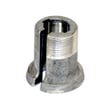
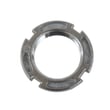
- Basket or drive issues: washer drive block WP389140, washer spanner nut WP21366
- Leaks: washer tub seal WP3359586, washer tub gasket W10814296
- Lid won’t lock or won’t run: switch 3949247V
Quick symptom-to-part guide
| Symptom | Most likely part(s) to check | What it affects |
|---|---|---|
| Won’t drain, water left in tub | Drain pump, drain hose | Water removal and end-of-cycle drain |
| Spins weakly or not at all | Coupling, clutch | Power transfer to the transmission and spin |
| Loud grinding, basket loose | Drive block, spanner nut | Basket drive and basket retention |
| Water leaking under washer | Tub seal, tub gasket | Sealing between tub components |
How we recommend choosing the right part
Because multiple issues can look similar, we recommend narrowing it down with a few quick checks before ordering:
- Listen: humming during drain often points to a blocked pump or hose.
- Look: leaks from the center or tub area often point to a tub seal or tub gasket.
- Test: if the motor runs but the washer does not agitate or spin, the coupling or clutch is a common fix.
- Inspect: worn drive block tabs or a loose spanner nut can cause poor spin and noise.
Why it matters
Replacing the correct wear part first saves time and prevents repeat failures. For example, a restricted drain hose can mimic a bad pump, and a worn coupling can mimic a gear case problem.
Last updated: March 2026