Owner’s manual



Do you have to hook up water to a LG steam dryer?
No. Your LG DLEX5680W dryer dries normally without a water hookup; water is only needed when you use steam features (such as Steam Fresh or steam options). If you never use steam, leaving the water supply disconnected will not affect standard drying performance.
When you do need water (steam features)
The DLEX5680W uses a steam feeder drawer for steam cycles. For steam to work correctly:
- Fill the steam feeder to the MAX line with water only
- Make sure the steam feeder is seated properly and the drawer is fully closed
- Restart the steam cycle if you get a water level message
- Do not use distilled water (the water level sensor may not work)
- Do not use hot water over 86°F (30°C)
For the exact steps and messages, follow the DLEX5680W owner's manual.
If you are seeing leaks or drips
Some moisture can be normal during steam operation (steam condensation), but steady leaking usually points to a connection or component issue.
Check these common causes:
- Loose water hose connection at the dryer or shutoff valve
- Worn or cracked rubber washer inside the hose fitting
- Kinked hose stressing the fitting
- Steam feeder overfilled or not seated correctly
- Water left around the steam feeder drawer area before starting
Quick symptom guide
| What you notice | Most likely cause | What to do |
|---|---|---|
| Drips right when steam starts | Steam condensation | Wait briefly; it typically stops |
| Water around drawer area | Steam feeder not seated or overfilled | Reseat feeder; fill to MAX only |
| Leak at hose connection | Loose fitting or bad washer | Tighten; replace washer |
Why it matters
Keeping the water hookup only when you need steam reduces leak risk and simplifies installation, while still letting you use steam cycles when you want wrinkle reduction and refresh performance.
Last updated: January 2026
How do you reset the flow sensor on a LG dryer?
On the LG DLEX5680W dryer, the Flow Sense indicator resets after you correct the airflow restriction it detected. Clean the lint filter and the entire exhaust vent path first, then power the dryer off and back on; the alert clears when airflow is back to normal (see the DLEX5680W owner's manual).
What “Flow Sense” is actually telling you
Flow Sense is a duct blockage sensing system. It monitors exhaust airflow and alerts you when household ductwork restrictions reduce airflow, which can cause long dry times and poor performance.
Quick checks we recommend (in order)
- Clean the lint screen before every load; confirm it is seated correctly.
- Inspect the lint screen housing and remove any lint buildup below the screen.
- Check the vent hose behind the dryer for kinks, crushing, or sagging.
- Verify the outside vent hood opens freely and is not blocked by lint or debris.
- If you have a long vent run, clean the full duct to the exterior (not just the first few feet).
Power reset steps (safe and effective)
- Turn the dryer off.
- Unplug the power cord (or switch the breaker off).
- Wait 5 minutes.
- Restore power and run a short timed dry cycle to confirm normal airflow.
When the alert keeps coming back
If Flow Sense returns quickly after cleaning, the most common causes are a hidden blockage in the wall duct, an overly long vent run, or a crushed flex vent.
| What you notice | Most likely cause | What to do next |
|---|---|---|
| Long dry times, hot cabinet | Restricted venting | Clean/shorten venting, replace crushed hose |
| Alert appears soon after start | Severe blockage | Check exterior hood and wall duct immediately |
| Clothes dry unevenly | Airflow plus load issues | Reduce load size; avoid over-drying |
Why it matters
Restricted airflow makes the dryer work harder, increases cycle time, and can overheat components like thermostats and the heating system.
Related help: LG dryer error codes
Last updated: January 2026
What is the most common problem with LG dryers?
The most common LG dryer issue we see on the LG DLEX5680W is poor drying or no heat, usually tied to restricted airflow (lint filter or venting) or a heating and temperature-sensing problem. Noisy tumbling from worn drum support parts is another frequent complaint.
Most common symptoms and what they usually point to
- Clothes take too long to dry: lint filter needs cleaning, exhaust duct is blocked/dirty, or the duct run is too long
- Dryer does not heat: power supply issue (electric), or a failed heating or safety temperature component
- Error code tE1 or tE2: thermistor (temperature sensor) problem
- Rumbling, thumping, squealing: worn rollers, idler pulley, or a loose/worn belt
- Lint on clothes: lint filter not cleaned properly
For model-specific operating and troubleshooting steps, follow the DLEX5680W owner's manual.
Quick checks we recommend first (fast, no parts)
- Clean the lint filter before every load and make sure it seats fully.
- Inspect the vent path: crushed flex duct, heavy lint buildup, or a long run can slow drying.
- Confirm the dryer is getting the correct power (many electric dryers can run but not heat if one leg of power is missing).
- If the display shows tE1/tE2, focus on the temperature sensor circuit.
Parts that commonly fix these problems on DLEX5680W
| Symptom | Common part to check | Why it matters |
|---|---|---|
| No heat or overheating shutdown | Dryer high-limit thermostat 6931EL3003D | Opens if temperatures get unsafe, often triggered by poor airflow |
| tE1/tE2 error | Dryer thermistor AGM30045804 | Feeds temperature data to the control for safe, accurate heating |
| Squeal or drum not turning | Dryer drum belt 4400EL2001F | Drives the drum; wear can cause slipping or noise |
| Rumbling/thumping | Dryer drum support roller 4581EL2002H | Supports the drum; flat spots cause vibration and noise |
Why it matters
Airflow problems can mimic “bad heat” and also overheat the dryer, which can trip thermostats and increase drying time. Fixing venting and lint buildup first prevents repeat failures and improves efficiency.
You can also use our LG dryer error codes guide to match symptoms to codes and next steps.
Last updated: January 2026
Why is my LG steam dryer not drying?
If your LG DLEX5680W steam dryer runs but clothes stay damp, the most common causes are restricted airflow (lint filter or venting), a cycle or load issue, or a heating/temperature control problem. Start with airflow and steam-feeder checks, then move to heat diagnostics.
Quick checks that fix most “not drying” complaints
- Clean the lint filter and confirm the dryer is never run without it (see DLEX5680W owner's manual).
- Check the exhaust vent for kinks, crushing, lint buildup, or a blocked exterior hood.
- Try a timed dry cycle to see if drying improves (helps separate sensor issues from airflow/heat issues).
- Reduce load size; bulky or mixed fabrics dry unevenly.
- Confirm the correct heat setting is selected for the fabric.
Steam-cycle specific items (easy to miss)
Steam features can fail or stop early if the steam feeder setup is wrong.
- Fill the steam feeder with water to the MAX line.
- Make sure the steam feeder is seated correctly and the drawer is fully closed.
- Use water only; do not use distilled water (the water level sensor may not read it correctly).
- Turn the dryer off, then restart the Steam cycle after correcting the feeder.
When the dryer tumbles but does not heat
On DLEX5680W, “no heat” points to the heating circuit or temperature sensing.
| Symptom | Most likely area to check | Common related part |
|---|---|---|
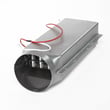
| Runs, no heat at all | Heating system or safety thermostat | LG dryer heating element 5301EL1001H |
| Stops heating mid-cycle | Overheating from poor airflow | Venting, lint buildup |
| Error code tE1/tE2 | Temperature sensing | Dryer thermistor AGM30045804 |
Why it matters
Poor airflow is the #1 reason dryers do not dry; it also overheats the heater housing and can trip high-limit thermostats. Fixing venting and lint buildup first prevents repeat failures and shortens dry times.
Last updated: January 2026