Owner’s manual
 Error Codes


How to tell cubic feet of Kenmore refrigerator by model number?
For Kenmore model 59665232404, the model number alone usually does not state the exact cubic-foot capacity. The most reliable way is to look up the capacity in the specifications section of the 59665232404 owner's manual, or estimate it by measuring the usable interior space and converting cubic inches to cubic feet.
Fast ways to find the cubic feet
- Check the manual specs: Look for “capacity” or “volume” in the specifications section of the 59665232404 owner's manual.
- Search the rating label: Many refrigerators list capacity on the model and serial tag (often inside the fresh food section on a side wall or near the crisper area).
- Measure and calculate (good estimate): Measure the usable interior (not the outside cabinet).
How to estimate cubic feet by measuring
- Empty the section you are measuring (fresh food and freezer are often listed separately).
- Measure width x depth x height in inches for the usable space.
- Multiply to get cubic inches.
- Divide by 1,728 to convert to cubic feet.
- Tip: Subtract obvious unusable areas (large air channels, thick interior housings) for a closer estimate.
Quick conversion table
| What you have | What to do | Result |
|---|---|---|
| Inches (W x D x H) | Multiply | Cubic inches |
| Cubic inches | Divide by 1,728 | Cubic feet |
| Fresh food + freezer | Add both sections | Total capacity estimate |
Why it matters
Capacity helps you compare replacement refrigerators, choose the right storage accessories, and confirm whether cooling complaints are “space and airflow” issues (overpacking can block vents and reduce performance).
If you are troubleshooting cooling at the same time, checking airflow components like the evaporator fan system can be relevant; our DIY guide how to fix your evaporator cooling fan covers common symptoms and checks.
Last updated: January 2026
Why is my Kenmore refrigerator leaking underneath?
Water under a Kenmore 59665232404 bottom-mount refrigerator is usually caused by defrost water not reaching the drain pan, most often from a clogged or frozen defrost drain. Clearing the drain path and confirming the drain pan is positioned correctly typically stops the leak.
Quick checks we recommend first
- Unplug the refrigerator before removing panels or working near wiring.
- Look for ice buildup on the freezer floor or under the evaporator cover; this points to a frozen/clogged defrost drain.
- Check the drain pan underneath for cracks, shifting, or overflow.
- Confirm doors close fully; warm air can increase frost and overwhelm the drain system.
- Wipe up water and monitor where it returns (front center, left, right, or back).
How to clear a clogged or frozen defrost drain
- Remove food and bins as needed to access the drain area (commonly at the back bottom inside the refrigerator or beneath the freezer evaporator cover).
- Melt any visible ice with warm water (not boiling) and towels.
- Flush the drain hole with warm water using a turkey baster or squeeze bottle until it flows freely to the drain pan.
- Clear the drain tube if it is restricted; replacing a damaged tube is often the cleanest fix.
If the drain tube is split, loose, or missing its tip, replacing it can prevent repeat leaks: refrigerator drain tube W10619951.
What the symptoms usually mean
| What you see | Most likely cause | What to do |
|---|---|---|
| Water under crisper area | Drain backing up in fresh food section | Flush drain hole and tube |
| Ice sheet on freezer floor | Frozen defrost drain | Defrost, then flush drain |
| Water only after defrost cycles | Drain pan overflow or drain restriction | Check pan position, clear drain |
| Drips near door/front | Door not sealing or left ajar | Clean gasket surfaces, reorganize shelves |
Why it matters
A blocked defrost drain can keep returning, leading to recurring puddles, ice buildup, and temperature swings. The manual also notes that water running into the drain pan during defrost is normal, but it should stay contained in the pan.
For model-specific access points and panel removal guidance, use the 59665232404 owner's manual.
Last updated: January 2026
How to tell if a Kenmore refrigerator compressor is bad?
If your Kenmore bottom-mount refrigerator model 59665232404 is not cooling well, runs almost constantly, trips the breaker, or makes new loud mechanical noises, the compressor or its start components are likely failing. First rule out normal long run times and power issues listed in the 59665232404 owner's manual.
Quick checks we recommend first
- Verify the outlet works by plugging in a lamp (a dead outlet can mimic a “bad compressor”).
- Reset a tripped breaker once; repeated trips point to an electrical or compressor-start problem.
- Confirm the temperature controls are turned on and not set to “off”.
- If it is a new install or was unplugged, allow 24 hours to reach full cooling.
- Listen for the compressor area: steady hum is normal; repeated clicking every few minutes is not.
What “normal” compressor behavior looks like
Your refrigerator can run longer than older models because it uses a high-efficiency compressor and fans. It may run even longer when the room is warm, the doors are opened often, or you add a large load of food.
| Symptom | Often normal | More likely a problem |
|---|---|---|
| Long run times | Warm kitchen, frequent door openings | Runs nonstop and temps stay unsafe |
| Sounds | Light pulsating or occasional hissing | Loud buzzing, repeated clicking, hard knocking |
| Heat | Warm around compressor area | Extremely hot plus breaker trips |
Parts that can mimic a bad compressor
A compressor may be fine but unable to start or run correctly if a related component fails.
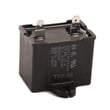
- Start/run components: a weak capacitor can prevent the compressor from starting; see refrigerator run capacitor WPW10662129.
- Airflow problems: a failed evaporator fan motor can cause poor cooling even with a running compressor; see refrigerator evaporator fan motor WPW10128551.
- Control issues: a failing board can cause odd cycling or no cooling commands; see refrigerator electronic control board WPW10503278.
Why it matters
A truly failing compressor typically leads to unsafe food temperatures and can overload the electrical circuit. Checking power, controls, airflow, and start components first prevents unnecessary compressor replacement.
Last updated: January 2026