Owner’s manual
 Error Codes


Why is my Kenmore refrigerator leaking underneath?
On Kenmore model 79571603010, water leaking underneath is usually caused by defrost water missing the drain path (a clogged or frozen defrost drain) or by a water supply connection that’s dripping and running down to the floor. Use the steps below to pinpoint the source quickly; see the 79571603010 owner's manual for cleaning and water line guidance.
- Look for a sheet of ice or standing water on the freezer floor; that points to a defrost drain issue.
- Check the drain pan underneath for cracks, misalignment, or overflow.
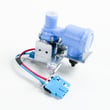
- Inspect the 1/4-inch water line and shutoff valve connections for slow drips.
- Confirm the icemaker is not overfilling or leaking at the fill tube.
- Make sure the refrigerator is level front-to-back and side-to-side so water flows to the drain.
When the defrost drain clogs, meltwater can back up, freeze, then spill out and run under the cabinet.
What to do
- Unplug the refrigerator.
- Remove the freezer drawer/baskets as needed to access the drain area.
- Melt any ice with warm water (not boiling) and clear the drain opening with a flexible cleaner.
- Flush the drain with warm water until it flows freely to the drain pan.
The manual’s water line section emphasizes tightening any connections that leak and checking for dripping after turning the water on.
| Leak location | What you’ll usually see | Best next step |
|---|---|---|
| Behind fridge at tubing/fitting | Drips on the floor near the wall | Tighten compression nut; re-seat tubing |
| Under fridge near front | Water trails from center | Check drain pan and defrost drain |
| Freezer/ice area | Ice buildup, occasional puddles | Check fill tube and icemaker area |
If you confirm the leak is tied to defrost drainage or door sealing, these model-matched parts are commonly related:
- Refrigerator drain tube 5251JA3003D (helps route defrost water)
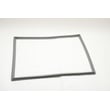
- Refrigerator door gasket MDS64172919 (poor sealing can increase frost and defrost water)
Leaks under a bottom-mount refrigerator often start small, but they can lead to recurring ice buildup, poor cooling airflow, and repeated puddles. Fixing the drain path or a slow water-line drip stops the problem at the source.
Last updated: January 2026
Why is there ice on the bottom of my freezer side by side?
Ice building up on the freezer floor is almost always caused by a defrost drain that is partially or fully clogged, so meltwater cannot flow to the drain pan and instead refreezes at the bottom. On Kenmore model 79571603010, clearing the drain and restoring proper door sealing stops the repeat icing.
- Defrost drain hole or drain tube blocked by ice, food debris, or sludge
- Drain tube grommet restricted, slowing water flow
- Door not closing fully, letting humid air in (creates extra frost that overwhelms the drain)
- Freezer opened frequently, adding moisture that later freezes
- Items in the freezer preventing the drawer or door from sealing
- Unplug the refrigerator and remove food from the freezer bottom.
- Melt the ice on the freezer floor using warm towels or a hair dryer on low (keep heat moving; do not overheat plastic).
- Flush the drain with hot water; a common mix is 1 teaspoon baking soda in 2 cups hot water to help break up residue.
- If water backs up, repeat flushes until it drains freely.
- Check the drain outlet and tube for restriction; replace the drain tube if it is split, hardened, or repeatedly clogs.
If you need the removal steps for bins and freezer components to access the drain area, use the 79571603010 owner’s manual.
If the drain tube is damaged or keeps clogging, replacing it is a reliable long-term fix.
| Symptom | What it points to | What we typically replace |
|---|---|---|
| Ice sheet on freezer floor | Drain not flowing | Refrigerator drain tube 5251JA3003D |
| Frost buildup plus poor closing | Air leak at door | Door gasket (inspect for gaps/tears) |
A clogged drain forces defrost water to refreeze inside the freezer, which can lead to recurring ice buildup, drawer operation problems, and temperature swings that affect ice maker performance.
Last updated: January 2026
What are the common problems with Kenmore Elite refrigerators?
Common problems we see on Kenmore Elite refrigerators like model 79571603010 include weak or no cooling, frost or ice buildup, water leaks, and unusual noises. Many issues trace back to airflow restrictions (dirty condenser coils), door sealing problems, or fan and defrost-system faults; our 79571603010 owner's manual troubleshooting section helps narrow it down fast.
- Not cooling or warm temperatures: dirty condenser coils, evaporator fan not running, blocked vents, or a sealed-system issue.
- Compressor seems to run too much: frequent door openings, warm room conditions, or airflow problems; the manual notes high-efficiency compressors can run longer than older models.
- Frost/ice buildup: door gasket not sealing, door left ajar, or a defrost sensor/heater problem.
- Water under the refrigerator or in the freezer: a clogged/iced drain path or a damaged drain tube.
- Lights not working or acting odd: door open too long (some models shut lights off after several minutes) or a failed door switch.
- Clean the condenser coils (a top cause of poor cooling and long run times).
- Confirm the doors seal and close easily; the cabinet should be slightly higher in front to help door closing.
- Verify airflow: do not block vents with food packages.
- Check room temperature: the manual recommends installing the refrigerator where ambient temperature is 55°F to 110°F.
- Look for drain issues if you see puddles or ice on the freezer floor.
| Symptom | Likely area | Example part for 79571603010 |
|---|---|---|
| Interior lights do not respond to door | Door sensing | Refrigerator door switch 6600JB1010A |
| Water leaking, ice on freezer floor | Defrost drain path | Refrigerator drain tube 5251JA3003D |
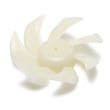
| Warm fridge/freezer, noisy airflow | Evaporator airflow | Lg refrigerator evaporator fan motor 4681JB1027C |
Cooling, defrosting, and airflow work as a system. A simple maintenance issue (like dirty condenser coils or a poor door seal) can mimic major failures by forcing the compressor to run longer and letting moisture turn into frost.
Last updated: January 2026