Owner’s manual


Can you replace parts in a dishwasher?
Yes. On the Amana ADB1400AGW3 dishwasher, many common components are designed to be serviced and replaced, as long as you disconnect electrical power and shut off the water supply first. Use the ADB1400AGW3 owner's manual for safety steps and access-panel removal guidance before starting.
What we recommend before you start
- Turn off power at the breaker (do not rely on the control panel).
- Shut off the water supply valve under the sink.
- Protect the floor with a towel or shallow pan for residual water.
- Take photos of wire and hose routing before disconnecting anything.
- Use the right tools (nut driver, Torx driver, pliers) to avoid stripped screws.
Common dishwasher parts you can replace
On ADB1400AGW3, DIY-friendly repairs often involve parts that are accessible from the toe panel or inside the tub, such as:
- Drain components (for “won’t drain” symptoms)
- Water fill components (for “won’t fill” symptoms)
- Wash system items (spray arms, filters)
- Door latch and door switch components
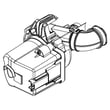
If your dishwasher is not draining, a frequent repair is replacing the drain pump, such as the dishwasher drain pump W10876537.
Basic replacement workflow (applies to most repairs)
- Disconnect power and shut off water.
- Remove the toe panel or access panel as needed.
- Confirm the failure (clog, leak, broken connector, seized motor).
- Swap the part, transferring any seals or clamps as required.
- Reassemble, restore water and power, then run a short cycle and check for leaks.
Quick decision guide
| What you’re seeing | Likely area to inspect | Example compatible part for ADB1400AGW3 |
|---|---|---|
| Standing water in tub | Drain path, drain pump | Dishwasher Drain Pump W10876537 |
| Not filling with water | Water inlet valve, float system | Valve-water W11175771 |
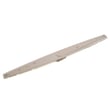
| Poor cleaning | Spray arms, filters | Dishwasher Spray Arm WPW10498900 |
Why it matters
Replacing a failed part can restore cleaning performance, prevent leaks, and extend the life of your ADB1400AGW3 without replacing the entire dishwasher.
Last updated: January 2026
How long does an Amana dishwasher cycle last?
On the Amana dishwasher model ADB1400AGW3, a typical wash cycle commonly runs about 2 to 5 hours. Normal-type cycles are often around 2 to 3 hours, while heavier cycles and options (heated wash, high temp, extra dry) can push total time past 3.5 hours. See the ADB1400AGW3 owner's manual for cycle and option details.
What makes the cycle longer or shorter?
Cycle time on ADB1400AGW3 is designed to adjust for cleaning performance and energy use. Expect longer times when the dishwasher needs to heat water or senses heavier soil.
- Incoming water temperature: cooler water increases heat time
- Selected options: heated wash and drying options add time
- Soil level: heavier soil can extend wash and rinse portions
- First run after install: some models run longer initially to calibrate sensors
- Loading and detergent: poor loading can lead to longer, less effective washing
Quick time guide (typical ranges)
| Cycle type (typical) | What it’s for | Typical total time |
|---|---|---|
| Normal / everyday | Mixed loads, average soil | ~2 to 3 hours |
| Heavy / pots & pans | Baked-on soil, cookware | 3+ hours |
| Short / quick (if equipped) | Light soil, small loads | Often under 2 hours |
Why it matters
Longer cycle times are normal on modern, energy-efficient dishwashers like ADB1400AGW3. The machine often washes longer with a low-energy motor and uses added time (instead of extra water and electricity) to deliver better cleaning.
If your cycles suddenly become much longer than usual, check basics first: hot water supply, filter cleanliness, and whether extra options are turned on.
Last updated: January 2026
Is there a reset button on an Amana dishwasher?
Amana dishwashers such as model ADB1400AGW3 typically do not have a dedicated “reset” button. Instead, we reset the control by canceling the cycle from the keypad or by doing a brief power reset at the breaker, depending on what the dishwasher is doing.
Reset options that work on ADB1400AGW3
- Cancel/Drain reset (best first step): Press Cancel/Drain and let the dishwasher pump out.
- Power reset: Turn the dishwasher’s circuit breaker OFF for 1 minute, then turn it back ON.
- Start/Resume reset (if it won’t start): Press Start/Resume and close the door within 3 seconds (a common reason the Start/Resume light flashes).
For model-specific control and operation details, use the ADB1400AGW3 owner’s manual.
What to check if “resetting” doesn’t fix it
Many “needs a reset” complaints are actually a door-latch, fill, or drain issue. Check these basics:
- Door closes fully and latches; no rack or dishes blocking the door
- House breaker is on; outlet has power (if corded)
- Water supply valve under the sink is open
- Drain hose is not kinked or crushed
- Filter area is not packed with debris
Quick symptom-to-next-step table
| What it’s doing | Most likely next step | Why |
|---|---|---|
| Won’t start, lights on | Verify door is latched; try Cancel/Drain | The control won’t run with an unlatched door |
| Won’t fill | Check water supply; consider inlet valve diagnosis | No water in means no wash action |
| Won’t drain | Check drain path; consider drain pump diagnosis | Standing water stops cycles and causes odors |
When a part is the real fix
If the dishwasher repeatedly won’t drain even after clearing the drain path, the drain pump can be the failure point on this model. A compatible replacement is the dishwasher drain pump W10876537.
Why it matters
A proper reset clears a stuck cycle or minor control glitch, but it won’t overcome a mechanical problem (like a failed drain pump, a water inlet issue, or a door latch problem). Using the right reset method helps you avoid repeat shutdowns and protects the control from unnecessary button presses.
Last updated: January 2026
What is the thing at the bottom of my dishwasher?
In an Amana dishwasher model ADB1400AGW3, the most common “thing” you’ll notice at the bottom is the filter and sump area (where water collects and is pumped), plus the lower spray arm. Some models also have a visible heating element, but what you see depends on the exact tub design.
What you might be seeing in ADB1400AGW3
These are the typical components customers point to at the bottom of the tub:
- Lower spray arm: spins and sprays water upward to clean dishes.
- Filter area: traps food particles to help prevent redeposit on dishes.
- Sump: the low basin where water gathers before the pump circulates or drains it.
- Overfill float: a small dome or cap that moves up if water level gets too high.
- Heating element (if equipped/visible): helps heat wash water and improve drying.
For cleaning and filter removal steps specific to your dishwasher, use the ADB1400AGW3 owner’s manual.
Quick ID guide (what it looks like vs. what it does)
| If it looks like... | It is usually... | What it does |
|---|---|---|
| A plastic arm with holes | Lower spray arm | Distributes wash water |
| A round twist-lock screen/cup | Filter assembly | Catches food and debris |
| A small plastic “cap” that lifts | Float | Helps prevent overfilling |
| A ring/loop of metal (some models) | Heating element | Heats water and aids drying |
If your “thing” is cracked, clogged, or not spinning, a common replacement is the dishwasher spray arm WPW10498900.
Why it matters
Bottom-of-tub parts directly affect cleaning and draining. A clogged filter can cause poor wash results, and a blocked spray arm can leave dishes dirty even when the cycle completes.
Helpful maintenance tips
- Rinse the filter under running water if you see buildup.
- Clear spray arm holes with a toothpick if jets look plugged.
- Make sure the float moves freely up and down.
- Avoid letting labels, glass shards, or food scraps collect in the sump.
Last updated: January 2026
Why is there water in the bottom of my Amana dishwasher?
A small amount of water in the bottom of your Amana ADB1400AGW3 dishwasher is often normal because the sump area holds water to keep seals from drying out. If you have standing water that covers the filter area or smells bad, the dishwasher is likely not draining fully.
What to check first (fast, no tools)
- Cancel the cycle and let it drain; then open the door and check the water level.
- Look for food debris around the filter area and sump.
- Check the sink drain for slow draining (a clogged sink drain can back up into the dishwasher).
- Run the garbage disposer (if you have one) and re-test.
- Verify the drain hose is not kinked behind the dishwasher.
Drain hose and plumbing setup (common cause)
Improper drain routing can let water flow back into the tub after the pump stops.
Use this quick checklist (matches typical requirements shown in the ADB1400AGW3 owner's manual):
- Drain hose connects to a waste tee or disposer inlet above the sink drain trap.
- Drain hose is routed with a high loop under the countertop or through an air gap.
- Disposer knockout plug is removed (new disposer installs often miss this step).
| Symptom | Most likely cause | What to do |
|---|---|---|
| Water returns hours after a cycle | Backflow from sink/disposer | Fix high loop/air gap, clear sink drain |
| Water stays immediately after drain | Partial clog or weak drain | Clean filter area; inspect hose and pump |
| Bad odor with water present | Debris trapped in sump/filter | Clean filters and run a cleaning cycle |
When it points to a part
If the hose routing and sink plumbing are correct and the dishwasher still leaves water, the drain pump or drain path may be restricted.
- Inspect for obstructions at the pump inlet and in the drain hose.
- If the pump hums but drains slowly or not at all, the drain pump can be the issue.
Helpful model-matched parts to consider:
Why it matters
Water left in the tub can cause odors, poor cleaning, and can eventually lead to leaks if debris prevents proper sealing or draining.
Last updated: January 2026