Owner’s manual
 Error Codes

What is the average lifespan of a Kenmore Elite refrigerator?
Most Kenmore Elite refrigerators, including Kenmore model 79571014010, typically last 10 to 15 years. With consistent maintenance and stable operating conditions, it’s common to see 15 years, and some units reach 20 years when major sealed-system repairs (like a compressor replacement) are avoided.
Typical lifespan and what usually ends a refrigerator’s life
A refrigerator can keep running for years with minor part replacements, but the most expensive failures tend to be in the sealed cooling system.
- 10 to 15 years is the normal service life for modern refrigerators
- 15 to 20 years is achievable with excellent maintenance and fewer heavy repairs
- Compressor or sealed-system issues often drive the replace-versus-repair decision
- Defrost system problems can shorten life if they cause repeated icing and warm temps
- Airflow and fan failures can stress the compressor by forcing longer run times
Maintenance that helps you reach the high end of the range
Use these habits to reduce compressor run time, prevent overheating, and keep temperatures stable.
- Clean condenser coils and keep airflow clear around the cabinet
- Keep door gaskets clean so doors seal tightly
- Set temperatures to typical targets (about 37°F fresh food, 0°F freezer)
- Don’t block interior vents; airflow matters in bottom-mount designs
- Replace worn airflow parts promptly (for example, a noisy or stalled fan)
Quick “repair vs. replace” guide
| Situation | What it usually means | Common next step |
|---|---|---|
| Unit is under ~10 years and cools inconsistently | Often a fixable airflow/defrost issue | Diagnose fans, sensors, defrost heater |
| Unit is 10 to 15 years and needs a major cooling repair | Costs can approach replacement value | Compare repair estimate to replacement |
| Unit is 15+ years with repeated warm-temp events | Multiple systems may be wearing out | Replace or repair only if low-cost |
Why it matters
Knowing the expected lifespan helps us plan maintenance and make smarter repair decisions. Spending on a fan motor, sensor, or heater can extend life; spending on a compressor often changes the value equation.
For model-specific care and cleaning guidance, use the 79571014010 owner’s manual.
Last updated: January 2026
Can I adjust the height of my refrigerator?
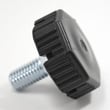
Yes. On the Kenmore 79571014010 bottom-mount refrigerator, we adjust the height by turning the front leveling legs (and, on some installations, adjusting the rear rollers) so the cabinet sits level and the doors seal correctly. The exact adjustment points are shown in the 79571014010 owner's manual.
How to adjust the height (leveling) safely
- Remove the base grille or kick plate to access the leveling legs.
- Have a helper gently tip the refrigerator back slightly to reduce weight on the front legs.
- Turn the leveling legs to raise or lower the front corners (small turns make a big difference).
- Recheck door alignment and door closing after each adjustment.
- Make sure the refrigerator does not rock when you press on opposite corners.
- Reinstall the kick plate when finished.
Quick checks after leveling
A properly leveled refrigerator should meet these basics:
| Check | What you want to see | What it prevents |
|---|---|---|
| Cabinet stability | No rocking or wobble | Vibration noise, shifting |
| Door swing | Doors close smoothly and stay closed | Warm air leaks, frost |
| Gasket seal | Even contact all the way around | Moisture, temperature swings |
| Drawer operation | Freezer drawer glides evenly | Rail wear, binding |
Why it matters
Leveling is not just cosmetic. When the refrigerator is slightly out of level, the doors can sit unevenly and leak air, which makes the compressor run longer, can cause moisture or frost issues, and can reduce cooling performance.
When to look for a related problem
If the refrigerator is level but you still have door closing or sealing issues, we typically check:
- Items in door bins or shelves interfering with closure
- A torn or warped door gasket
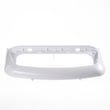
- A damaged stop or hinge area (for example, a worn refrigerator door stop 4620JJ2009A)
Last updated: January 2026
What are the common problems with Kenmore Elite refrigerators?
Kenmore Elite refrigerators (including Kenmore model 79571014010) most often have cooling problems, ice maker or water dispenser issues, frost buildup from defrost or door-seal problems, and unusual fan or compressor noises. We use the symptoms to narrow the cause, then confirm with the checks and test procedures in the 79571014010 owner's manual.
Most common symptoms and what usually causes them
- Not cooling or warm temperatures: dirty condenser coils, failed evaporator fan motor, airflow blockage, or sealed-system/compressor trouble
- Frost buildup or ice on the back wall: defrost heater or sensor issue, door not sealing, frequent door openings
- Water under the refrigerator or in the freezer: clogged/iced defrost drain, cracked drain tube, cabinet not level
- Ice maker not making ice: freezer too warm, water supply restriction, ice maker assembly failure
- Lights not working when the door opens: failed door switch
Quick checks we recommend before replacing parts
- Set temperatures to typical targets: 0°F freezer and 37°F fresh food.
- Make sure vents are not blocked by food packages.
- Clean condenser coils and confirm the condenser fan is running.
- Check door gaskets for gaps, tears, or areas not sealing.
- If you see water or ice buildup, inspect and clear the defrost drain path.
Parts that commonly fix these issues on model 79571014010
| Symptom | Common suspect part | What it affects |
|---|---|---|
| Warm fridge section | Lg refrigerator evaporator fan motor 4681JB1027C | Circulates cold air through the fresh food compartment |
| Frost buildup | Defrost heater or sensor | Melts frost off the evaporator so airflow stays strong |
| Water puddles | Refrigerator drain tube 5251JA3003D | Routes defrost water to the drain pan |
| Door light issues | Refrigerator door switch 6600JB1010A | Turns lights on and signals the control when the door opens |
| No ice | Ice maker assembly (AEQ72909602) - refrigerator ice maker part by lg AEQ72909602 | Harvests and fills ice cubes |
Why it matters
Cooling, defrost, and airflow problems can quickly lead to food spoilage and repeated icing that strains the evaporator fan and compressor. Catching the root cause early usually prevents bigger, more expensive repairs.
Helpful model-family guidance
If your display shows an error code, use Kenmore 795 model bottom freezer refrigerator error codes to match the code to the most likely failure area (fan, sensor, defrost, or communication).
Last updated: January 2026