Installation guide
 Owner’s manual




What is the life expectancy of a Maytag dryer?
A Maytag electric dryer like model MEDB855DC4 typically lasts 10 to 15 years. Consistent airflow, routine lint removal, and avoiding chronic overheating are the biggest factors that keep the motor, heater, and drum support parts running longer.
- Vent airflow: long or restricted venting increases heat and run time.
- Lint control: lint buildup inside the cabinet and vent raises operating temperature.
- Load habits: frequent overloading strains the drum, belt, and rollers.
- Heat stress: repeated overheating shortens the life of thermostats, fuses, and the heating element.
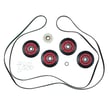
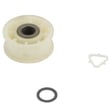
- Wear parts: rollers and idler components eventually flatten or squeal.
Use the care steps in the MEDB855DC4 owner's manual.
| Task | How often | Why it matters |
|---|---|---|
| Clean lint screen | Every load | Keeps airflow strong and drying times normal |
| Check venting for good airflow | Monthly | Prevents long dry times and overheating |
| Remove lint from exhaust vent run | Every 2 years (or more with heavy use) | Reduces heat buildup and wear |
| Cabinet lint cleaning (service) | Every 2 years | Protects motor and heater area from lint accumulation |
If your dryer is under 10 years old and showing these symptoms, fixing airflow or a worn part often restores normal performance:
- Takes much longer to dry than it used to
- Runs hot or shuts off mid-cycle
- Squealing, thumping, or rumbling while the drum turns
- No heat or intermittent heat
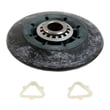
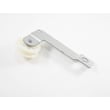
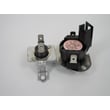
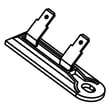
Common wear items for this model include the dryer drum support roller WPW10314173 and the heater circuit components.
A dryer that runs with poor airflow can overheat and cycle longer, which accelerates wear on the heating element, thermal fuse, thermistor, and drum support system. Keeping venting short and clear is the simplest way to reach the 10 to 15 year range.
Last updated: February 2026
What is the capacity of the Maytag dryer MEDB855DC4?
The Maytag MEDB855DC4 electric dryer has a large-capacity drum; for this model family, capacity is typically listed at about 8.8 cu. ft. For the exact published capacity tied to your unit’s configuration, confirm it in the MEDB855DC4 owner's manual.
Capacity is usually shown in the specifications section of the manual or on the model and serial tag.
- Check the specifications pages in the MEDB855DC4 owner's manual
- Look for the model and serial label (commonly inside the door opening)
- Match the full model number MEDB855DC4 exactly (suffixes matter)
- If you are comparing dryers, use capacity plus venting and cycle options, not capacity alone
A larger drum helps bulky items tumble more freely, which supports better airflow and more even drying.
| Load type | What to expect in an 8.8 cu. ft. class dryer | Tip |
|---|---|---|
| Towels | Handles large loads well | Avoid packing tight; leave room to tumble |
| Comforter | Often fits most queen comforters | Use a bulky/bedding cycle if available |
| Mixed loads | Better separation and fewer wrinkles | Sort by fabric weight for best results |
Capacity affects drying performance, cycle time, and energy use. Even with a large drum, restricted airflow can cause long dry times; keeping the lint screen and venting clean is key (see maintenance guidance in the MEDB855DC4 owner's manual).
Last updated: February 2026
What is the most common problem with the Maytag dryer?
On the Maytag MEDB855DC4 electric dryer, the most common customer complaint is long dry times or “no heat”, and the first place we check is airflow (lint screen and venting). Poor venting reduces performance and can also trigger heat-related shutdowns.
- Clean the lint screen before each load (or after each load) and confirm it is not coated with residue.
- Inspect the vent hose for crushing, kinks, or excessive length.
- Confirm you are using a 4 in. (102 mm) heavy metal vent (not plastic or foil).
- Check the outside exhaust hood for lint buildup and a stuck flap.
- Make sure the dryer is level; tumbling and sensor cycles can act up when it is not.
For model-specific operating and venting requirements, follow the MEDB855DC4 owner’s manual.
If airflow is good and the dryer runs but does not heat, these are common electric-dryer suspects:
- Heating circuit issue (heater, wiring, or connections)
- Blown thermal safety device after overheating
- Temperature sensing problem
- House power issue (electric dryers often need two breakers/fuses)
| Symptom | Common check | Related part for this model |
|---|---|---|
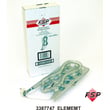
| Runs, no heat | Heater continuity, burnt terminals | Dryer heating element WP3387747 |
| Runs, no heat (after overheating) | Thermal fuse continuity | Thermal fuse W10909685 |
| Overheats or cycles heat oddly | Thermostat operation | Dryer high-limit thermostat WP8557403 |
Airflow problems make the dryer work harder, increase dry time, and can overheat the heater housing. Keeping the vent system clear (including periodic full-duct cleaning) helps protect key parts like the heating element, thermostats, and thermal fuse.
Last updated: February 2026