
How many BTUs does a 3 ton AC unit have?
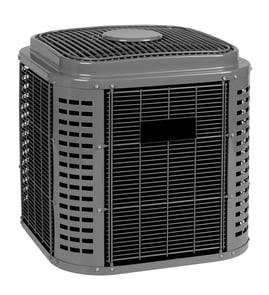
A 3-ton central air conditioner has 36,000 BTUs per hour of cooling capacity (because 1 ton = 12,000 BTU/hr). For a Nordyne S3QA036KA, the “036” in the model number commonly indicates a nominal 36,000 BTU/hr class unit.
Quick conversion (tons to BTU/hr)
- 1 ton = 12,000 BTU/hr
- 2 ton = 24,000 BTU/hr
- 2.5 ton = 30,000 BTU/hr
- 3 ton = 36,000 BTU/hr
- 3.5 ton = 42,000 BTU/hr
- 4 ton = 48,000 BTU/hr
| Nominal size | Cooling capacity |
|---|---|
| 3 ton | 36,000 BTU/hr |
| 36,000 BTU/hr | 3 ton |
Why BTU/hr matters for your home
Correct sizing helps your system cool and dehumidify properly. A unit that is too large can short-cycle (turn on and off frequently), while a unit that is too small can run constantly and still struggle on hot days.
What to check on the unit for the exact rating
Even though “3 ton = 36,000 BTU/hr” is the standard, the exact rated capacity can vary slightly by outdoor temperature, indoor conditions, and the matched indoor coil.
Check these items:
- The data plate on the outdoor condenser for capacity and electrical specs
- The AHRI match information (outdoor unit + indoor coil pairing)
- The indoor coil and blower setup (airflow affects delivered capacity)
- Duct condition and insulation (losses can reduce comfort)
Helpful DIY reference
If you are troubleshooting cooling performance or electrical issues while checking capacity, use our guides on safe testing and wiring basics: how to use a multimeter to test electrical parts video.
Last updated: February 2026
How much do 3 ton AC units usually cost?
A typical installed price for a 3-ton central AC system is about $3,000 to $15,000. For a Nordyne S3QA036KA, the final total depends most on efficiency (SEER2 rating), whether you replace the indoor coil too, and the amount of labor needed for your home’s ducting, electrical, and refrigerant work.
What drives the price the most
- Equipment efficiency and features: Higher SEER2, variable-speed, and communicating systems cost more.
- What’s being replaced: Outdoor condenser only vs. condenser plus indoor evaporator coil (and sometimes the furnace/air handler).
- Refrigerant and line set work: Reusing vs. replacing the line set, plus any required flushing.
- Electrical and controls: New disconnect, breaker/wiring upgrades, thermostat changes.
- Labor and access: Rooftop installs, tight side yards, long line runs, and crane needs increase cost.
- Permits and commissioning: Pressure testing, evacuation, charge verification, airflow setup.
Typical cost ranges (installed)
| Scenario | What’s included | Common range |
|---|---|---|
| Basic replacement | Standard-efficiency condenser swap, minimal extras | $3,000 to $6,000 |
| Mid-range system | Better efficiency, coil match, some electrical or line work | $6,000 to $10,000 |
| Premium or complex | High efficiency, major duct/electrical work, difficult access | $10,000 to $15,000 |
What to confirm before you compare quotes
- Exact system match: 3-ton capacity plus a properly matched indoor coil.
- SEER2 and warranty terms: Compare like-for-like efficiency and coverage.
- Scope in writing: Line set, pad, disconnect, thermostat, drain safety, and start-up testing.
- Duct and airflow condition: Undersized or leaky ducts can make a new unit perform poorly.
Why it matters
A 3-ton AC price swings widely because the “unit” is only part of the system. Proper sizing, matched components, and correct refrigerant charging protect comfort, efficiency, and compressor life.
Helpful related reading
If you need the model number for accurate parts and system matching, use how to find your appliance model number (and what it means for parts).
Last updated: February 2026
What size AC unit do I need for a 3600 sq ft house?
For a 3,600 sq ft home, most houses land in the 4 to 5 ton central air conditioner range (about 48,000 to 60,000 BTU/hr), but the right size depends on your insulation, windows, ceiling height, climate, and ductwork. For your Nordyne S3QA036KA, the “036” commonly indicates a 3-ton class unit, which is typically undersized for 3,600 sq ft.
Quick sizing rule of thumb (starting point)
A common planning range is 15 to 25 BTU per sq ft.
- 3,600 x 15 BTU = ~54,000 BTU (about 4.5 tons)
- 3,600 x 20 BTU = ~72,000 BTU (about 6 tons)
- 3,600 x 25 BTU = ~90,000 BTU (about 7.5 tons)
Most well-insulated homes with average ceilings end up closer to the lower end; hot climates, lots of glass, or poor insulation push you higher.
Tons to BTU conversion (helpful table)
| Nominal size | Approx. capacity | Typical use case |
|---|---|---|
| 3 ton | 36,000 BTU/hr | Smaller homes, tighter envelopes |
| 4 ton | 48,000 BTU/hr | Many larger homes |
| 5 ton | 60,000 BTU/hr | Large homes, warmer climates |
What to check before choosing a size
- Manual J load calculation results (best way to size)
- Ceiling height (tall ceilings increase load)
- Insulation and air sealing (attic, walls, rim joists)
- Window area and sun exposure (west-facing glass adds load)
- Duct sizing and leakage (undersized or leaky ducts reduce delivered cooling)
- Humidity needs (oversizing can reduce dehumidification)
Why it matters
An oversized central air conditioner can short-cycle (less comfort, higher wear, weaker humidity control). An undersized unit can run constantly and still not maintain set temperature. Correct sizing protects comfort, efficiency, and compressor life.
Helpful next step
If you are confirming the exact model and data plate details before shopping parts or comparing systems, use our guide: how to find your appliance model number (and what it means for parts).
Last updated: February 2026