Owner’s manual
 Error Codes




Are bottom mount fridges better?
A bottom-mount refrigerator like the Maytag MBF2258DEH00 is better for many households because the fresh-food section sits at eye and waist level, so you reach everyday items (milk, produce, leftovers) without bending as much; the freezer stays in a lower pull-out drawer.
Bottom-mount advantages
- Easier access to fresh-food shelves and crisper drawers (more ergonomic for daily use).
- Freezer drawer can hold bulky items and stacks well with baskets.
- Often helps keep frequently used items in view, which can reduce food waste.
Trade-offs to consider
- You bend more to reach freezer items.
- Freezer drawers can feel heavier when fully loaded.
- If you frequently use ice, frozen meals, or bulk frozen storage, a top-freezer layout can feel more convenient.
| Layout | Best for | Main drawback |
|---|---|---|
| Bottom-mount | Fresh-food heavy use, cooking at home | More bending for freezer |
| Top-freezer | Frozen-food heavy use, simple storage | More bending for fresh food |
| Side-by-side | Narrow door swing, frequent freezer access | Narrower shelves for wide items |
- Keep everyday items on the middle shelves; reserve top shelf for less-used items.
- Use the freezer’s upper basket for most-used frozen foods.
- If doors do not close smoothly, adjust the front leveling screws so the cabinet tilts slightly to the rear (a common setup that helps doors self-close); the steps are outlined in the MBF2258DEH00 owner's manual.
“Better” comes down to what you access most. For most families, fresh food is used more often than frozen, so bottom-mount models typically feel more comfortable day to day and keep the most-used space easiest to reach.
Last updated: February 2026
What is the life expectancy of a bottom freezer refrigerator?
A bottom-freezer refrigerator typically lasts 10 to 15 years. With consistent care (cleaning, good airflow, and fixing small issues early), many units reach the upper end of that range. For your Maytag MBF2258DEH00, following the maintenance steps in the MBF2258DEH00 owner's manual helps maximize service life.
- Condenser coil cleanliness (dust buildup makes the compressor work harder)
- Door gasket condition (air leaks cause longer run times and frost)
- Room temperature and ventilation (hot garages and tight cabinets shorten life)
- Defrost performance (ice buildup restricts airflow and stresses the cooling system)
- How often doors are opened and how full the compartments are
- Vacuum and brush the condenser area regularly; keep airflow clear behind and underneath.
- Keep doors closing squarely; use the leveling/door alignment guidance in the manual if doors drift.
- Clean spills promptly and keep drain areas clear to prevent water issues.
- If you see frost buildup or warm temps, address airflow issues early (evaporator fan, vents, and defrost system).
- Replace worn seals before they start causing heavy condensation or frost.
| Symptom | Often fixable? | Common next step |
|---|---|---|
| Warm fridge, freezer OK | Yes | Check evaporator airflow; inspect fan and frost pattern |
| Heavy frost on freezer back wall | Yes | Check defrost system; heater and sensors |
| Clicking, won’t start cooling | Sometimes | Start device/controls; compressor diagnosis |
| Water leaking/puddles | Yes | Clear drain path; check drain tube and alignment |
A refrigerator that runs longer to hold temperature uses more energy and wears out key components faster. Simple upkeep (especially coils, door sealing, and airflow) reduces compressor run time and helps your MBF2258DEH00 reach a full, normal lifespan.
Last updated: February 2026
Why does my Maytag bottom freezer build up ice on the bottom?
Ice on the bottom of the freezer in your Maytag MBF2258DEH00 almost always happens when the defrost drain clogs. Defrost water can’t flow to the drain pan, so it refreezes on the freezer floor and builds into a sheet of ice. For model-specific access and cleaning steps, use the MBF2258DEH00 owner's manual.
When the refrigerator goes through defrost, frost melts off the evaporator and should drain away. If the drain is blocked by ice, food debris, or sludge, water backs up and freezes at the lowest point.
Common symptoms include:
- A thick ice layer on the freezer bottom
- Water dripping into the freezer drawer or forming frozen “waves”
- A gurgling sound after defrost
- Water pooling under the crisper area (in some cases)
- Unplug the refrigerator.
- Remove the freezer drawer/bins and melt the ice on the floor (towels plus a hair dryer on low, kept moving).
- Locate the drain opening under/near the evaporator cover and flush it with hot water (turkey baster works well).
- Clear the drain tube until water flows freely to the drain pan.
- Reassemble and restore power; allow temperatures to stabilize.
If the drain keeps freezing, replacing the drain extension can help on this model family; see extension-dr W10619951.
| What it affects | Likely part to check | When to suspect it |
|---|---|---|
| Drain flow and recurring clogs | Drain tube/extension | Ice returns within days or weeks |
| Defrost performance | Defrost heater | Heavy frost plus poor cooling |
| Temperature sensing | Thermistor | Temps swing, defrost issues repeat |
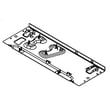
Model-matched examples for MBF2258DEH00:
A clogged defrost drain does more than create ice. It can block airflow, reduce cooling efficiency, and lead to water leaks that damage shelves, bins, and flooring. Fixing the drain restores normal defrost water routing and helps prevent repeat ice buildup.
Last updated: February 2026
Why is my Maytag refrigerator leaking from the bottom?
On a Maytag MBF2258DEH00 bottom-mount refrigerator, water leaking from the bottom is typically caused by a clogged or frozen defrost drain (water backs up and spills inside) or a leak in the ice maker water supply (valve, tubing, or fittings). Use the MBF2258DEH00 owner’s manual to locate access panels and drain areas.
- Unplug the refrigerator before removing any panels.
- Look for a sheet of ice on the freezer floor; that points to a blocked defrost drain.
- Check under the crisper drawers for water tracks from an internal overflow.
- Inspect the rear water line connection and visible tubing for drips.
- Turn the ice maker off for 24 hours; if the leak stops, focus on the water supply side.
| Likely cause | What you’ll notice | Where the water ends up |
|---|---|---|
| Defrost drain clogged or frozen | Ice in freezer bottom, then water after defrost | Under crispers or front/bottom |
| Water inlet valve seeping | Slow drip even when not making ice | Back of cabinet, then floor |
| Ice maker fill tube leaking | Leak mainly during fill | Freezer area, then down |
| Door not sealing well | Excess frost, repeat drain freeze-ups | Bottom/front after defrost |
- Remove the freezer bottom panel to reach the drain trough.
- Melt ice with warm water (not boiling) and towels.
- Flush the drain until water flows freely to the drain pan.
- Clean debris from the drain opening.
- If it refreezes often, inspect the drain tube routing and extension.
- For water supply leaks to the ice maker, replace the refrigerator water inlet valve WPW10498976.
- For recurring drain backups, inspect or replace the extension-dr W10619951 (drain tube).
Bottom leaks can damage flooring and create ice buildup that restricts airflow, leading to warmer temperatures and poor ice production.
Last updated: February 2026