Installation guide
 Owner’s manual
 Error Codes
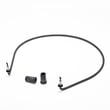


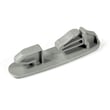
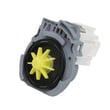
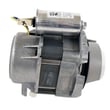
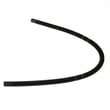
How to change the bottom seal on a Whirlpool dishwasher?
To change the bottom (lower) door seal on your Whirlpool DU1055XTSQ2 dishwasher, we remove the access panels, pull the old seal from the bottom edge of the inner door, clean the channel, then press the new seal in evenly so the door closes without gaps. Use the DU1055XTSQ2 installation guide for safe panel removal and reassembly.
Before you start
- Turn off power at the breaker (dishwashers use line voltage behind the toe panel).
- Shut off the water supply valve under the sink.
- Protect the floor with a towel; small screws are easy to lose.
- Keep the dishwasher door closed unless you are actively working; an unsecured unit can tip.
Step-by-step: replace the lower door seal
- Remove the toe panel and lower access panel screws; set panels aside.
- Open the door and locate the lower seal along the bottom edge of the inner door (some versions sit in a channel or clip points).
- Pull the old seal straight out; if it is stuck, work from one end to the other to avoid bending the door lip.
- Clean the mounting channel and the mating surface on the tub with warm water; remove detergent residue and grit.
- Press the new seal in from one end to the other, keeping it centered and fully seated the entire length.
- Close and latch the door; confirm the gap between the inner door and tub looks even on both sides.
- Reinstall the access panels; make sure the lower edge of the lower panel contacts the floor.
Quick checks after installation
| What you see | Most likely cause | What we do next |
|---|---|---|
| Drip at center bottom | Seal not fully seated | Reseat seal; press firmly along full length |
| Drip at one corner | Door not level or not centered | Level the dishwasher; verify door alignment |
| Water trails down toe panel | Leak higher than the seal | Inspect door seal, vent area, and tub edge |
Why it matters
A properly seated lower door seal prevents leaks that can damage flooring and helps the dishwasher maintain correct wash pressure for better cleaning and drying.
Last updated: February 2026
What is the average lifespan of a Whirlpool dishwasher?
A Whirlpool dishwasher typically lasts 10 to 12 years. For your Whirlpool DU1055XTSQ2, lifespan depends most on water quality, how often it runs, and whether key wear items (like the heating system and pumps) are kept in good working order; our maintenance steps below help you reach the full service life.
What affects lifespan the most
- Hard water and scale buildup (can reduce cleaning and strain the heater)
- Heavy daily use versus a few loads per week
- Filter and spray arm cleanliness (restricted flow makes the motor work harder)
- Drying performance (a weak heater can leave moisture and odors)
- Small leaks that go uncorrected (can damage components over time)
Maintenance checklist (best return for the effort)
Use the care and loading guidance in the DU1055XTSQ2 owner’s manual and follow these habits:
- Run a dishwasher cleaner or descaling cycle monthly (more often with hard water)
- Keep the bottom area clear of debris after heavy soil loads
- Use the right detergent amount for your water hardness
- Keep rinse aid filled to improve drying and reduce spotting
- Avoid overloading; make sure spray arms can spin freely
Common “end-of-life” symptoms and what they usually point to
| Symptom | Most common cause | Typical fix type |
|---|---|---|
| Dishes not drying | Heater not heating, rinse aid low | Maintenance or heater repair |
| Won’t drain | Drain restriction or weak drain pump | Cleaning or pump replacement |
| Poor cleaning | Clogged spray path, circulation issue | Cleaning or motor/sump service |
| No power or dead panel | Power supply issue, blown fuse | Electrical check or fuse replacement |
If drying is consistently weak, the dishwasher heating element W10518394 is a common wear item to check on this model.
Why it matters
Planning around a 10 to 12 year lifespan helps you decide when a repair (like a drain pump, inlet valve, or heating element) makes sense versus budgeting for replacement, especially if multiple symptoms show up at once.
Last updated: February 2026
What is the thing at the bottom of my dishwasher?
In a Whirlpool DU1055XTSQ2 dishwasher, the most common “thing” you notice at the bottom of the tub is the heating element; it warms the wash water and helps the dishwasher dry dishes. You may also see a small amount of water left in the sump area after a cycle.
What you might be seeing
- Heating element: A metal loop (often exposed) running along the tub floor; it heats water and boosts drying.
- Sump area: The low spot where water collects for circulation and draining; a little water here is normal.
- Filter or screen (if equipped): Helps catch food soil so it does not recirculate.
- Spray arm hub: The base connection where the lower spray arm mounts and spins.
- Standing water after a cycle: A shallow pool can remain in the bottom to keep seals from drying out.
Quick checks you can do safely
- Look for the metal loop along the bottom; that is typically the heater.
- After starting a short cycle, wait about 2 minutes, unlatch the door, wait 5 seconds, then open it and confirm there is water in the tub (a normal fill check described in the DU1055XTSQ2 installation guide).
- If you are seeing dirty water that never drains, check the sink drain path and any air gap (if your setup uses one).
When it points to a part problem
| What you notice | Likely area | Common next step |
|---|---|---|
| Dishes not drying, water stays cool | Heating circuit | Inspect/replace the dishwasher heating element W10518394 if it is damaged or tests open |
| Water left is dirty, debris present | Drain path | Check for clogs; if the unit will not pump out, the drain pump may be involved |
| No heat plus unit stops mid-cycle | Safety device | Check the thermal fuse and wiring connections |
Why it matters
Correctly identifying the heater versus the sump helps you avoid unnecessary part replacements. It also helps you decide whether you are seeing a normal condition (a little clean water in the bottom) or a drainage or heating issue that affects cleaning and drying.
Last updated: February 2026
What are the commonly replaced parts in a dishwasher?
In a Whirlpool DU1055XTSQ2 dishwasher, the most commonly replaced parts are the wash and drain components (pumps and motor), the heating and fill parts (heating element and inlet valve), and leak or wear items (door seal, hoses, rack rollers). These parts fail most often from normal wear, clogs, and heat exposure.
Commonly replaced parts (and what they affect)
- Heating and drying: heating element, vent parts, rinse-aid dispenser cap
- Filling: water inlet valve
- Draining: drain pump, drain hose, clamps
- Washing: circulation motor/pump, sump assembly, sensor
- Leaks and door issues: door seal, vent gasket, hinge friction sleeve
- Rack wear: upper dishrack roller assembly, racks
- Electrical/no power: fuse, electronic control, control panel
Model-specific examples for DU1055XTSQ2
These are popular replacements we see for this model:
| Symptom | Likely part category | Example part for this model |
|---|---|---|
| Dishes not drying, water not heating | Heating | Dishwasher heating element W10518394 |
| Dishwasher not draining | Drain | Dishwasher drain pump WPW10348269 |
| Won’t fill or fills slowly | Fill | Dishwasher water inlet valve WPW10158389 |
| Leaks at the door | Seal | Dishwasher door seal W10542314 |
| Dead/no power | Electrical protection | Fuse W10258275 |
Quick checks that prevent repeat failures
- Clean the filter area regularly so debris does not overload the pump.
- Make sure the overfill protection float moves freely (a stuck float can stop filling).
- Use the right detergent amount to avoid excess foam and residue.
- Run hot water at the sink before starting a cycle to reduce long heat-up times.
- Inspect the drain hose routing for kinks and high-loop issues.
Why it matters
Replacing the correct “high-failure” part first saves time and prevents secondary damage. For example, restricted draining can strain the drain pump, and poor heating can extend cycle time while the dishwasher tries to reach temperature.
Helpful references for this model
- Use the troubleshooting and parts diagrams in the DU1055XTSQ2 owner’s manual to match symptoms to components.
- For installation-related leak and hose routing basics, follow the DU1055XTSQ2 installation guide.
Last updated: February 2026