

What is the most common problem with whirlpool washers?
The most common Whirlpool washer problems are failure to drain or spin, leaking, and poor agitation. On the Whirlpool LSQ9200PQ0 (a direct-drive top-load design), these symptoms often trace back to a worn lid switch, a failing drain pump, or a worn motor coupling.
- Won’t spin or drains but won’t spin: lid switch not closing or drive system issue
- Won’t drain (water left in tub): clogged pump, blocked hose, or failing pump
- Agitates weakly or not at all: worn agitator dogs or motor coupling wear
- Leaking: loose hose connections, worn tub gasket, or pump seepage
- Loud grinding/burning smell: clutch or gear case wear
- Confirm the lid closes firmly and the strike lines up with the switch.
- Check the drain hose for kinks and make sure it is not shoved too far down the standpipe.
- Look for coins, socks, or debris at the pump inlet and in the drain hose.
- Run a spin cycle with an empty tub to see if the basket reaches full speed.
- If agitation is weak, inspect the agitator for stripped internal teeth.
If your symptoms match, these are frequent repair wins for this model:
| Symptom | Common fix | Part to consider |
|---|---|---|
| Won’t spin or stops when lid opens | Lid switch issue | Washer lid switch assembly WP8318084 |
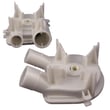
| Won’t drain or drains slowly | Pump issue or blockage | Washer drain pump WP3363394 |
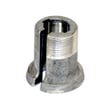
| Won’t agitate/spin; motor runs or hums | Coupling worn/broken | Washer motor coupling 285753A |
| Agitator moves but clothes don’t | Worn agitator dogs | Agitator dog 80040 |
Drain, spin, and agitation problems can look similar, but the fix is very different. Checking the lid switch and drain path first prevents unnecessary replacement of higher-cost drive parts like the clutch or gear case.
Last updated: February 2026
What is the most expensive part to replace on a washing machine?
On a Whirlpool LSQ9200PQ0 top-load washer, the most expensive repairs are typically large drive-system assemblies such as the gear case (transmission) or other major mechanical components, because the parts cost is high and the job is labor-intensive. Electronic control repairs can also be costly on many washers.
For top-load direct-drive designs like the LSQ9200PQ0, the biggest-ticket items are usually in the drive and spin system:
- Gear case (transmission) and related internal drive components
- Drive basket or basket assembly components
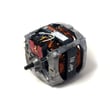
- Drive motor and motor-to-drive connection parts
- Timer or control components (varies by design)
- Tub and seal-related repairs when leaks damage other parts
These are some of the higher-cost parts commonly associated with major repairs on this model:
| Part type | Example part on this model | Why it can be expensive |
|---|---|---|
| Gear case (transmission) | Gear case 3360629 | High part cost; major teardown to replace |
| Basket assembly | Basket W10389328 | Large assembly; can involve multiple related parts |
| Drive motor | Washer drive motor WP661600 | Higher-cost component; diagnosis matters |
| Timer | Washer timer WP8557301 | Costly part; must match symptoms correctly |
A good rule is to compare the total repair (parts plus labor) to the washer’s overall condition and age.
- If the washer leaks, address the leak first so new parts are not damaged
- If it will not spin or drains poorly, check simpler failures before major assemblies
- If agitation is weak, inspect small wear items before replacing big drive parts
- If the basket is loose or noisy in spin, inspect drive block and basket hardware
- If multiple major parts are failing, replacement often makes more sense than stacking repairs
The “most expensive part” is often not the best first guess. Accurate symptom-based troubleshooting helps avoid replacing a gear case or motor when the real issue is a smaller wear part or a drain problem.
Last updated: February 2026
How to tell if a whirlpool drain pump is bad?
On a Whirlpool LSQ9200PQ0 top-load washer, a bad drain pump usually shows up as water left in the tub, slow or no draining, or a loud humming or grinding sound during the drain portion of the cycle. We confirm it by ruling out clogs first, then checking whether the pump actually moves water.
- Tub stays full or drains very slowly
- Washer stops before spin because it cannot drain
- You hear a steady hum but little or no water flow
- Grinding or rattling noise (debris hitting the impeller)
- Burning smell or the pump housing feels unusually hot after a drain attempt
- Unplug the washer and turn off water supply.
- Check for a blockage in the drain hose and the tub-to-pump hose (coins, socks, lint).
- Inspect the pump inlet and outlet ports for debris.
- Try a drain/spin cycle and watch for strong flow at the standpipe.
- If the motor runs but flow is weak, the impeller may be damaged; replacement is typically the fix.
If you need the correct replacement for this model, use the washer drain pump WP3363394.
| What you observe | Most likely cause | What to do next |
|---|---|---|
| Hums, no drain, hoses clear | Pump impeller stripped or pump seized | Replace pump |
| Drains a little, then stops | Partial clog in hose or pump | Clear obstruction, retest |
| No sound from pump area | Lid switch or timer issue, or wiring | Check lid switch, then timer |
| Loud grinding during drain | Debris in pump | Remove debris; replace if damaged |
A drain problem is not always the pump. On LSQ9200PQ0, these parts commonly affect drain and spin:
- Washer lid switch assembly WP8318084 (washer may not spin if the lid switch is failing)
- Washer timer WP8557301 (can stall the cycle before or during drain)
- Washer motor coupling 285753A (motor runs issues can prevent proper drain/spin)
A washer that cannot drain will often refuse to spin, leaving clothes soaking wet and putting extra strain on the drive system. Catching a weak or jammed pump early helps prevent repeat clogs and cycle failures.
Last updated: February 2026
What is the life expectancy of a whirlpool washing machine?
A Whirlpool washing machine typically lasts 10 to 14 years. For a direct-drive top-load model like Whirlpool LSQ9200PQ0, lifespan depends most on load size, water quality, and how quickly you address wear items such as the lid switch, drain pump, and drive components.
Most washers fall into these real-world ranges:
| Washer type | Typical life expectancy | What usually ends life first |
|---|---|---|
| Top-load (direct drive) | 10 to 14 years | Drive system wear, leaks, spin issues |
| Front-load | 9 to 12 years | Bearings, door boot leaks, control issues |
These are the most common life-reducers we see with top-load washers:
- Overloading (stresses the clutch, drive block, and gear case)
- Running unbalanced loads (stresses suspension and basket components)
- Ignoring slow drains (overworks the pump and can lead to no-spin)
- Using too much detergent (residue, odors, and extra mechanical strain)
- Letting small leaks continue (corrosion and bearing or drive damage)
If your LSQ9200PQ0 is otherwise in good shape, replacing a worn part can extend its usable life.
- No drain or weak drain: washer drain pump WP3363394
- Won’t spin or stops when lid opens: washer lid switch assembly WP8318084
- Agitates poorly: agitator dog 80040
- No agitation or no spin with motor running: washer motor coupling 285753A
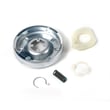
- Slow or slipping spin: clutch 285785
A washer near the 10 to 14 year mark often fails in predictable, serviceable ways. Catching symptoms early (slow drain, intermittent spin, weak agitation) helps you avoid secondary damage to higher-cost assemblies like the gear case.
Last updated: February 2026