Owner’s manual
 View engine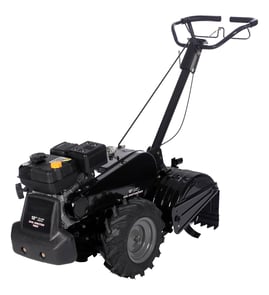



Where is the model number on a Craftsman rear tine tiller?
On the Craftsman rear-tine tiller model 917297030, the model number is printed on the product identification label. On this style of tiller, that label is most often found on the tine shield/guard area or on the frame near the front of the unit; confirm the exact location using the 917297030 owner's manual.
- Check the tine shield (the guard around the tines) for a label or stamped plate.
- Look along the main frame rails, especially on the left side near the belt guard.
- Inspect the area near the engine and fuel tank mounting points.
- Wipe off dirt and oil; labels can be hidden under grime.
- Use a flashlight and look for a silver/white sticker with a long number.
Most Craftsman tiller ID labels include:
- The model number (for example, 917.297030 or 917297030)
- A serial number
- Basic safety or compliance text
We use the model number to match the correct Craftsman parts diagrams and ensure you get the right drive belt, clutch cable, tines, and hardware for your exact rear-tine tiller.
| What you need | What to write down | Example |
|---|---|---|
| Model number | Full model digits | 917297030 |
| Serial number | Full serial from the same label | (varies) |
Last updated: January 2026
How often should I change the oil in my tiller?
For the Craftsman 917297030 rear-tine tiller, we change the engine oil after every 25 hours of operation or at least once a year (whichever comes first). We also check the oil level before starting and after each 5 hours of continuous use; this helps prevent low-oil engine damage.
Use this schedule as your baseline, then shorten intervals if you till in heat, heavy load, or dusty conditions.
- Change engine oil every 25 hours of operation
- Change engine oil at least once per year even if you do not reach 25 hours
- Check oil level before each use
- Recheck oil level after each 5 hours of continuous operation
- Use a high-quality detergent oil with API service classification SF-SJ
| Task | Normal interval | When to do it sooner |
|---|---|---|
| Check engine oil level | Before each use | Also after 5 hours of continuous use |
| Change engine oil | Every 25 hours | Heavy load, high temperatures, dusty conditions |
| Service air cleaner cartridge | Every 25 hours | Very dusty conditions |
Follow the detailed procedure in the 917297030 owner's manual. In general, we:
- Warm the engine briefly so oil drains more freely
- Park the tiller on a level surface and use a suitable drain pan
- Remove the drain plug and tip the tiller forward to drain
- Reinstall and tighten the drain plug securely
- Refill with the correct oil viscosity for your temperature range
Fresh oil protects internal engine parts from wear and overheating. On a rear-tine tiller like the Craftsman 917297030, consistent oil checks and 25-hour oil changes are one of the most effective ways to extend engine life and keep starting and power consistent.
Last updated: January 2026
What tiller is made in the USA?
If you’re specifically looking for a tiller made in the USA, Mantis is a commonly cited example of a brand that manufactures in the United States. For your Craftsman rear-tine tiller model 917297030, our 917297030 owner's manual focuses on safe operation, maintenance, and parts identification rather than country-of-origin details.
The most reliable way is to check the product’s identification markings and documentation.
- Look for a “Made in …” statement on the engine shroud, frame tag, or handlebar decal
- Check the model and serial tag; it’s often near the engine mount or transmission area
- Review the packaging or original sales listing if you still have it
- Compare the brand’s current manufacturing statements with the exact model you own
- If you’re shopping, confirm the country-of-origin on the carton or product label before purchase
Your Craftsman 917297030 manual provides model-specific operating and maintenance specs (fuel, oil, spark plug type and gap), plus safety guidance like disconnecting the spark plug wire before service. Those details help you maintain performance, but they do not determine where the unit was manufactured.
| Item | What to check | Why it helps |
|---|---|---|
| Model tag | Model and serial information | Identifies the exact unit you own |
| Decals/labels | “Made in …” marking | Direct country-of-origin confirmation |
| Manual specs | Fuel, oil, spark plug info | Keeps the tiller running correctly |
Country-of-origin can affect your buying decision, but for repairs and upkeep, matching the correct model number, engine specs, and replacement parts matters most for fit and performance.
Last updated: January 2026
What are the common problems with lawn tillers?
Common problems on the Craftsman 917297030 rear-tine tiller include hard starting, rough running, poor tilling performance, and tines or wheels that do not engage. Most issues trace back to fuel quality, ignition, or drive components, plus operating the tiller too deep or too fast.
- Engine will not start: stale fuel, clogged fuel path, dirty spark plug, choke/fuel shut-off set wrong
- Engine runs rough or lacks power: carburetor mixture needs adjustment (especially below 32°F or above 3,000 ft), restricted fuel flow
- Tines do not turn or tilling is weak: worn/slipping drive belt, stretched clutch cable, broken shear pin, jammed tine shaft
- Excessive bouncing or hard handling: soil too dry or too hard; trying to till too deep too fast
- Soil clumps or “balls up”: soil is too wet
- Move the tiller to a safe, open area and let all moving parts stop.
- Disconnect the spark plug wire before inspecting tines, belt, or chain.
- Confirm fresh fuel and correct choke and fuel shut-off settings.
- Inspect the tine area for vines/grass wrapped around the tine shaft.
- Reduce tilling depth and slow ground speed; best tilling depth is typically 4 to 6 inches.
If the engine runs but the tines do not pull or engage consistently, these parts are frequent suspects:
| Symptom | Most likely area | Example part for this model |
|---|---|---|
| Tines slip under load | Belt drive | Husqvarna rear-tine tiller drive belt 591372401 |
| Tines engage late or not at all | Cable adjustment/wear | Tiller clutch cable 532110675 |
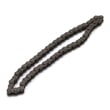
| Grinding or no drive to tines | Chain drive | Tiller chain, #25-50 532102134 |
Running a tiller overloaded (too deep, too fast) increases wear on the drive belt, clutch cable, and drivetrain. The manual also notes shear pins are designed to break first during a jam to help prevent internal transmission damage.
For model-specific operating and adjustment steps (including carburetor adjustment guidance for cold weather or high altitude), use the Craftsman 917297030 owner’s manual.
Last updated: January 2026