Owner’s manual
 Error Codes


How to tell KitchenAid refrigerator model?
To tell your KitchenAid refrigerator model, we look for the model and serial number label on the appliance; it is an adhesive label (often silver on major appliances) that lists both numbers. For your KitchenAid bottom-mount refrigerator, use the KRBL102ESS00 owner's manual as a location guide.
Where to look on a KitchenAid bottom-mount refrigerator
Check these common label locations first:
- Inside the fresh food compartment on a side wall near the crisper drawers
- On the ceiling of the fresh food compartment near the light housing
- Along the door frame (hinge side) when you open the refrigerator door
- Behind the toe grille or near the lower front frame (less common)
- On the back exterior panel near the compressor area (less common)
What you should write down (and why)
Record the model number and serial number exactly as shown. This matters because parts, wiring, and control settings can vary by revision even within the same KitchenAid product line.
| Item on label | What it’s used for | Example format |
|---|---|---|
| Model number | Matching the correct parts list and diagrams | KRBL102ESS00 |
| Serial number | Identifying production series and version changes | Letters and numbers |
Tips to avoid common mix-ups
Use these quick checks so you do not order the wrong refrigerator parts:
- Copy every character; do not drop zeros (0) or swap with the letter O
- Use the full model number, not just “KRBL102ESS”
- If the label is worn, take a clear photo and zoom in
- When ordering, match parts to the exact model number on the label
Why it matters
Using the correct model number ensures you get the right KitchenAid refrigerator parts for fit and function, especially for electrical items such as a control board, thermistor, or evaporator fan motor.
Last updated: February 2026
What is the average lifespan of a KitchenAid refrigerator?
A KitchenAid refrigerator typically lasts 14 to 17 years on average. For your KitchenAid KRBL102ESS00 bottom-mount refrigerator, consistent maintenance (clean condenser coils, good door sealing, stable temperatures) is what most directly determines whether you land closer to 10 years or closer to 17.
Typical lifespan ranges (what to expect)
Most premium refrigerators like KitchenAid fall into these real-world ranges:
- 10 to 12 years: Higher use, warmer kitchens, infrequent cleaning
- 13 to 17 years: Normal use with routine upkeep
- 17+ years: Light use, excellent airflow around the cabinet, prompt repairs
| Lifespan range | What it usually means | Common drivers |
|---|---|---|
| 10 to 12 years | More wear and tear | Dirty coils, door leaks, heavy ice maker use |
| 13 to 17 years | Typical for KitchenAid | Regular cleaning, good airflow, correct temps |
| 17+ years | Best-case outcome | Fast fixes, stable power, gentle use |
Maintenance that adds years (and prevents expensive failures)
These steps have the biggest payoff for cooling performance and compressor life:
- Vacuum and brush the condenser area regularly (dust buildup raises run time)
- Keep door gaskets clean and sealing evenly; warm air leaks cause frost and long run cycles
- Set steady temperatures (avoid frequent big changes)
- Do not block interior vents with food packages
- Keep the freezer drawer closing fully every time
If you are troubleshooting warm temps or heavy frost, the owner's manual is the best place to confirm recommended temperature settings and care routines for KRBL102ESS00.
Parts that commonly affect longevity on this model
When cooling problems start, these are frequent culprits that can shorten lifespan if ignored:
- Evaporator fan issues (poor airflow, warm fresh food section)
- Defrost system problems (ice buildup, restricted airflow)
- Temperature sensing/control issues (inconsistent temps, over-running)
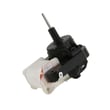
For example, a failing evaporator fan motor can lead to uneven cooling and longer compressor run times; the refrigerator evaporator fan motor WPW10128551 is one of the model-matched parts used to restore proper airflow.
Why it matters
A refrigerator that runs longer than it should (from dirty coils, air leaks, or airflow problems) puts extra stress on sealed-system components like the compressor. Keeping airflow and sealing in good shape is the simplest way to protect performance and extend service life.
Last updated: February 2026
What is the most common problem with a KitchenAid refrigerator?
For KitchenAid model KRBL102ESS00, the most common issues we see are cooling problems (warm refrigerator or freezer), ice maker and water supply troubles, water leaks, and unusual noises. These symptoms usually trace back to airflow, defrost drainage, temperature sensing, or control and start components; use the KRBL102ESS00 owner's manual to match symptoms to checks.
Most common symptoms and what they usually point to
- Fridge warm, freezer OK (or vice versa): evaporator airflow problem, frost buildup, or a temperature sensor issue
- No ice or slow ice: water supply restriction, ice maker fault, or air in the water line
- Water under the fridge or in the crisper area: clogged/iced defrost drain or drain tube issue
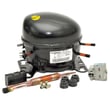
- Buzzing/clicking from the back: compressor start components or compressor-related issues
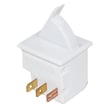
- Lights not working when door opens: door switch problem
Quick checks we recommend before replacing parts
- Confirm settings: set refrigerator to about 37°F and freezer to about 0°F.
- Listen for the evaporator fan: a steady fan sound in the freezer area is normal; no fan often means an airflow problem.
- Check for frost on the freezer back wall: heavy frost suggests a defrost system issue.
- Inspect door sealing: gaps or a torn gasket can cause temperature swings and moisture.
- Look for drain blockage signs: water pooling inside often points to a defrost drain problem.
Common parts that relate to these problems on KRBL102ESS00
| Symptom | Likely system | Example part on this model page |
|---|---|---|
| Warm temps, poor airflow | Evaporator fan | Refrigerator evaporator fan motor WPW10128551 |
| Fan noise or rubbing | Fan blade | Refrigerator evaporator fan blade WP2169142 |
| Frost buildup, not defrosting | Defrost heat | Refrigerator defrost heater WP12729128 |
| Temps swing, erratic cooling | Temperature sensing | Refrigerator thermistor 12002355 |
| Random operation, no response | Controls | Refrigerator electronic control board WPW10503278 |
Why it matters
Cooling, ice maker performance, and leaks are often connected. A weak evaporator fan, a defrost problem, or a bad thermistor can make the refrigerator run longer, warm up, frost over, or drip water, which can also lead to noise and food spoilage.
Helpful DIY guidance
- For water and ice performance, follow how to replace the water filter in a KitchenAid refrigerator to keep flow strong and reduce ice maker issues.
- For airflow-related cooling symptoms, use how to fix your evaporator cooling fan to diagnose fan motor and blade problems.
Last updated: February 2026