Installation guide
 Owner’s manual
 Error Codes


What setting to use on a whirlpool dryer?
For your Whirlpool WED5820SW0 dryer, use the cycle and temperature that match the fabric and load weight: the Energy Preferred setting works well for most heavy to medium fabrics, and lower heat or an air cycle is best for delicate or heat-sensitive items. See the owner's manual for cycle details.
- Towels, jeans, sweatshirts: Timed dry or an automatic/sensor cycle with high heat
- Everyday mixed loads (cottons, blends): Automatic/sensor cycle with medium heat (often the best balance)
- Synthetics, athletic wear: Automatic/sensor cycle with low heat
- Delicates: Low heat and shorter time; remove promptly
- Foam, rubber, plastic items: Air cycle only (no heat)
- Check the garment care tag first (heat level matters most).
- Pick a cycle type:
- Automatic/sensor cycles: Best for preventing over-drying and shrinking.
- Timed dry: Best when you want full control (bulky loads, very small loads).
- Match temperature to fabric (high for sturdy cottons, low for synthetics).
- Load the drum loosely so clothes tumble freely.
Poor airflow is the most common reason a dryer needs “more heat” settings.
- Clean the lint screen before every load
- Check the outside vent hood for strong airflow
- Replace crushed or kinked venting; use 4-inch heavy metal venting
- Avoid plastic or foil vent
- Do not run the dryer in spaces below 45°F (7°C)
| Symptom | Most likely cause | Best first fix |
|---|---|---|
| Long dry times | Restricted venting | Clean/shorten vent run |
| Clothes feel hot but still damp | Poor airflow or overloaded drum | Reduce load size, improve vent |
| Dryer shuts off early on auto cycles | Dryer not level or airflow issue | Level dryer, check vent |
Using the right cycle and temperature helps prevent shrinking, reduces wrinkles, and improves drying performance. It also lowers stress on key parts like the heating system and blower airflow path.
Last updated: January 2026
What does F-22 mean on a dryer?
On a Whirlpool dryer like model WED5820SW0, an F-22 code points to a temperature-sensing problem (commonly the outlet thermistor circuit). The dryer may run briefly, then shut down to prevent overheating or unsafe operation; check airflow first, then test the sensor circuit.
Restricted airflow is the most common reason a dryer overheats and triggers temperature-related faults.
- Clean the lint screen completely (wash off fabric softener residue if present).
- Inspect the vent hose for kinks, crushing, or long runs.
- Check the outside vent hood for a stuck flap or lint blockage.
- Run a timed dry cycle with the vent disconnected briefly (only if safe to do so) to see if heat and airflow improve.
- Let the dryer cool, then restart; repeated F-22 means you need deeper checks.
If airflow is good, the issue is usually in the temperature sensing or safety cutoff circuit.
| What you notice | Most likely area | Example part to consider for WED5820SW0 |
|---|---|---|
| Runs 1 to 3 minutes, then stops and shows F-22 | Outlet thermistor circuit or wiring | Use the wiring diagram in the WED5820SW0 owner's manual |
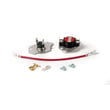
| No heat or shuts down quickly | Safety device opened from overheating | Dryer thermal fuse WP3392519 |
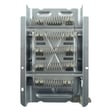
| Overheats, burning smell, very hot cabinet | Vent restriction or high-limit control issue | Dryer high-limit thermostat WP3977767 |
- Unplug the dryer (or switch off the breaker) before accessing internal components.
- Verify strong airflow at the outside vent while the dryer runs.
- Check harness connections for loose plugs, corrosion, or heat damage.
- If the dryer will not run or stops quickly, test the thermal fuse and thermostats for continuity.
- Use the diagnostic and wiring information in the WED5820SW0 owner's manual to identify the thermistor circuit and expected checks.
Temperature sensing and safety cutoffs protect the heating element and reduce fire risk. Fixing venting and replacing a failed thermal fuse or thermostat restores normal cycling, drying performance, and safe operation.
Last updated: January 2026
What is the average lifespan of a whirlpool dryer?
A Whirlpool dryer like model WED5820SW0 typically lasts 10 to 13 years. With consistent lint removal, good airflow (proper venting), and avoiding overloads, many dryers reach 10 to 15 years of service before major repairs become common.
The biggest lifespan drivers are heat stress and restricted airflow. Your WED5820SW0 installation instructions emphasize using proper vent materials and keeping the vent system clean for best performance.
- Clean the lint screen every load
- Keep the exhaust venting clear; lint buildup should be removed about every 2 years (more often with heavy use)
- Use rigid or heavy metal venting (avoid plastic or foil vent)
- Use the fewest 90° turns possible and avoid crushed or kinked venting
- Do not overload; heavy loads strain the drum belt, idler pulley, and motor
Use this as a routine to help your dryer last longer.
| Task | How often | Why it helps |
|---|---|---|
| Clean lint screen | Every load | Improves airflow and drying time |
| Check outside vent hood flap | Monthly | Confirms strong exhaust airflow |
| Clean inside exhaust vent run | About every 2 years | Reduces heat buildup and wear |
| Inspect vent material and bends | Yearly | Prevents kinks, sagging, and restrictions |
These are normal wear items that often show up in the 8 to 15 year range, depending on usage.
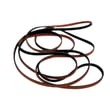
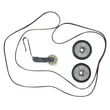
- Drum belt: squealing, drum not turning, burning rubber smell (see dryer drum belt 341241)
- Thermal fuse: dryer will not run or stops mid-cycle after overheating (see Whirlpool dryer thermal fuse WP3392519)
- Heating system components: long dry times, no heat, cycling issues
- Door switch: dryer will not start when door is closed
A dryer that takes longer to dry or runs hotter than normal wears out faster. Good venting and lint control reduce cycle time, lower operating temperature, and help protect key components like the heating element, motor, and safety fuses.
For model-specific care and cleaning steps, follow the WED5820SW0 owner's manual.
Last updated: January 2026