 Owner’s manual
 Error Codes


How do I know if my dryer start switch is bad?
If your Kenmore 11064112200 electric dryer will not run when you press the Push to Start button (with the door closed and the timer set to a dry cycle), the start switch is a top suspect. The most reliable confirmation is a continuity test of the switch with a multimeter after unplugging the dryer; a failed reading means the switch should be replaced.
Quick checks before testing the switch
These items can mimic a bad start switch and are faster to rule out first:
- Confirm the Cycle Selector (timer) is set to a drying cycle, not OFF
- Close the dryer door firmly (opening the door stops the dryer)
- Push the start button firmly
- Verify the dryer is plugged into a grounded outlet
- Check the house fuses or circuit breakers (many dryers use 2)
For the model-specific start procedure and “dryer will not start” checklist, use the owner's manual.
Symptoms that point to a bad start switch
A bad Push to Start switch often shows up like this:
- Nothing happens when you press Start (no motor sound)
- Start works only if you press unusually hard or hold it “just right”
- Dryer starts intermittently, then becomes more frequent over time
- Button feels physically loose, stuck, or does not “spring back” normally
How we test the start switch (basic overview)
Unplug the dryer first. Access the console, remove the switch leads, then check continuity while pressing and releasing the button.
| What you do | What you should see | What it means if you don’t |
|---|---|---|
| Press and hold Start | Continuity (closed circuit) | Switch contacts are failing |
| Release Start | No continuity (open circuit) | Switch is stuck closed or shorted |
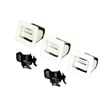
If the readings do not match the table, replacing the switch is the correct fix. The correct replacement for this model is the dryer push-to-start switch WP3977456.
Why it matters
A failed start switch prevents the motor circuit from energizing, so the dryer will not run even when the timer, door switch, and power supply are set correctly. Replacing the switch restores normal starting and helps avoid repeated no-start situations.
Last updated: February 2026
Is it worth replacing a heating element in a dryer?
Yes. For a Kenmore 11064112200 electric dryer, replacing a failed heating element is usually worth it because the part cost is typically far less than replacing the dryer, and the repair often restores normal heat when the rest of the machine is in good shape. See the owner's manual for model-specific safety and operating checks.
When replacing the heating element makes sense
A heating element replacement is a strong choice when the dryer tumbles normally but does not heat, and airflow and power supply check out.
- The drum turns and the timer advances, but clothes stay cold
- You have proper airflow at the outside vent hood (strong, steady flow)
- Both dryer power feeds are good (many electric dryers use 2 fuses or 2 breakers)
- The dryer is otherwise quiet and smooth (no loud squeal or grinding)
- You want a repair that typically takes less time and money than a full replacement
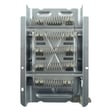
A common replacement for this model is the dryer element 279838.
Check these first (often mistaken for a bad element)
The manual notes that an electric dryer can run but still have no heat if only one fuse is blown or one breaker is tripped.
- Confirm the dryer is plugged in and the door fully closes
- Check both fuses or both circuit breakers for the dryer
- Clean the lint screen and confirm the exhaust vent is not crushed or kinked
- Run the dryer 5 minutes, then open the door and feel for heat
- Make sure you are not using an “air dry” or no-heat cycle
Quick decision guide
| What you observe | Most likely issue | What we recommend |
|---|---|---|
| Tumbles, no heat | Power supply issue or failed heat circuit part | Check both breakers; then consider element and heat safeties |
| Weak airflow, long dry times | Vent restriction | Clean/replace venting before replacing parts |
| Heats briefly, then stops | Overheating protection opening | Fix airflow; consider heat safety parts |
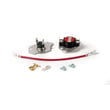
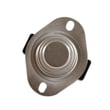
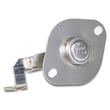
If overheating has occurred, replacing the element alone can lead to repeat failures. For heat-safety repairs, the dryer thermal cut-off fuse kit 279816 is commonly used.
Why it matters
A restricted vent can cause poor drying and overheating, which can trip safety devices and shorten the life of the heating system. Fixing airflow first protects the new heating element and improves drying performance.
Last updated: February 2026
How to tell if your dryer element is bad?
A bad heating element in your Kenmore electric dryer model 11064112200 usually shows up as a dryer that runs but does not heat, takes much longer to dry, or trips a breaker. The most reliable check is a continuity test on the element after unplugging the dryer (see the owner's manual).
Common signs the heating element is failing
- Dryer tumbles normally but there is no heat
- Clothes stay damp and cycles run longer than normal
- You smell a brief “first heat” odor only on first use, but ongoing burning smells point to a problem
- The dryer heats for a few minutes, then stops heating (often tied to overheating or airflow issues)
- Breaker trips during a heated cycle
Quick heat check (no tools)
Our manual-based check is simple:
- Run a full heat cycle (not Air/Fluff).
- After about 5 minutes, open the door and feel for heat.
If you do not feel heat, the manual points you to check the home electrical supply first (many electric dryers use two fuses or two breakers). If power is good, move on to electrical testing of the heater circuit.
How to test the heating element with a multimeter
- Unplug the dryer (or switch off both breakers).
- Access the heater housing and disconnect the element wires.
- Test across the element terminals for continuity.
Typical readings for many electric dryer elements are in the roughly 10 to 50 ohms range. If the meter shows open/infinite resistance, the element is bad and replacement is the fix.
| Test result | What it usually means | Next step |
|---|---|---|
| Continuity present (ohms reading) | Element is likely intact | Check airflow, thermostats, thermal cut-off |
| Open/infinite resistance | Element is failed | Replace the element |
For this model, the replacement part is the dryer element 279838.
Why it matters (and what to check next)
A failed element is common, but restricted venting can overheat the dryer and damage heater-related safety parts. We follow the manual’s guidance to make sure the vent is not crushed or kinked and is secured properly.
If the element tests good, the next most common heat-loss causes are the thermal cut-off and high-limit thermostat; the dryer thermal cut-off fuse kit 279816 and dryer high-limit thermostat WP3977767 are the typical heater-safety parts involved.
Last updated: February 2026








