Owner’s manual


How to identify a Kenmore washer model?
Your Kenmore washer model number is printed on the model and serial number plate; on Kenmore model 11022702100, the plate is typically located under the lid area near the opening. Once you have the full model number, we can match the correct Kenmore washer parts (like a lid switch, drain pump, or inlet valve) to your exact machine.
Check these common locations first (use a flashlight and look for a sticker or metal plate):
- Under the lid, around the tub opening or underside of the top panel
- Along the back panel near the power cord entry
- Near the control console area (rear edge or inside the console, depending on design)
- On the cabinet frame near the lid switch opening
For the exact plate location and a diagram of the control panel and features, use the 11022702100 owner's manual.
Record the model number exactly as shown, including all digits.
| What to capture | Example for this washer | Why it matters |
|---|---|---|
| Model number | 11022702100 | Ensures parts fit your exact Kenmore washer |
| Serial number | (varies) | Helps confirm production series for some parts |
| Stock number (if shown) | 22702 | Useful for cross-referencing features and documentation |
Many Kenmore washers share similar cabinets but use different internal components. Using the correct model number helps us avoid mismatches in common repairs such as:
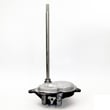
- No drain or slow drain (often the washer drain pump WP3363394)
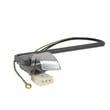
- Won’t start or won’t spin (often the washer lid switch WP3949238)
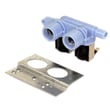
- Won’t fill or fills slowly (often the washer inlet valve 285805)
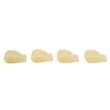
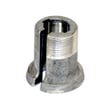
- Agitator not moving properly (often the agitator dog 80040)
- Copy the model number directly from the plate, not from a similar-looking online listing
- If the label is worn, take a close-up photo and zoom in to confirm digits
- Match the model number first, then choose the part by name and symptom
Last updated: February 2026
Is it worth repairing a Kenmore washing machine?
Yes, repairing a Kenmore washer is worth it when the fix restores reliable washing and spinning for less than replacing the machine. For Kenmore model 11022702100, many common failures involve serviceable parts (lid switch, drain pump, motor coupling), so a targeted repair often makes sense.
We use these practical checkpoints:
- Repair it when the washer still fills, agitates, and spins but has one clear symptom (no drain, no spin, won’t start).
- Repair it when the needed part is a common wear item (switch, pump, coupling, clutch).
- Replace it when the tub or cabinet is severely rusted, the unit has repeated major leaks, or multiple major systems are failing.
- Repair it when the washer is otherwise meeting your needs for capacity and cycle options.
- Start with the basics in the 11022702100 owner's manual to confirm correct cycle, water level, and control settings before buying parts.
These are frequent, cost-effective fixes on this style of Kenmore washer:
- No spin or won’t run: washer lid switch WP3949238
- Won’t drain or drains slowly: washer drain pump WP3363394
- Agitates but won’t spin (or vice versa) with motor running: coupling 285753A
- Poor agitation: agitator dog 80040
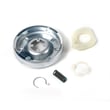
- Spin issues or burning smell during spin: clutch 285785
Typical “worth it” logic is based on total repair cost (parts plus labor) versus replacement.
| Situation | What it usually means | Typical next step |
|---|---|---|
| One failed wear part | Isolated failure | Repair is usually the best value |
| Two or more major symptoms | Multiple systems involved | Diagnose carefully before spending |
| Major leak from tub area | Seal, gasket, or tub damage | Compare repair total to replacement |
A compact washer like the Kenmore 11022702100 often fails due to a single mechanical or safety component. Replacing the correct part restores normal wash action and spin performance, and prevents repeat issues like standing water, out-of-balance loads, or no-start conditions.
Last updated: February 2026
What is the average lifespan of a Kenmore washer?
A Kenmore washer typically lasts 10 to 15 years. For the Kenmore 11022702100 compact washer, reaching the high end of that range comes down to load size, proper water level selection, and keeping wear items (like the lid switch and drain pump) in good working order; see the 11022702100 owner's manual for model-specific use and care details.
Most washers fail early from overload stress, poor draining, or repeated out-of-balance spinning. These factors have the biggest impact:
- Overloading (stresses the drive system and suspension)
- Frequent unbalanced loads (wears the basket drive and clutch components)
- Slow or incomplete draining (overworks the pump)
- Hard water and detergent buildup (can affect valves and performance)
- Lid switch issues (can stop spin and shorten usable life)
We recommend these practical habits for a Kenmore top-load design like model 11022702100:
- Use the lowest water level that still allows clothes to move freely
- Distribute items evenly; wash bulky items with a few smaller items
- Leave the lid open after use to help the tub dry
- Check pockets to prevent coins and debris from damaging the pump
- Replace worn drive and safety parts promptly (before they cause secondary damage)
| Symptom | Common wear part | What it affects |
|---|---|---|
| Won’t spin or stops mid-cycle | Washer lid switch WP3949238 | Spin safety circuit and cycle completion |
| Won’t drain or drains slowly | Washer drain pump WP3363394 | Water removal and spin performance |
| Agitator slips or doesn’t “ratchet” | Agitator dog 80040 | Agitation action and cleaning performance |
| No fill or slow fill | Washer inlet valve 285805 | Water entering the washer |
A washer that is draining well, spinning smoothly, and agitating correctly runs cooler and with less strain. That reduces wear on the motor, coupling, clutch, and suspension, which is how most machines make it to the 10 to 15 year mark.
Last updated: February 2026