Owner’s manual
 Error Codes



What are the dimensions of the Samsung RF22K9381SR?
The Samsung RF22K9381SR is a full-size French door, bottom-mount refrigerator; most units in this class measure about 35 3/4 in. wide, around 70 in. tall, and roughly 30 to 36 in. deep depending on hinges and handles. For the exact configuration dimensions, use the RF22K9381SR owner's manual.
Common dimension sets you may see
Refrigerator dimensions are usually listed in a few different ways; depth changes the most depending on what’s included.
- With hinges, handles, and doors (largest overall depth)
- With hinges and doors, no handle (slightly shallower)
- Without hinges and door (cabinet-only depth for tight installs)
- Case width (typically stays the same)
- Height to top of hinge (often the tallest measurement)
Quick reference (typical for this size class)
Use this as a planning range, then confirm the exact numbers in the manual for your RF22K9381SR.
| Measurement | Typical range | What it includes |
|---|---|---|
| Width | 35 3/4 in. | Cabinet and doors |
| Height | 68 7/8 to 70 in. | Varies by hinge/leveling |
| Depth | 24 to 31 in. | Cabinet-only vs. doors/handles |
How we recommend measuring your space
To avoid fit issues, we measure both the opening and the path into the kitchen.
- Measure opening width at the front and back (walls can be out of square)
- Measure opening height to the lowest cabinet or trim
- Measure depth to the front edge of counters and note door swing clearance
- Measure doorways and hallways on the delivery path
- Plan for airflow clearance behind and above the refrigerator
Why it matters
Depth and hinge/handle allowances determine whether the doors open fully and whether drawers clear adjacent walls or islands. Confirming the exact “with handles” and “without hinges/door” dimensions helps prevent installation surprises.
Last updated: February 2026
How many cubic feet is the Samsung RF22K9381SR?
The Samsung RF22K9381SR refrigerator is typically listed at about 22 cubic feet of total capacity. For the exact capacity for your specific configuration and any usable-space notes (bins, FlexZone, ice room), we recommend confirming it in the RF22K9381SR owner's manual.
How to confirm the exact capacity for your unit
Capacity can vary slightly by revision and how manufacturers report “total” versus “usable” space. We use these checks:
- Look up the “Specifications” section in the RF22K9381SR owner's manual
- Check the model/serial label inside the fresh food compartment (then match the exact suffix if shown)
- Compare listed “total capacity” versus “refrigerator” and “freezer” breakdowns
- Note that ice maker and dispenser compartments reduce usable storage volume
Quick reference: what you may see in specs
| Spec label | What it means | Why it can look different |
|---|---|---|
| Total capacity (cu. ft.) | Combined fresh food + freezer | Often the headline number |
| Refrigerator capacity | Upper compartment only | Shelves and bins affect usable space |
| Freezer capacity | Bottom drawer area | Ice room and dividers can reduce usable space |
Why it matters
Knowing the correct cubic feet helps when comparing replacement refrigerators, planning kitchen storage, and choosing organization accessories. It also helps set realistic expectations if the unit feels “smaller” after adding an ice maker, bins, or a full water filter housing.
Last updated: February 2026
What is the most common problem with Samsung refrigerators?
For Samsung refrigerators like model RF22K9381SR, the most common customer-reported problems are ice maker issues (no ice, small cubes, freezing up, leaking) and cooling problems (warm fridge, temperature swings, frost buildup). These symptoms often trace back to airflow, defrost, or water-supply components.
What you’ll usually notice first
- Ice maker stops producing ice or makes hollow/small cubes
- Ice clumps or the ice box freezes up
- Water leaking in or under the refrigerator
- Fresh food section warms up while freezer seems OK
- Unusual fan noise, clicking, or intermittent cooling
Common causes and the parts that are often involved
On RF22K9381SR, these issues commonly relate to sensors, fans, valves, or sealed-system controls.
| Symptom | Most likely system | Example part to check on this model |
|---|---|---|
| No ice or slow ice | Water supply and fill | Water inlet valve (DA62-04027A) |
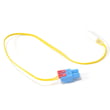
| Ice maker freezes up | Ice room airflow/temperature | Refrigerator temperature sensor DA32-10104N |
| Fridge warm, freezer OK | Fresh food airflow | Evaporator fan motor (DA31-00287B) |
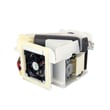
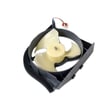
| Warm temps and noisy back area | Condenser airflow | Condenser fan motor assembly (DA97-15765A) |
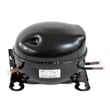
| Intermittent cooling | Inverter/control or compressor | Inverter (DA92-00763B) or compressor (NC1MV90ALPASH) |
Quick checks we recommend before replacing parts
- Confirm the temperature settings are correct and allow 24 hours after changes.
- Make sure doors seal fully and nothing is holding them open.
- Check for blocked vents (overpacked shelves can restrict airflow).
- If the ice maker is the issue, verify household water pressure and that the supply valve is fully open.
- Power reset: unplug for 5 minutes, then restore power and monitor temperatures.
Error codes and why they matter
If the display shows an error code, it usually points to a specific circuit (fan, sensor, defrost, or communication). Use our Samsung rb series bottom freezer refrigerator error codes reference to narrow the troubleshooting path before ordering parts.
Why it matters
Ice maker and cooling complaints often share the same root cause: temperature control and airflow. Catching a weak fan motor, failing sensor, or restricted airflow early helps prevent food spoilage and repeat ice maker failures.
For model-specific operating details (controls, recommended temps, and diagnostic steps), follow the RF22K9381SR manual.
Last updated: February 2026
Why is my Samsung fridge running but not cooling?
If your Samsung RF22K9381SR refrigerator is running but not cooling, the most common causes are airflow problems (blocked vents or dirty condenser area), a fan not moving air, heavy frost from a defrost issue, or a sealed-system problem. Start with quick checks, then move to component diagnosis.
Quick checks we recommend first
- Confirm the temperature settings were not accidentally changed.
- Make sure food packages are not blocking air vents in the fresh food section or freezer.
- Check that doors close fully and gaskets seal all the way around.
- Power reset: unplug the refrigerator (or turn off the breaker) for 5 minutes, then restore power.
- Clean dust from the condenser area (unplug first); restricted airflow can cause warm temps.
For model-specific control and operating details, follow the steps in the RF22K9381SR owner’s manual.
What to check next (most likely failed systems)
1) Fans (air movement)
If the compressor runs but cold air is not circulating, a fan issue is likely.
| Symptom | Most likely area | What you’ll notice |
|---|---|---|
| Freezer cold, fridge warm | Fresh food airflow/evaporator cover area | Weak or no airflow at fridge vents |
| Both sections warm, compressor running | Condenser airflow | Hot cabinet sides, little heat leaving the unit |
Parts that commonly relate to airflow and cooling on this model include the refrigerator evaporator fan motor DA31-00287B and the refrigerator condenser fan motor assembly DA97-15765A.
2) Frost buildup (defrost problem)
A solid frost blanket on the evaporator can block airflow and stop cooling. If you hear the fan hitting ice or airflow is weak, inspect for heavy frost behind the interior rear panel.
3) Temperature sensing and control
If temperatures are erratic or the unit runs constantly without reaching set temps, a failed sensor can mislead the control.
- A common sensor used for temperature feedback is the refrigerator temperature sensor DA32-10104N.
Why it matters
Running without cooling can overheat components and spoil food quickly. Fast troubleshooting helps you decide whether this is a cleaning/airflow fix, a replaceable part (fan or sensor), or a sealed-system repair that needs a technician.
When to stop and schedule service
- You see oil residue near tubing, or you hear unusual hissing and cooling never improves.
- The compressor runs but both compartments stay warm after cleaning and a reset.
- Fans are not running and wiring checks are needed.
Last updated: February 2026