Installation guide
 Owner’s manual
 Error Codes


How can I tell how many cubic feet my Whirlpool refrigerator is?
For your Whirlpool GC5SHEXNS03 side-by-side refrigerator, the most reliable way to confirm cubic-foot capacity is to look it up by the complete model number from the ID label inside the fresh food compartment; measuring the interior can also give a close estimate.
Option 1: Look it up by model number (most accurate)
Use the model/serial label inside the refrigerator compartment to confirm the full model number (GC5SHEXNS03), then reference the capacity listing in the GC5SHEXNS03 owner's manual.
- Open the refrigerator door and locate the model/serial label on an inside wall
- Write down the complete model number and serial number
- Check the product information section in the manual for capacity and specifications
- Keep the model number handy for parts matching and service
Option 2: Estimate cubic feet by measuring (good approximation)
If you want a quick estimate, measure the usable interior space and convert cubic inches to cubic feet.
Steps
- Empty the compartment enough to measure accurately
- Measure width x height x depth (in inches) of the main interior box
- Subtract obvious non-usable areas (large air channels, fixed housings) as needed
- Convert using the formula below
Conversion
| What you have | What to do | Result |
|---|---|---|
| Interior measurements in inches | Multiply W x H x D | Cubic inches |
| Cubic inches | Divide by 1,728 | Cubic feet (approx.) |
Quick reference: what “capacity” includes
Capacity is the total usable interior volume; it is not the same as exterior size. Shelves, bins, the ice maker area, and air ducts can make measured volume differ from the published spec.
Why it matters
Knowing cubic feet helps us match the right Whirlpool parts (like shelves, bins, and air diffuser components) and compare storage space when planning a replacement refrigerator.
Last updated: February 2026
What is the average lifespan of a side-by-side refrigerator?
A side-by-side refrigerator typically lasts 10 to 12 years. For your Whirlpool GC5SHEXNS03, lifespan depends most on airflow (clean condenser area), door seal condition, and how hard the compressor and fans have to work; our GC5SHEXNS03 owner's manual covers the key care and operating tips.
Typical lifespan and what changes it
Most side-by-side units land in this range because they run multiple fans, an ice maker, and a dispenser system more often than simpler designs.
- Longer life: steady room temperature, good ventilation, clean condenser area
- Shorter life: doors opened often, warm kitchen/garage installs, heavy ice and water use
- Maintenance matters: keeping seals tight and airflow unobstructed reduces run time
- Water system upkeep: replacing the filter on schedule helps dispenser flow and ice maker fill
Maintenance checklist that helps you reach the average
Use these habits to reduce compressor run time and prevent common wear issues.
- Keep the door gaskets clean and sealing flat
- Avoid blocking air vents inside the fresh food and freezer sections
- Let hot foods cool before loading
- Keep the refrigerator level so doors close fully
- Replace the water filter when flow drops or on a regular schedule
- Address unusual noises early (rattling, buzzing, or fan sounds)
Quick guide: what to service and how often
| Item | Typical interval | What you’ll notice when it’s overdue |
|---|---|---|
| Water filter | About every 6 months (or sooner with low flow) | Slow dispenser flow, smaller/slow ice production |
| Door gasket care | Monthly wipe-down | Moisture, frost, or warm spots near the door |
| Condenser area cleaning | Every 6 to 12 months | Longer run times, warmer temps, higher energy use |
Why it matters
A refrigerator that runs “too much” wears components faster. The manual notes that warm rooms, frequent door openings, and large food loads can make the unit run longer; reducing those loads helps the compressor and fans last closer to the expected lifespan.
Last updated: February 2026
What is the most common problem with Whirlpool refrigerators?
The most common Whirlpool refrigerator problem is a cooling complaint (fresh food too warm, freezer not cold enough, or temperatures swinging). On Whirlpool model GC5SHEXNS03, we see this most often tied to airflow restrictions, dirty condenser coils, or a defrost system issue that lets frost block the evaporator.
Quick checks we recommend first
- Confirm the unit has power and the temperature controls are set near the mid-settings (initial cool-down can take several hours).
- Make sure doors are closing fully and not being held open by bins or food packages.
- Listen for normal operating sounds; buzzing when the water valve fills the ice maker and fan pulsing can be normal.
- Check for heavy frost on the freezer back wall (a strong clue of a defrost problem).
- Verify vents inside both compartments are not blocked by food.
Most common symptoms and what they usually point to
| Symptom | Most likely cause | What to do next |
|---|---|---|
| Fresh food warm, freezer OK | Airflow/damper issue or blocked vents | Clear vents; check diffuser/damper operation per the GC5SHEXNS03 owner's manual |
| Freezer warm, fridge warm | Dirty condenser coils, fan/compressor issue | Clean coils; confirm fans run; allow several hours after adjustments |
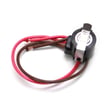
| Frost buildup, weak airflow | Defrost system problem | Inspect defrost components; consider replacing the refrigerator defrost bi-metal WPW10225581 |
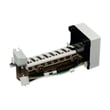
| Ice maker slow or no ice | Water supply, valve fill issue, ice maker fault | Confirm water supply; troubleshoot ice maker; consider the Whirlpool refrigerator ice maker assembly 2198597 |
Why it matters
Cooling problems are usually fixable when caught early. Restoring proper airflow and defrosting prevents long run times, temperature swings, and food spoilage, and it reduces strain on the compressor and fans.
Helpful DIY guidance
For model-specific operating tips and troubleshooting steps, follow the GC5SHEXNS03 owner's manual. If your unit shows a fault code or you suspect an electronic control issue, use our Whirlpool refrigerator error codes guide to narrow the problem before replacing parts.
Last updated: February 2026