 Installation guide
 Owner’s manual




Are Bosch dishwashers a standard size?
Yes. Most Bosch built-in dishwashers, including the Bosch SHE3ARL5UC, are designed to fit a standard 24-inch-wide dishwasher opening, so they install in the same cabinet cutout used by most major brands. For the exact cutout and clearance requirements, use the installation guide.
What “standard size” means for dishwashers
A “standard” built-in dishwasher is sized around a common cabinet opening, not an identical exterior shell on every model.
Typical standards you can plan around:
- Opening width: about 24 inches
- Opening height: commonly 34 to 35 inches (adjustable legs help fine-tune)
- Opening depth: commonly 24 inches to align with standard countertops
- Door clearance: needs room to open fully without hitting adjacent hardware
How to confirm fit for your SHE3ARL5UC
We recommend checking the installation specs before ordering parts or scheduling an install.
Use this checklist:
- Measure the cabinet opening width, height, and depth in three spots (front, middle, back)
- Confirm you have space for the water line, drain hose, and power connection
- Verify the unit can be leveled (floor slope is common)
- Check that the toe-kick area is clear
- Confirm the dishwasher can be anchored to the cabinet or countertop as required
Common fit issues (and what they usually mean)
| What you see | Most common cause | What to do |
|---|---|---|
| Dishwasher won’t slide in all the way | Hose or cord bunching behind unit | Re-route lines through the side channel per the install steps |
| Door rubs cabinets | Unit not centered or not level | Level legs; re-center in opening |
| Gaps at the sides | Opening slightly oversized | Use side mounting/trim approach described in the install instructions |
Why it matters
A correct fit prevents leaks, vibration noise, and door sealing problems. If the dishwasher is forced into a tight opening, it can pinch the drain line and contribute to draining issues later.
Last updated: February 2026
How to fix E21 error on Bosch dishwasher?
An E21 error on a Bosch dishwasher (including model SHE3ARL5UC) points to a wash motor (circulation) problem, most often caused by restricted water flow from a blockage in the sump, pump area, or a jammed impeller. We fix it by clearing obstructions first, then testing the circulation pump circuit and replacing the failed part if needed.
What to do first (fast checks that solve most E21 issues)
- Turn off power at the breaker; do not work with the unit energized.
- Remove standing water from the tub so you can access the sump safely.
- Pull out the lower rack and remove the filter assembly; rinse it thoroughly.
- Check the sump area for glass, labels, bones, or debris that can jam the impeller.
- Spin the impeller area gently (if accessible) to confirm it is not seized.
- Run a short cycle after reassembly to see if the error returns.
If it still shows E21: likely parts to inspect or replace
E21 commonly comes back when the circulation pump cannot move water at the expected rate, or when draining problems cause abnormal water conditions that stress the wash system.
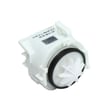
- If the dishwasher is also not draining well, inspect the drain path and consider the dishwasher drain pump 00611332.
- If you find backflow or intermittent draining, check the dishwasher check valve 00611320 for sticking or debris.
- If the unit is not filling correctly (low water level), inspect the dishwasher water inlet valve 00633970.
Quick symptom-to-part guide
| What you notice | What it usually means | What we check next |
|---|---|---|
| Loud hum, little or no wash action | Wash motor is jammed or failing | Sump blockage, circulation pump, wiring |
| E21 plus water left in tub | Drain restriction can contribute | Drain hose, check valve, drain pump |
| Weak spray, poor cleaning | Low flow through wash system | Filters, sump, turbidity sensor, pump |
Why it matters
When the wash motor cannot circulate water, dishes will not clean and the dishwasher can stop mid-cycle to protect the motor and control. Clearing a simple blockage early prevents repeat errors and reduces strain on the pump and control system.
Model-specific references
Use the SHE3ARL5UC installation guide for access steps, mounting, and safety notes before pulling the unit or removing panels.
For code behavior and what Bosch codes mean across cycles, use our Bosch dishwasher error codes reference.
Last updated: February 2026
What's the most common problem with a Bosch dishwasher?
The most common Bosch dishwasher issue is poor cleaning caused by restricted water flow: a dirty filter, clogged spray arms, or low incoming water temperature. On the Bosch SHE3ARL5UC, the next most common complaints are draining problems and leaks tied to the drain path or door sealing.
What we check first (fast, high-impact fixes)
- Clean the filter area and remove any food debris or glass fragments.
- Spin and rinse the spray arms; clear blocked jets with a toothpick.
- Run hot water at the sink until it is hot before starting the cycle.
- Confirm the detergent dispenser door opens freely and is not blocked by tall items.
- Use the correct detergent amount; too much can cause filming, too little can reduce cleaning.
When it is a draining problem
If the tub has standing water, focus on the drain path: the drain hose routing, check valve, and drain pump.
- Inspect for kinks or a low loop issue in the drain hose.
- Check the air gap (if installed) and garbage disposal inlet for clogs.
- If you hear the pump hum but water does not move, the pump or check valve is often involved.
Common parts related to no-drain symptoms
| Symptom | What it often points to | Example part for this model |
|---|---|---|
| Water left in bottom | Blocked drain path or weak pump | Dishwasher drain pump 00611332 |
| Drains slowly or backs up | Restriction or backflow | Dishwasher check valve 00611320 |
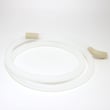
| Leaks or poor drain routing | Cracked or misrouted hose | Dishwasher drain hose 00668108 |
When it is a leak or door issue
Door leaks are usually about alignment or sealing, not “too much water.” Check the door seal for tears, flattening, or debris; also confirm the door closes and latches firmly.
- Wipe the seal and mating surfaces clean.
- Look for a warped lower rack or items preventing full closure.
- If the door will not latch consistently, the latch assembly is a common fix.
Why it matters
Restricted water flow and poor draining make cycles longer, leave residue on dishes, and can lead to odors. Keeping the filter area clean and the drain path clear prevents repeat problems and reduces strain on pumps, valves, and seals.
For model-specific operating and care steps, follow the owner's manual.
Last updated: February 2026





