Owner’s manual
 Error Codes


How big is the KitchenAid KSRG25FKSS16?
The KitchenAid KSRG25FKSS16 side-by-side refrigerator’s exact exterior dimensions (height, width, and depth) are provided in the specifications section of the KSRG25FKSS16 owner's manual. Use those listed measurements to confirm fit in your cabinet opening, through doorways, and for door-swing clearance.
Where to find the exact dimensions
In the KSRG25FKSS16 owner's manual, look for a section labeled Specifications, Product dimensions, or Installation requirements. That section typically lists multiple depth measurements (for example, cabinet only vs. with doors and handles).
What to measure in your home (and what to match)
Measure your space first, then compare to the manual’s dimensions.
- Opening width between cabinets or walls
- Opening height to the lowest overhead cabinet or soffit
- Opening depth to the back wall (note baseboards)
- Door swing clearance so both doors open fully
- Pathway clearance (doorways, hallways, turns)
Common dimension labels you will see
These labels help you compare apples to apples when planning an install.
| Dimension label | What it means | What you use it for |
|---|---|---|
| Height to top of hinge | Tallest point of the refrigerator | Overhead clearance |
| Width | Overall side-to-side measurement | Cabinet opening fit |
| Depth without handles | Front-to-back excluding handles | Flush fit planning |
| Depth with handles | Front-to-back including handles | How far it will protrude |
Why it matters
Using the model-specific dimensions prevents installation problems like doors that hit walls, a refrigerator that will not slide into the opening, or restricted airflow that can reduce cooling performance.
Last updated: February 2026
How do I contact KitchenAid about parts?
For KitchenAid parts help for model KSRG25FKSS16, use the parts list and diagrams for your refrigerator to identify the exact replacement part, then order the part you need through our site. For additional help with part identification or ordering, contact Sears PartsDirect support.
What to have ready before you reach out
Having the right details speeds up parts lookup and avoids ordering the wrong item.
- Your refrigerator’s model number: KSRG25FKSS16
- The serial number (from the model and serial tag)
- Your purchase date (or approximate date)
- A short description of the issue (for example: no ice, leaking water, warm freezer)
- The part you think you need (if known)
Parts that commonly come up for this model
If your symptoms match, these are common part categories to check for KSRG25FKSS16.
| Symptom | Part to check | Example part on this page |
|---|---|---|
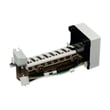
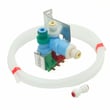
| No ice or small cubes | Ice maker, water inlet valve | Refrigerator ice maker assembly 2198597, refrigerator inlet valve W10408179 |
| Water leaking or no water at dispenser | Water tubing, filter housing | Refrigerator water tube 8201597, refrigerator water filter housing WP2186443 |
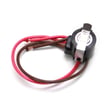
| Frost buildup, warm fridge | Defrost heater, defrost bi-metal | Refrigerator heater WP2323198, refrigerator defrost bi-metal WPW10225581 |
Why it matters
Using the correct, model-matched part helps prevent leaks, poor cooling, and repeat failures. It also makes installation smoother because the connectors, mounting points, and electrical ratings match your KitchenAid side-by-side refrigerator.
Where to confirm part numbers and procedures
We recommend using the diagrams and troubleshooting information in the KSRG25FKSS16 owner's manual when identifying parts and planning a repair.
Last updated: March 2026
How do I read my KitchenAid refrigerator model number?
Your KitchenAid side-by-side refrigerator model number is the full ID printed on the model and serial number label inside the fresh food (refrigerator) compartment. For model KSRG25FKSS16, record the entire model number exactly as shown so we can match the correct parts and diagrams.
Where to find the model number label
We most often see the label in one of these spots:
- Inside the refrigerator compartment on an interior side wall
- On the ceiling (top interior) of the refrigerator compartment
- Inside the door area, sometimes near the lower bins or crisper area
- Less commonly, inside the freezer compartment on an interior wall
For the most accurate location and what the label looks like, use the KSRG25FKSS16 owner's manual.
How to read it correctly (and why it matters)
Model numbers are read left to right, exactly as printed. When you write it down:
- Copy every letter and number (do not skip dashes or suffixes)
- Watch for look-alike characters (0 vs O, 1 vs I)
- Record the serial number too (it helps confirm production details)
- Use the complete model number when ordering parts like an ice maker, inlet valve, or door gasket
Quick checklist
| What to capture | Example for this refrigerator | Used for |
|---|---|---|
| Model number | KSRG25FKSS16 | Correct part fit and diagrams |
| Serial number | (from the same label) | Service identification |
| Brand | KitchenAid | Cross-referencing parts |
Why it matters
KitchenAid model numbers can look similar across multiple side-by-side refrigerators, but small suffix differences can change which parts fit. Using the exact model number helps prevent ordering the wrong component and speeds up troubleshooting.
Last updated: February 2026
What is the most common problem with a KitchenAid refrigerator?
The most common KitchenAid refrigerator issues we see are ice maker and water dispensing problems, followed by cooling complaints caused by restricted airflow or defrost trouble. On the KitchenAid KSRG25FKSS16, start by checking the water supply conditions and basic airflow items listed in the KSRG25FKSS16 owner's manual.
Most common problems (and what they usually point to)
- Ice maker not making ice: water supply issue, inlet valve problem, or ice maker failure
- Water dispenser slow or not working: air in the line, low water pressure, or a weak inlet valve
- Warm refrigerator or freezer: dirty condenser coils, evaporator fan issue, or frost buildup from a defrost failure
- Water leaking or puddles: clogged/iced drain, loose water line, or valve seepage
- Unusual noises: evaporator fan blade hitting ice, failing fan motor, or vibration from the cabinet/lines
Quick checks we recommend first
- Confirm water pressure and temperature: This model’s water supply guideline is 30 to 120 psi and 33 to 100°F.
- Check the shutoff valve (fully open) and inspect the supply line for kinks.
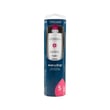
- Replace the water filter on schedule and flush the dispenser after changes.
- Clean condenser coils and make sure vents inside the compartments are not blocked.
- Listen for the evaporator fan (freezer side); a stalled fan often causes warm temps and noise.
Parts that commonly solve these symptoms on KSRG25FKSS16
| Symptom | Likely system | Model-matched part to check |
|---|---|---|
| No ice, no water | Water supply | Refrigerator inlet valve W10408179 |
| Ice maker dead or intermittent | Ice maker assembly | Whirlpool refrigerator ice maker assembly 2198597 |
| Frost buildup, warm temps | Defrost system | Refrigerator defrost bi-metal WPW10225581 and refrigerator heater WP2323198 |
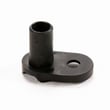
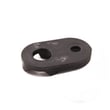
| Door not closing well | Door alignment/cam | Refrigerator door cam (black) WP2182179 |
Why it matters
Ice maker and cooling problems often share the same root causes: water supply limits, airflow restrictions, or ice and frost buildup. Fixing the underlying cause protects food temperatures, reduces leaks, and prevents repeat failures.
Helpful DIY guidance
- Use how to replace the water filter in a KitchenAid refrigerator to handle filter changes and flushing correctly.
- If you suspect a valve issue, follow how to diagnose a faulty refrigerator water inlet valve before replacing parts.
Last updated: February 2026
Why is my KitchenAid side by side refrigerator leaking water?
A KitchenAid KSRG25FKSS16 side-by-side refrigerator most often leaks water because the defrost drain is clogged or frozen, or because the water supply and filtration system is restricted (kinked line, clogged filter, or air in the lines). Use the troubleshooting steps in the KSRG25FKSS16 owner's manual to pinpoint the source.
Quick checks to find where the water is coming from
- Puddle inside the fresh food section: check for a clogged or frozen defrost drain and ice buildup near the drain trough.
- Water on the floor near the front: check the water supply line for kinks and verify fittings are tight.
- Drips at the dispenser area: air in the water lines can cause dripping for 24 to 72 hours after filter changes or water interruptions.
- Slow dispenser flow plus leaking: a clogged or misinstalled filter can force water to seep or drip.
- Leak only when ice maker fills: suspect the inlet valve or fill tubing.
Step-by-step troubleshooting (safe DIY)
- Confirm the leak location: dry everything, then watch for the first place water reappears.
- Check the water filter seating: remove and reinstall the filter correctly; then dispense water to flush air.
- Inspect the home water line: straighten any kinks and make sure the line is not pinched behind the cabinet.
- Flush the dispenser: run several glasses of water to clear air and stabilize flow.
- If the leak points to the valve: test and replace the refrigerator inlet valve W10408179 if it is seeping, sticking, or not shutting off fully.
Common causes and what you typically see
| Symptom | Most likely cause | What to do first |
|---|---|---|
| Water under crisper drawers | Clogged/frozen defrost drain | Clear the drain path and melt ice safely |
| Drips from dispenser after use | Air in water lines | Flush; allow 24 to 72 hours of normal use |
| Slow water flow | Clogged filter or misinstalled filter | Remove/reseat filter; test flow |
| Leak during ice maker fill | Inlet valve not sealing or tubing issue | Inspect valve and connections |
Why it matters
Water leaks can lead to ice buildup, poor cooling airflow, and floor damage. Fixing the root cause early also helps protect components like the ice maker, water tubing, and electrical connections.
Last updated: February 2026