Installation guide
 Owner’s manual


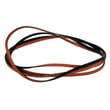
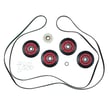
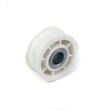
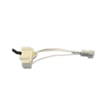
How do I tell what model my Kenmore dryer is?
Your Kenmore dryer’s model number is printed on the model and serial number label; on Kenmore model 11066922500, that label is located at the top inside the dryer door well. Write down the full model number and serial number exactly as shown so you can match the correct parts and instructions.
Where to look on the dryer
Check these common label locations first (most Kenmore dryers use one of these):
- Top inside the dryer door well (most common on this style)
- Inside the door opening on the cabinet frame
- Rear of the dryer near the top (less common)
- On the side panel near the door opening (some versions)
For the exact label location and how it’s formatted, use the 11066922500 owner's manual.
What to record (and why)
When you find the label, copy these items exactly:
- Model number (example format: 110.XXXXXXXX)
- Serial number
- Purchase date (helpful for service history)
Why it matters
The model number narrows down the correct Kenmore dryer parts list, while the serial number helps identify production variations. That prevents ordering the wrong items like a door switch, heating element, or control.
Quick check: model number vs. part number
| Item | What it identifies | Example from this page |
|---|---|---|
| Model number | The exact dryer design | 11066922500 |
| Part ID | The catalog identifier used to order | WP3406107 |
| Part number | Manufacturer number for the same part | 3406107 |
If you are troubleshooting a symptom after identifying your model, the Kenmore 110 series electronic control model dryer error codes guide can help you match error codes to likely causes.
Last updated: February 2026
How to remove top panel of Kenmore dryer?
On Kenmore model 11066922500, we remove the top by first releasing the top retaining clips at the front seam, then lifting the top up and off after removing any screws that secure it to the cabinet. Follow the steps in the 11066922500 installation guide for safe access and handling.
Before you start (safety and prep)
- Unplug the dryer (or switch off the breaker) before opening any panels.
- If it is a gas dryer, shut off the gas supply valve.
- Pull the dryer forward enough to work comfortably without crushing the vent.
- Protect the floor with cardboard or a drop cloth.
- Keep screws organized by location so reassembly is straightforward.
Steps to remove the top panel
- Disconnect power and confirm the drum light and controls are off.
- Access the front seam where the top meets the front panel.
- Release the clips: insert a flat putty knife or flat screwdriver into the seam near the left and right front corners; push to release each spring clip.
- Lift the top: once both clips release, lift the front of the top panel.
- Remove mounting screws (if present): some versions use screws under the console or along the top flange.
- Slide and lift off: slide the top slightly to disengage rear tabs, then lift it off the cabinet.
What you can reach once the top is off
| Area exposed | What you can inspect | Common symptom it helps diagnose |
|---|---|---|
| Door switch area | Wiring and switch operation | Dryer will not start |
| Belt and idler area | Belt tension, pulley wear | Squealing, thumping, no tumble |
| Drum support area | Rollers and shafts | Rumbling, uneven drum movement |
Parts that commonly relate to top-off service
- If the dryer will not start when the door closes, check the dryer door switch WP3406107.
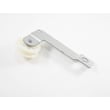
- If you hear squealing or the drum is hard to turn, inspect the dryer idler pulley 279640.
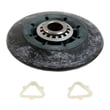
- If you hear rumbling or thumping, inspect the support WPW10314173 drum rollers.
Why it matters
Removing the top panel correctly prevents cabinet damage and makes it easier to diagnose no-start and noise issues (door switch, belt path, idler pulley, and drum support rollers) without forcing panels or bending the frame.
Last updated: February 2026
Is it worth replacing the heating element in a dryer?
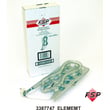
Yes, replacing the heating element is usually worth it on a Kenmore dryer like model 11066922500 because the part cost is typically far less than a new dryer. It is most worthwhile when the dryer tumbles normally but has no heat, and you also correct airflow or power-supply issues.
Quick decision checklist
- The drum turns and the timer advances, but clothes stay cold
- You have proper airflow at the outside vent hood (strong, steady exhaust)
- The dryer is on the correct power supply (electric dryers can have two fuses or breakers)
- The lint screen and venting are clean and not crushed or kinked
- The rest of the dryer is in good shape (no major drum noise, no burning smell beyond first-use odor)
What to check before you buy a heating element
Your installation instructions for this style of electric dryer recommend running the dryer for about 5 minutes and then checking for heat; if there is no heat, verify the home electrical supply because there may be two fuses or circuit breakers feeding the dryer. See the 11066922500 installation guide.
Also use the troubleshooting steps in the 11066922500 owner’s manual to confirm airflow is not restricted; a clogged or kinked exhaust vent can cause long dry times and overheating symptoms that look like a heater problem.
Common “no heat” causes (and what they look like)
| Symptom | Most likely cause | Typical fix |
|---|---|---|
| Tumbles but no heat | Power supply issue (one breaker tripped) | Reset both breakers, check both fuses |
| Long dry times, hot cabinet | Restricted venting | Clean/replace vent with heavy metal or flexible metal |
| No heat after overheating event | Thermal cut-off opened | Replace the cut-off kit and correct venting |
| No heat, element tests open | Failed heating element | Replace the element |
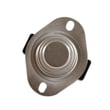
If you’re replacing heat-related parts after an overheat, the cut-off kit 279769 is commonly replaced along with vent cleaning so the new part does not fail again.
Why it matters
A new heating element can restore normal drying performance, but airflow and electrical supply determine whether the repair lasts. Fixing vent restrictions and confirming both breakers are on protects the heater, thermostat, and wiring.
Last updated: February 2026
Is there a way to reset a Kenmore dryer?
Yes. For Kenmore dryer model 11066922500, the most reliable “reset” is a power reset: shut the dryer off, disconnect power for about 1 minute, then restore power and restart the cycle (close the door, select a cycle, press PUSH TO START). See the 11066922500 owner's manual.
Quick reset steps (power reset)
- Turn the Cycle Selector to OFF.
- Unplug the dryer (or switch the breaker OFF).
- Wait 60 seconds.
- Restore power.
- Close the door firmly.
- Select a cycle and temperature.
- Press PUSH TO START.
If it still will not start after a reset
These checks solve most “dead” or “won’t run” complaints on this style of Kenmore dryer.
- Confirm the door is fully closed; a failed door switch can prevent starting (see dryer door switch WP3406107).
- Check house power: many dryers use two fuses or breakers; make sure both are on.
- Turn the timer/cycle knob to a definite cycle (not between settings).
- Clean the lint screen and make sure airflow is not restricted.
- If the motor hums but the drum will not turn, inspect the belt drive system; a worn idler or rollers are common wear items.
Common symptoms and what they usually mean
| Symptom | Most likely cause | What we recommend |
|---|---|---|
| No lights, no response | Power supply issue | Check both breakers/fuses, cord, outlet |
| Runs only with door held | Door switch not closing | Test/replace door switch |
| Hums, drum does not turn | Belt/idler/roller drag | Inspect idler and drum support rollers |
| Starts then stops quickly | Overheat/airflow problem | Clean lint screen, venting, internal lint buildup |
Why it matters
A “reset” clears a temporary control state, but it will not fix a door-switch, power-supply, or airflow problem. Doing the quick checks above prevents repeat shutdowns and helps protect the heating system and motor.
Last updated: February 2026
What are signs of a failing dryer element?
A failing heating element in your Kenmore dryer model 11066922500 usually shows up as no heat (dryer tumbles but clothes stay cool and damp) or weak, inconsistent heat that makes cycles take much longer. Confirm airflow and power first, then test the heater circuit using the steps in the 11066922500 installation guide.
Common signs you are losing heat
- Dryer runs and tumbles normally, but there is little to no heat after about 5 minutes.
- Clothes take multiple cycles to dry, even on high heat.
- Heat seems to come and go during the cycle.
- A burning smell on first use can be normal for a new element, but ongoing overheating points to a heat-control problem.
- The dryer shuts off early or performance changes after vent cleaning (often airflow related, not the element).
Quick checks before blaming the element
The installation instructions for this dryer recommend checking for heat after the dryer runs about 5 minutes; if there is no heat, verify the electrical supply and protection devices.
- Make sure the dryer is on the correct cycle and temperature setting.
- Check that the door fully closes and the switch engages.
- Verify the home has two fuses or two breakers for the dryer and that both are on.
- Confirm the dryer is plugged into a properly grounded outlet.
- Check venting: crushed, kinked, or restricted venting can cause long dry times and overheating.
What typically fails with the element (and what to test)
If airflow and power are good, the heater circuit is the next place to look.
| Symptom | Most common cause | Related part for 11066922500 |
|---|---|---|
| No heat at all | Open heating element or blown thermal cut-off | Dryer heating element WP3387747 or cut-off kit 279769 |
| Overheats, scorches, or cycles too hot | Thermostat not regulating temperature | Dryer operating thermostat WP3387134 |
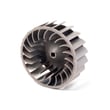
| Long dry times with normal heat | Poor airflow or weak blower | Dryer blower wheel WP697772 |
Why it matters
Running a dryer with a weak heater or restricted airflow increases drying time, wastes energy, and can overheat components like the thermal cut-off and thermostat. Fixing the root cause protects the heating circuit and restores normal cycle performance.
Last updated: February 2026