 Owner’s manual


Is a 7.4 cu ft dryer big?
Yes. A 7.4 cu ft dryer is considered large capacity, meaning it can handle bigger loads and bulky items with fewer cycles. For a GE electric dryer like model DBXR453EV0WW, that size is typically a step up from standard-capacity dryers.
What “7.4 cu ft” means in real use
Dryer capacity is the approximate volume of the drum. A larger drum helps clothes tumble more freely, which can improve drying performance and reduce wrinkles.
Common examples a 7.4 cu ft dryer can handle:
- Larger mixed loads (towels plus everyday clothing)
- Bulky items (comforters, blankets, jackets)
- Fewer loads per week for families
- Better tumbling space for faster, more even drying
Capacity comparison (typical ranges)
| Dryer capacity | Common label | Best for |
|---|---|---|
| 5.0 to 6.5 cu ft | Standard | Singles, couples, smaller loads |
| 6.6 to 7.3 cu ft | Large | Medium to larger households |
| 7.4 cu ft and up | Extra large | Bulky items, big weekly laundry |
Tips to get the best results from a large-capacity dryer
Even with a big drum, overloading can still cause long dry times.
- Fill the drum loosely; items should tumble, not pack tightly
- Use the correct cycle (timed dry vs. automatic) for the fabric type
- Clean the lint screen before every load
- Keep the exhaust venting clear to maintain airflow
- Follow load and cycle guidance in the DBXR453EV0WW owner’s manual
Why it matters
A larger-capacity dryer can save time and energy by reducing the number of cycles you run. It also helps prevent damp spots by giving laundry enough room to tumble and allowing airflow to move through the load.
Last updated: January 2026
What is the most common problem with a GE dryer?
For the GE DBXR453EV0WW electric dryer, the most common problems we see are the drum not turning (belt or idler issue), no heat or weak heat (heating circuit or airflow restriction), and a no-start condition (door switch or control/timer issue). Many symptoms trace back to restricted venting.
Most common symptoms and what they usually mean
- Drum won’t turn but motor runs or hums: worn/broken belt, seized drum support, or a stuck idler.
- Runs but no heat: heating element circuit issue, thermostat problem, or a power supply issue (missing one leg of 240V).
- Takes too long to dry: clogged lint screen, crushed/blocked vent, or a weak blower airflow.
- Won’t start: door switch not closing, timer/control issue, or power problem.
- Overheats or shuts off: restricted airflow causing high temperatures and safety devices to open.
Quick checks we recommend first (fast, high-impact)
- Clean the lint screen and confirm strong airflow at the outside vent hood.
- Inspect the vent path for kinks, long runs, or lint buildup.
- Verify the dryer is getting full power (electric dryers typically need 240V; a tripped breaker can leave it running but not heating).
- Listen for squealing or thumping (often belt, idler, drum slides, or felt).
Common parts tied to these problems on DBXR453EV0WW
| Symptom | Likely part area | Example model-matched part |
|---|---|---|
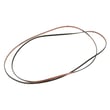
| Drum not turning | Belt and tension system | Drive belt WE03X29897 |
| Squealing, poor drum support | Drum support surfaces | Slide drum WE03X37317 |
| No-start when door closes | Door interlock | Door switch WE4M415 |
| No heat or overheating | Heating and temperature control | Heater housing WE11M23 |
Why it matters
Airflow problems can mimic “bad parts” by causing long dry times, overheating, and repeated thermostat trips. Fixing venting first often restores normal drying and helps protect the heating system and motor.
For model-specific diagnostics, wiring, and access steps, use the DBXR453EV0WW owner’s manual.
Last updated: January 2026
What does DBXR453EV0WW stand for?
DBXR453EV0WW is the GE model number that identifies a specific electric dryer configuration (series, design, and feature set) so you can match the correct parts and service information. For this appliance, the full model is GE DBXR453EV0WW electric dryer.
How to read the model number
Manufacturers use model numbers like DBXR453EV0WW as an internal “code” for the dryer’s platform and options. While GE does not publish a universal public key for every character, the model number is still very useful for parts lookup and troubleshooting.
Common ways the code is used:
- DBXR: Identifies the dryer series/platform family.
- 453: Often indicates a specific design or feature package within that series.
- EV0: Typically a revision/engineering or configuration identifier.
- WW: Commonly used to indicate white finish on many GE models.
For the most accurate identification details (and to confirm features for your exact revision), use the DBXR453EV0WW owner’s manual.
Why the exact model number matters for parts
Even small suffix changes can affect fit and wiring. Using the full model number helps ensure you get the right GE dryer parts such as the belt, idler pulley, or thermostats.
When ordering parts, match:
- The full model number: DBXR453EV0WW
- The part ID (Sears PartsDirect identifier)
- The manufacturer part number (GE number)
Example: common model-matched parts
| What you’re fixing | Example part for DBXR453EV0WW | What it does |
|---|---|---|
| Drum not turning | Drive belt WE03X29897 | Turns the drum using the motor pulley |
| Squealing or thumping | Slide drum (wear pads) | Supports drum glide surfaces |
| Weak airflow or rumbling | Dryer blower wheel | Moves air through the heater and drum |
Why it matters
Correctly decoding and using DBXR453EV0WW prevents wrong-part returns and speeds up repairs, especially on items that vary by revision like a timer, thermostat, or heating circuit components.
Last updated: January 2026
What brand of dryer has the least problems?
If you want a dryer brand with the fewest problems, we recommend prioritizing simple, proven designs and strong parts support. In real-world ownership, Speed Queen is widely known for durability; Whirlpool and LG also tend to perform well, and GE is a solid choice when you want straightforward serviceability and common replacement parts.
What to look for (more important than the logo)
The most reliable dryers usually share the same traits: fewer “smart” features, strong airflow, and easy-to-service mechanical components.
- Choose a basic timer or simple electronic control over feature-heavy models
- Keep the venting short and clean to prevent overheating and long dry times
- Favor brands with widely available parts (belt, thermostat, motor, door switch)
- Avoid chronic overloads; they wear the drum support and belt system faster
- Maintain airflow: clean the lint screen every load and the vent regularly
For your GE electric dryer model DBXR453EV0WW, the maintenance and operating guidance in the DBXR453EV0WW manual helps you get the best reliability from the machine you already own.
Reliability snapshot (typical ownership trends)
These are practical, customer-focused expectations for common dryer brands.
| Brand | Typical reliability profile | Best fit for |
|---|---|---|
| Speed Queen | Very durable, commercial-style build | Long lifespan, simple operation |
| Whirlpool | Strong basic reliability, easy to repair | Value, parts availability |
| LG | Good performance, often low service rates | Features plus reliability |
| GE | Solid mainstream reliability, common parts | Straightforward repairs and upkeep |
Why it matters for repairs and downtime
Even a “reliable” dryer will have wear items. When parts are common and easy to access, repairs are faster and less expensive.
Common wear items on many GE electric dryers include:
- Drum belt and idler pulley components
- Drum slides and felt seals
- Thermostats and thermal safety devices
- Door switch and motor-related parts
If your dryer starts squealing, thumping, or the drum stops turning, the drive belt WE03X29897 is one of the first components we check on this model family.
Practical tip: reliability is also airflow
A large share of “dryer problems” are actually vent restriction symptoms (long dry times, overheating, cycling heat). For prevention steps, follow the cleaning schedule in the how to clean and maintain your clothes dryer guide.
Last updated: January 2026





