Installation guide
 Owner’s manual
 Error Codes


How many cubic feet is a Kenmore 11024712300 washer?
The Kenmore washer model 11024712300 has a 3.5 cu. ft. wash basket capacity. For the matching use and care details for this exact model, use the 11024712300 owner's manual.
How to confirm you are matching the right model
Use the model and serial tag under the lid so you do not mix up similar Kenmore 110-series washers.
- Lift the washer lid and locate the model/serial label
- Match the full model number exactly: 11024712300
- Use the capacity for load sizing, not the cabinet size
- If you are comparing washers, compare capacity and basket style (standard vs. larger basket)
What 3.5 cu. ft. means for real-world loading
A 3.5 cu. ft. top-load washer is a large-capacity design; it handles everyday family loads without packing the basket.
| Load type | Practical guidance for 3.5 cu. ft. |
|---|---|
| Mixed clothes | Fill loosely to the top of the basket, do not compress |
| Towels/jeans | Run medium loads; keep like items together |
| Bulky items | Wash 1 large item at a time; add a few small items to balance |
Why it matters
Using the correct capacity helps prevent poor cleaning and out-of-balance spinning; it also reduces strain on the drive system and agitation components.
Tips to avoid overload and balance problems
- Load items evenly around the basket
- Keep the top layer loose so water and detergent circulate
- If the washer bangs or will not spin, pause and redistribute the load
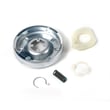
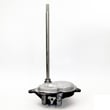
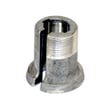
- Replace worn agitation parts if clothes are not moving well, such as the agitator dog 80040
Last updated: January 2026
How to hard reset kenmore washer?
To hard reset your Kenmore washer model 11024712300, unplug it (or switch off the breaker) for 2 minutes, then restore power and restart a cycle. This clears many temporary control glitches; if the washer still will not run, check lid closure and basic drain and level conditions.
Hard reset steps (safe and effective)
- Press the Cycle Control knob in to stop the washer (if it is running).
- Unplug the washer or turn off the circuit breaker.
- Wait 2 minutes.
- Restore power.
- Close the lid fully.
- Select a cycle and pull out the Cycle Control knob to start.
For model-specific control and cycle details, follow the 11024712300 owner's manual.
If it still will not start, agitate, or spin
A reset will not fix a mechanical or safety-interlock issue. For this model, the manual notes the washer will not agitate or spin with the lid open, and some cycles pause briefly.
- Confirm the lid is fully closed and the washer is not in a normal cycle pause.
- Avoid extension cords; plug directly into a grounded outlet.
- Reduce load size if overloaded.
- If the washer will not spin or drain, check for a kinked or clogged drain hose and confirm the drain height is not above typical limits.
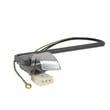
- If the symptom matches a lid-safety problem (fills but will not agitate/spin), inspect the washer lid switch WP3949238.
Quick checks: reset vs. repair
| What you see | Most likely cause | Best next step |
|---|---|---|
| Random lights or odd behavior | Control glitch | Hard reset (2 minutes) |
| Fills but will not agitate/spin | Lid not closed or lid switch issue | Check lid; test/replace lid switch |
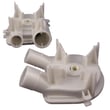
| Will not drain/spin | Drain restriction or pump issue | Check hose; inspect pump |
| Basket crooked or banging | Unbalanced load or leveling | Rebalance; level washer per install guide |
Why it matters
A hard reset is a fast first step because it clears temporary electronic states. When the problem is a safety input (lid switch), drain restriction, or out-of-level cabinet, the washer needs a correction or part replacement, not a reset.
Last updated: January 2026
How to unclog drain hose on Kenmore washer?
To unclog the drain hose on Kenmore washer model 11024712300, we unplug the washer, drain any standing water, then remove and flush the drain hose and check the pump inlet for debris. Reinstall the hose exactly as shown in the 11024712300 installation guide to prevent leaks and kinks.
Safety and prep
- Unplug the washer.
- Turn off both water faucets.
- Protect the floor with towels or a shallow pan.
- If the tub is full, bail out water first to reduce spills.
Steps to clear the clog
- Access the drain hose connection: Pull the washer forward and locate the drain hose where it connects at the bottom of the cabinet.
- Remove the hose: Release the clamp and twist the hose back and forth while pulling it off the drain connector.
- Clear the blockage:
- Run water through the hose from a sink or outdoor spigot.
- Push out lint or small items with a flexible brush or a straightened coat hanger (avoid puncturing the hose).
- Check the pump inlet: Look into the pump port and remove coins, socks, or lint clumps.
- Reinstall correctly: Push the hose fully onto the drain connector until it reaches the cabinet stop, then reposition the clamp.
Reinstall tips that prevent repeat clogs
The drain hose setup matters as much as the unclogging.
- Keep the hooked end in the tub or standpipe; do not straighten it.
- Rotate the hook to eliminate kinks.
- Do not force extra hose down into the standpipe.
- Leave an air gap so drain water cannot siphon back.
| Symptom | Most common cause | What we check first |
|---|---|---|
| Washer will not drain | Hose kink or clog | Hose routing and hooked end |
| Slow drain | Lint buildup | Hose flush and pump inlet |
| Leaks at washer base | Loose clamp or poor seating | Clamp position and hose fully seated |
Why it matters
A partially clogged or kinked drain hose can cause slow draining, poor spin performance, and leaks. Installing the hose per the guide protects floors from water damage and helps prevent the hose from slipping off.
Last updated: January 2026