Installation guide
 Owner’s manual
 Error Codes


What is the life expectancy of a KitchenAid dishwasher?
Most KitchenAid dishwashers, including the KitchenAid KUDS35FXSSA undercounter dishwasher, typically last 10 to 14 years with normal household use. Consistent cleaning, correct loading, and addressing leaks or draining issues quickly are the biggest factors that help you reach the high end of that range (or beyond). See the KUDS35FXSSA owner's manual for model-specific care and operating guidance.
What affects dishwasher lifespan the most
- Water quality (hard water): mineral buildup can shorten the life of the heater, pump, and seals.
- How often you run it: multiple loads per day adds wear to the wash motor and drain pump.
- Cleaning and maintenance: keeping the filter area and spray paths clear reduces strain.
- Drying habits: using rinse aid improves drying and helps reduce deposits.
- Installation quality: a properly leveled, centered dishwasher helps prevent door rubbing and leaks.
Quick maintenance checklist (high impact)
- Run hot water at the sink before starting a cycle so the dishwasher fills with hotter water.
- Use rinse aid consistently to improve drying and reduce hard-water spotting.
- Check the bottom area for debris that can interfere with draining.
- Inspect the door seal area and wipe it clean to prevent seepage.
- Avoid overloading; blocked spray arms can lead to poor cleaning and longer run times.
Common “wear” parts vs. “major” parts
| Part type | What you may notice | Typical fix |
|---|---|---|
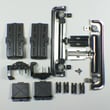
| Rack hardware | Rack won’t roll smoothly, adjuster breaks | Replace rack components |
| Seals | Small leaks at the door | Replace door seal |
| Pumps/valves | Not draining or not filling | Replace pump or inlet valve |
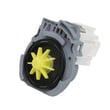
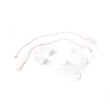
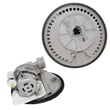
If you are seeing draining problems that could shorten lifespan, the dishwasher drain pump WPW10348269 is a common repair part for this model.
Why it matters
A dishwasher that is maintained and installed correctly usually avoids the early failures that drive replacement (leaks, poor draining, and heating or drying complaints). Small fixes and routine care often add years of reliable service.
Last updated: January 2026
Is it worth fixing a KitchenAid dishwasher?
Fixing a KitchenAid dishwasher like model KUDS35FXSSA is worth it when the problem is a wear item or a single mid-priced part, and the unit has been reliable overall. Replacement makes more sense when multiple major systems are failing or repair cost approaches about half the price of a comparable new dishwasher.
Quick decision checklist
- If it’s leaking at the door, start with seals and alignment checks before assuming a major failure.
- If it won’t drain, check the drain path first; then consider the drain pump.
- If it won’t fill, confirm water supply is on and connections are correct; then consider the inlet valve.
- If it won’t start or stops mid-cycle, suspect a latch issue or an electrical/control problem.
- If you’ve had 2+ repairs in the last 12 months, replacement usually becomes the better value.
Common repairs that are usually “worth it”
These are typical, targeted fixes that often restore normal operation without replacing the dishwasher.
| Symptom | Likely area | Example part for KUDS35FXSSA | Typical effort |
|---|---|---|---|
| Not draining | Drain system | Dishwasher drain pump WPW10348269 | Medium |
| Not filling | Water supply | Dishwasher water inlet valve WPW10327249 | Medium |
| Door won’t latch / won’t run | Door switch/latch | Dishwasher door latch WPW10653840 | Easy to medium |
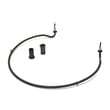
| Poor drying | Heating circuit | Heater W10703867 | Medium |
When replacement is usually the better call
Replacement is typically the better value when any of these are true:
- The dishwasher needs a major assembly (for example, motor/sump) and you’re also seeing other issues.
- The tub is damaged or leaking from a non-serviceable area.
- You have recurring electrical problems (intermittent power, burning smell, repeated control failures).
- The dishwasher is near the end of typical life expectancy.
Why it matters
A dishwasher repair is “worth it” when it restores reliability. Spending on one focused repair (like a drain pump, inlet valve, or door latch) often beats replacing the entire unit, but stacking multiple high-cost repairs usually does not.
What we recommend checking first
Use the KUDS35FXSSA installation guide to confirm the basics that can mimic a “bad dishwasher”:
- Water supply connection is tight and not leaking (avoid overtightening fittings).
- Drain hose is properly connected and clamped.
- Dishwasher is centered and leveled so the door closes correctly.
Last updated: January 2026
What is the most common problem with a KitchenAid dishwasher?
For the KitchenAid KUDS35FXSSA dishwasher, the most common customer-reported problems are poor cleaning (dirty dishes) and drain-related issues (water left in the tub). In many cases, the root cause is a restriction in the wash system (filter area, spray arms) or a failing drain component.
Most common symptoms and what they usually point to
- Dishes come out dirty or gritty: wash water is not circulating well; check spray arms and sump area
- Water won’t drain or drains slowly: drain path restriction or a weak drain pump
- Won’t start: door not fully latched, power issue, or control problem
- Leaks at the door: worn or misaligned door seal, door not centered
- Loud humming or grinding: pump or motor area obstruction, or a worn pump/motor
Quick checks we recommend first (fast, no parts guessing)
These align with the basic “does not operate” checks used during installation verification.
- Confirm the door is closed tightly and latched
- Confirm the water supply is turned on
- Check the circuit breaker or house fuse
- Start a cycle and verify water enters the tub early in the cycle
- If it won’t run correctly, follow the troubleshooting steps in the KUDS35FXSSA installation guide
Parts that commonly solve these problems on KUDS35FXSSA
If your symptoms match, these are frequent repair paths for this model.
| Symptom | Common part to inspect/replace | Why it helps |
|---|---|---|
| Standing water after cycle | Dishwasher drain pump WPW10348269 | Restores proper draining when the pump is weak or seized |
| Not filling or fills slowly | Dishwasher water inlet valve WPW10327249 | Fixes low or no water entering the dishwasher |
| Poor drying or water not heating | Heater W10703867 | Helps restore water heating and drying performance |
| Won’t start or stops when door moves | Dishwasher door latch WPW10653840 | Ensures the control “sees” the door as safely latched |
Why it matters
Dirty dishes and standing water are usually not “normal performance”; they typically mean the dishwasher is not getting enough wash pressure, not heating correctly, or not evacuating water. Fixing the underlying cause protects the pump, motor, and control from repeat failures.
Last updated: January 2026