Owner’s manual
 Error Codes



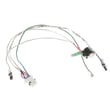
How to remove bottom grille on GE refrigerator?
On the GE CYE22USHESS bottom-mount refrigerator, the bottom grille (base grille) typically comes off by releasing its retaining tabs or screws and then pulling the grille straight out from the front. Use the removal method shown for your exact configuration in the owner's manual.
- Unplug the refrigerator or switch it off at the control panel if you will be working near wiring.
- Pull the refrigerator straight out a few inches if you need more hand clearance (avoid rolling over the power cord or water line).
- Look along the top edge and corners of the grille for fasteners or snap tabs.
- If screws are present, remove them with a Phillips screwdriver.
- If tabs are present, press the tabs in and pull the grille forward to release it.
- Lift the grille away and set it aside.
In most cases, reinstalling is the reverse of removal: align the grille with the slots, push it in until it seats, then reinstall any screws.
| Grille style you see | What to do | What you should feel/hear |
|---|---|---|
| Screw-secured grille | Remove Phillips screws, then pull forward | Grille loosens after screws are out |
| Snap-in grille | Press tabs, then pull forward | Tabs release with a firm pop |
Removing the bottom grille gives you access for cleaning dust buildup and checking airflow at the front of the refrigerator. Better airflow helps cooling performance and can reduce temperature swings.
Last updated: February 2026
What is the most common problem with GE refrigerators?
The most common issue we see with GE refrigerators, including the GE CYE22USHESS bottom-mount refrigerator, is a cooling complaint (fresh food too warm, freezer not holding temperature, or temperature swings). In many cases, the root cause is restricted airflow, a failing evaporator fan, or a temperature-sensing or defrost problem; use the CYE22USHESS owner's manual to confirm the correct checks for your exact symptoms.
Start with the items that most often create warm temperatures or uneven cooling:
- Dirty condenser coils causing poor heat release and longer run times
- Air vents blocked by food packages, bins, or ice buildup
- Evaporator fan not running or running intermittently (moves cold air through the cabinet)
- Defrost system trouble leading to frost-packed evaporator (air cannot pass)
- Temperature sensor reading incorrectly and confusing the control
- Control board issues that prevent fans, defrost, or compressor control from operating normally
| Symptom you notice | Common system involved | Example part on this model page |
|---|---|---|
| Fridge warm, freezer cold, weak airflow | Evaporator fan/air circulation | Refrigerator evaporator fan motor and blade WR60X26866 |
| Temps swing, unit runs too long or too short | Temperature sensing | Refrigerator temperature sensor WR55X10025 |
| Heavy frost on back freezer panel, airflow drops | Defrost system | Refrigerator defrost heater WR51X10132 and refrigerator defrost bi-metal thermostat WR50X10108 |
| Random behavior, no response, repeated odd issues | Electronic control | Refrigerator main board assembly WR55X46805 |
We recommend this order because it catches the most common, easiest-to-fix causes first:
- Verify the temperature settings and give the unit 24 hours to stabilize after changes
- Make sure interior vents are not blocked (especially the return vents)
- Clean condenser coils and confirm the condenser fan (if equipped) is running
- Listen for the evaporator fan when the doors are closed (a failed fan often means warm fresh food)
- Check for frost buildup on the freezer rear panel (a sign of defrost trouble)
- If you see an error code, use GE refrigerator error codes to narrow the circuit to test
Cooling problems are usually airflow or control related; catching them early helps prevent food spoilage and reduces strain on the compressor and sealed system.
Last updated: February 2026
What is the bottom compartment of a fridge called?
On the GE CYE22USHESS refrigerator, the “bottom compartment” most often means the lower drawers in the fresh-food (refrigerator) section, such as the crisper drawers or the full-width temperature controlled drawer. The freezer is also located on the bottom in this bottom-freezer design; see the CYE22USHESS owner's manual for the exact compartment names.
- Freezer compartment: The bottom section used for frozen food and ice storage.
- Crisper drawers: Lower drawers in the refrigerator section for fruits and vegetables.
- ClimateZone drawers: Produce drawers designed to keep fruits and vegetables organized in separate areas.
- Temperature controlled drawer: A full-width drawer with selectable temperature settings (often labeled for deli, beverage, or meat).
| What you mean by “bottom” | Most common name | Typical use |
|---|---|---|
| Bottom of the whole appliance | Freezer compartment | Frozen foods, ice |
| Bottom drawers inside the refrigerator section | Crisper drawers (produce drawers) | Fruits and vegetables |
| Full-width drawer with a selector | Temperature controlled drawer | Deli, beverages, meat, flexible storage |
Using the right compartment name helps you follow the correct care steps and settings. For example, GE notes that moisture can collect under produce drawers and should be wiped dry, and the temperature controlled drawer settings are intended for specific food types.
- Store produce in the crisper drawers to help reduce drying and wilting.
- Wipe any water that collects in the bottom of drawers or under drawers.
- Match the temperature controlled drawer setting to what you store (deli, beverage, meat).
- Avoid overpacking drawers so cold air can circulate.
- If temperatures seem uneven, make sure drawers and shelves are fully seated.
Last updated: February 2026