 Installation guide
 Owner’s manual
 Error Codes



What is the average lifespan of a GE dishwasher?
A GE dishwasher like model PDT845SSJ0SS typically lasts 10 to 15 years, with about 12 years being a solid average for normal household use. Consistent cleaning, correct detergent use, and fixing small issues early usually make the biggest difference in how long it runs reliably.
Typical lifespan range (what to expect)
Most modern residential dishwashers fall into a predictable window.
- Average: ~12 years
- Common range: 10 to 15 years
- Shorter life: heavy daily use, hard water buildup, frequent clogs
- Longer life: regular maintenance, clean filters, prompt leak/drain fixes
| Usage pattern | Typical outcome | What helps most |
|---|---|---|
| Light (few loads/week) | Often reaches the high end of the range | Keep seals clean, run cleaning cycles |
| Normal (most households) | Around the average | Clean filters and spray arms |
| Heavy (multiple loads/day) | Can trend lower | Prevent clogs, address leaks quickly |
Maintenance that extends life
These steps help protect key components like the circulation pump, drain path, and door seals.
- Clean the interior and follow the care guidance in the owner's manual.
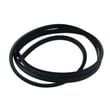
- Keep the door sealing surfaces clean; replace worn seals if you see drips (for example, the dishwasher tub gasket WD08X23477).
- Prevent drain backups by keeping the drain path clear; replace a cracked or kinked hose such as the dishwasher drain hose WD24X10062 when needed.
- Use the right amount of detergent and avoid overfilling.
- If the door does not latch firmly, inspect the latch system (the GE dishwasher door latch lock WD21X10490 is a common wear item).
Why it matters
Dishwasher lifespan is closely tied to leak prevention and water flow. A small door leak, weak latch, or partial drain restriction can force longer run times, strain the pump and motor system, and shorten the service life.
Last updated: February 2026
What is the most common problem with a GE dishwasher?
The most common issues we see with GE dishwashers like model PDT845SSJ0SS are not draining and not starting. Drain problems usually trace to a clogged filter, a kinked/blocked drain hose, or a disposal/air gap restriction; start problems often come from a door that is not fully latched.
Most common symptoms and what they usually mean
- Standing water in the bottom: drain path restriction (filter, hose, air gap, disposal inlet).
- Hums but won’t drain: partial blockage or drain pump struggling.
- Won’t start or stops immediately: door not latching, latch strike misalignment, or control lock/settings.
- Detergent left in the cup: dishes blocking the dispenser or poor spray action.
- Poor cleaning: spray arm/manifold blockage, loading issues, or low water temperature.
Quick checks we recommend first (fast, no parts)
- Confirm the door closes firmly and the rack is fully pushed in.
- Check for error indicators and match them to the code list in GE dishwasher error codes.
- Inspect the drain route: look for kinks and clogs; make sure the dishwasher can be removed for service per the installation guide.
- Re-load to avoid blocking the detergent cup; the manual notes that blocked spray can leave detergent behind.
- Use the right detergent (automatic dishwasher detergent only) and wipe up any rinse-aid spills.
Parts that commonly fix “won’t start” or “won’t drain”
If the basics check out, these model-matched parts are frequent solutions:
| Problem | Common fix | Example part for PDT845SSJ0SS |
|---|---|---|
| Door won’t latch, unit won’t start | Replace latch or adjust strike | GE dishwasher door latch lock WD21X10490, dishwasher door latch strike WD13X10071 |
| Not draining or slow drain | Replace a restricted hose | Dishwasher drain hose WD24X10062 |
Why it matters
Drain and latch problems can look like “the dishwasher is dead,” but they are often simple mechanical or flow issues. Fixing the root cause prevents repeat clogs, detergent residue, and cycle interruptions.
Last updated: February 2026
Is GE profile considered high end?
Yes. GE Profile is generally considered GE’s higher-end mainstream line; it typically adds upgraded design, quieter operation, and more advanced features than standard GE models, without being positioned as a true luxury tier. For your GE PDT845SSJ0SS dishwasher, the feature set and operating details are outlined in the PDT845SSJ0SS owner's manual.
What “high end” usually means for GE Profile
In practical terms, GE Profile appliances are built to feel more premium than entry-level models. You’ll commonly see:
- More cycle and option choices (wash, dry, and convenience features)
- Quieter sound packages and better insulation
- More refined controls and finishes
- Added tech features on some models (status indicators, connectivity on certain versions)
- Better rack and loading flexibility compared with basic lines
Where GE Profile typically sits in the lineup
GE’s branding usually breaks down like this:
| Line | Typical positioning | What you usually get |
|---|---|---|
| GE (standard) | Value to mid-range | Core cleaning performance, fewer premium extras |
| GE Profile | Upper mainstream | More features, quieter builds, upgraded styling |
| GE Café | Premium | More design-forward styling and higher-end feature focus |
Why it matters when you’re shopping parts or troubleshooting
Knowing the line helps set expectations for features and serviceability. GE Profile dishwashers often use more sensors, control features, and door venting components, so symptoms like “won’t start,” “beeping,” or “not drying” can be tied to control settings, error codes, or door/vent sealing.
If your dishwasher is acting up, we recommend checking:
- Control settings and any displayed fault indicators
- Incoming water temperature (GE recommends 120°F to 150°F for effective cleaning)
- Door closing and latching alignment (a common no-start cause)
- Vent area and seals for proper airflow and drying
For model-specific troubleshooting steps and operating modes, use the PDT845SSJ0SS owner's manual. If you’re seeing a code, our GE dishwasher error codes guide helps you match the code to likely causes.
Last updated: February 2026
Can a clogged drain cause an FTD error?
Yes. On the GE PDT845SSJ0SS dishwasher, an FTD (fail to drain) error commonly happens when water cannot pump out because the drain path is restricted, such as a clogged air gap, disposer connection, filter area, or a kinked/blocked drain hose. See the PDT845SSJ0SS owner's manual for the model’s drain and care guidance.
What to check first (fast, no-parts steps)
- Cancel the cycle and let the drain pump run; listen for the pump trying to move water.
- Check the sink side first: if the kitchen sink drains slowly, the dishwasher can back up too.
- If you have an air gap, remove the cap and clean out debris (a toothpick works well).
- If the dishwasher drains into a garbage disposer, run the disposer to clear it.
- Inspect the drain hose routing for kinks, crushing, or a sag that traps water.
Drain system checkpoints for this model
A clog can be anywhere from the tub outlet to the sink connection. Use this quick map to narrow it down:
| Where the restriction is | What you usually notice | What to do |
|---|---|---|
| Air gap (if installed) | Water standing in tub, slow drain | Clean the air gap cap and passage |
| Disposer or sink drain connection | Sink drains poorly too | Clear disposer and sink drain |
| Drain hose | Intermittent drain, hose feels heavy with water | Straighten routing; clear blockage |
| Door area leak detection (some models) | Cycle cancels with leak message | Address leak source before retrying |
When a part is likely involved
If the drain path is clear but the unit still shows FTD, a failed drain component or a leaking door seal can contribute to drain problems or cycle cancellation.
Common parts to inspect on PDT845SSJ0SS:
- Dishwasher drain hose WD24X10062 if the hose is split, soft, or permanently kinked
- Dishwasher tub gasket WD08X23477 if you see leaking around the tub opening (leaks can trigger protection features)
Why it matters
A restricted drain can leave dirty water in the sump, reduce cleaning performance, and cause repeated error codes. Clearing the drain path early also helps prevent odors and standing water.
For code-specific troubleshooting steps, use GE electronic dishwasher error codes.
Last updated: February 2026





