Owner’s manual
 Error Codes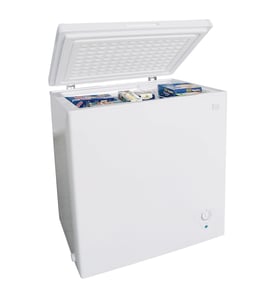



How many cubic feet is a Kenmore freezer model 25316502100?
Kenmore chest freezer model 25316502100 has a capacity of 14.8 cubic feet. You can also confirm the exact capacity for your unit on the rating label and in the specifications information in the 25316502100 owner's manual.
Where to confirm the capacity on the freezer
Use these model-specific sources so you match your exact unit and serial range:
- Rating/serial label on the left exterior wall of the cabinet (common chest-freezer location)
- Specifications section of the 25316502100 owner's manual
- Energy Guide paperwork (often lists capacity and estimated energy use)
- Product identification paperwork from installation or delivery
What 14.8 cu ft means for storage planning
This helps you estimate how much food you can organize and whether accessories fit your layout.
- Plan zones for meats, vegetables, and ready-to-eat items
- Use baskets to keep frequently used items accessible
- Avoid overpacking; airflow helps maintain even temperatures
Quick reference table
| Capacity | Best use | Typical organization tip |
|---|---|---|
| 14.8 cu ft | Family bulk storage | 1 to 2 baskets for top-layer access |
Why it matters
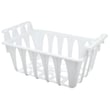
Knowing the correct cubic-foot capacity helps you compare chest freezers accurately, plan floor space, and choose the right storage accessories (such as a replacement freezer basket 216848200) for your Kenmore 25316502100.
Last updated: January 2026
What are the most common issues with 25316502100?
The most common issues we see with the Kenmore 25316502100 chest freezer are warm temperatures (not freezing), heavy frost buildup, and lid sealing or locking problems. These usually trace back to airflow and cleaning needs, temperature control parts, or compressor start components; use the owner's manual for model-specific operating checks.
Common symptoms and likely causes
- Freezer not cold enough: dirty condenser coil, thermostat/control issue, start relay/overload problem, or compressor trouble
- Runs constantly: lid not sealing, warm room location, frequent openings, condenser coil clogged with dust
- Excessive frost: lid left ajar, gasket leak, humid air entering, infrequent defrosting
- Clicking but not running: start relay/overload or run capacitor issue
- Lid will not lock or key issues: worn catch, lock, or missing key
Quick checks we recommend first
- Set the control colder and wait 24 hours for temperatures to stabilize.
- Clean the condenser area; dust buildup is a top cause of poor cooling.
- Confirm the lid closes evenly all the way around; check for gaps.
- Listen for repeated clicking at the compressor (often a start device issue).
- Defrost if frost is thick; heavy ice reduces cooling performance.
Parts that commonly solve these problems
| Symptom | Part to consider | What it does |
|---|---|---|
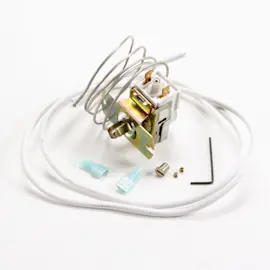
| Warm temps or temperature swings | Freezer temperature control thermostat 5304496559 | Cycles cooling on and off based on temperature |
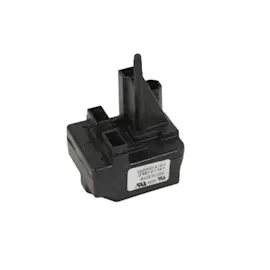
| Clicking, won’t start | Universal/multiflex (frigidaire) freezer compressor start relay 216954200 | Helps the compressor start |
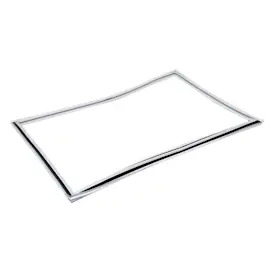
| Frost or air leaks at lid | Frigidaire freezer gasket and liner fastener kit 5304406520 | Improves lid seal to keep humid air out |
| Lid won’t secure | Lock 5303925134 or freezer lid lock catch (white) 297014100 | Keeps the lid closed/locked |
Why it matters
A chest freezer that runs warm or frosts heavily wastes energy, risks food spoilage, and can shorten compressor life. Fixing sealing, cleaning, and control issues early prevents bigger, costlier failures.
Last updated: March 2026
What can cause a chest freezer to stop working?
A Kenmore chest freezer model 25316502100 typically stops working because it is not getting power, the temperature control is set to OFF, or a start or cooling-system component is failing. Start with the power and control checks in the 25316502100 owner's manual.
Most common causes (and what to check first)
- Loose plug or no power at the outlet: confirm the cord is fully seated and the outlet works.
- Tripped breaker or blown fuse: reset the breaker or replace the fuse (commonly a 15-amp time-delay fuse).
- GFCI outlet nuisance trip: if the freezer is on a GFCI circuit, try a different non-GFCI circuit (an electrician can confirm the best setup).
- Temperature control set to OFF or too warm: adjust the control and allow time for temperatures to stabilize.
- Door not sealing: a poor seal can lead to temperature problems and long run times; inspect the gasket and lid alignment.
- Compressor start issue: clicking, humming, or repeated start attempts often point to the start relay or overload.
Quick diagnostic checklist (10 minutes)
- Verify the yellow Power On light is lit (if equipped).
- Confirm the outlet has power by testing with a lamp.
- Check the house breaker or fuse.
- Make sure the control knob is not set to OFF; then wait up to 4 hours for a full cool-down after being off.
- Listen for compressor behavior: steady run vs. repeated clicking.
- Check the lid seal for gaps, dirt, or damage.
Parts that commonly relate to “won’t run” symptoms
| Symptom | Likely area | Example part for this model |
|---|---|---|
| No start, clicking near compressor | Start components | Universal/multiflex (frigidaire) freezer compressor start relay 216954200 |
| Runs but won’t cool well | Sealed system | Freezer compressor 5304507767 |
| Temperature swings or won’t maintain setting | Temperature control | Freezer temperature control thermostat 5304496559 |
| Lid won’t seal, warm air leaks | Door seal hardware | Frigidaire freezer gasket and liner fastener kit 5304406520 |
Why it matters
A freezer that stops running can thaw food quickly. Keeping the lid closed helps food stay frozen longer during a power failure, and the temperature alarm (if equipped) alerts you when the interior temperature becomes unsafe.
Last updated: January 2026