Error Codes


How to identify a Kenmore washer model?
Your Kenmore washer model number is printed on the appliance’s model and serial tag. For Kenmore washers, it’s commonly found under the lid (top-load models like 11082980830), inside the door opening (front-load models), or on the back panel near the power cord or control console.
Where to look on Kenmore washers
Check these spots in order; they cover most Kenmore washer designs:
- Top-load washer: Lift the lid and look along the underside of the lid or the top rim of the tub opening
- Front-load washer: Open the door and check the door opening frame (often around the door seal area)
- Back of the cabinet: Look near the power cord entry or rear panel
- Control console area: Sometimes behind the console or on the cabinet near the controls
What the model number looks like
Kenmore model numbers are usually a mix of numbers (and sometimes letters). Many Kenmore washers start with 110 (as in 11082980830), followed by additional digits that identify the exact design and parts.
| What you see on the tag | What it means | Why it matters |
|---|---|---|
| Model number (example: 11082980830) | Exact washer identity | Ensures correct parts fit |
| Serial number | Production identifier | Helps match revisions/production runs |
| Type/style info (varies) | Internal manufacturing info | Useful for service reference |
Why it matters
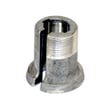
Using the exact model number prevents ordering the wrong part when you are troubleshooting issues like no drain, no spin, or poor agitation. For example, common wear items for Kenmore 11082980830 include the agitator dog 80040 and the coupling 285753A, which are model-specific selections from the parts list.
Quick tips before you order parts
- Copy the model number exactly, including all digits
- Take a clear photo of the model tag for reference
- Match symptoms to the right system (drain, spin, agitation, fill)
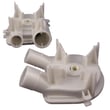
- If the washer won’t spin or drains slowly, check related parts like the water pump WP3363394
Last updated: February 2026
Is it worth repairing a Kenmore washing machine?
Yes, it’s usually worth repairing a Kenmore washer, especially when the problem is a common wear item and the machine is otherwise in good shape. For Kenmore model 11082980830, repairs like a drain pump, motor coupling, or agitator parts often cost far less than replacing the washer.
Quick rule of thumb (repair vs. replace)
We use these practical checkpoints to decide:
- Repair when the washer still fills, agitates, and spins but has a specific symptom (leak, no drain, weak agitation).
- Repair when the fix is a common mechanical part (pump, coupling, clutch, valve).
- Replace when multiple major systems are failing (drive system plus tub/basket damage plus repeated leaks).
- Replace when the tub or basket is severely damaged or rusted through.
- Replace when the repair requires several high-cost parts at once.
Common “worth it” repairs for model 11082980830
These are frequent, cost-effective fixes on this style of Kenmore top-load washer:
| Symptom | Likely area | Example part on this model |
|---|---|---|
| Won’t drain or leaves water in tub | Drain pump or blockage | Water pump WP3363394 |
| Agitator moves poorly or “ratchets” | Agitator dogs/cam | Agitator dog 80040 |
| Motor runs but washer won’t agitate/spin | Motor coupling | Coupling 285753A |
| Spins weakly or slips under load | Clutch/drive components | Clutch 285785 |
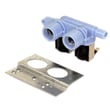
| Won’t fill or fills incorrectly | Water inlet valve | Washer valve 285805 |
Why it matters
A targeted repair restores cleaning performance and prevents secondary damage. For example, a failing pump can lead to standing water and odors; a worn coupling can progress to a no-agitate/no-spin situation.
Before you decide, check these 5 things
- Overall condition: excessive rust, loud bearing noise, or a badly worn basket points toward replacement.
- Single failure vs. multiple failures: one clear symptom is a good repair candidate.
- Leak location: leaks from hoses/pump are usually straightforward; leaks at the tub seal area can be more involved.
- Parts cost vs. value: if parts and labor approach about half the cost of a comparable new washer, replacement is often the better value.
- Downtime: if you need it running fast, common parts like pumps and couplings are typically quick-turn repairs.
Last updated: February 2026
What is the average lifespan of a Kenmore washer?
A Kenmore washer typically lasts 10 to 15 years. For your Kenmore 11082980830 top-load washer, lifespan depends most on load size, how often it runs, and whether wear items are replaced promptly when symptoms show up.
Typical lifespan and what changes it
Most washers land in the 10 to 15 year range, but these factors move the needle:
- Overloading (stresses the drive system and suspension)
- Unbalanced loads (increases wear on springs, basket, and drive components)
- Hard water and detergent buildup (can affect valves, pump, and overall performance)
- Small leaks left unattended (can damage bearings, drive parts, and electrical components)
- Timely replacement of common wear parts (often extends usable life)
Common “end-of-life” symptoms (and parts that often fix them)
If the washer is otherwise in good shape, these issues are often repairable:
- Agitator moves poorly or “ratchets”: check the agitator dog 80040 and agitator cam 285748
- Won’t spin or struggles to start agitation: inspect the coupling 285753A and clutch 285785
- Won’t drain or leaves water in the tub: look at the water pump WP3363394
- Excessive shaking or banging: inspect the washer suspension spring WP63907
Quick maintenance that helps a washer reach 10 to 15 years
- Keep loads evenly distributed; wash bulky items in smaller batches
- Use the right amount of detergent; too much can cause buildup
- Check fill hoses and connections periodically for slow leaks
- If draining slows, clear the drain path before the pump is overworked
- Address new noises early (grinding, squealing, repeated thumping)
Repair vs. replace: a simple guide
| What you’re seeing | Most likely category | Typical next step |
|---|---|---|
| Agitation issues only | Wear item | Replace small drive/agitator parts |
| No spin plus burning smell | Drive system | Inspect coupling, clutch, motor |
| Water left in tub | Drain system | Check pump and drain path |
| Constant severe vibration | Suspension/basket | Inspect springs and basket support |
Why it matters
A washer near the 10 to 15 year mark can still be a solid performer if you catch wear early. Replacing a few common parts is often the difference between a short-term nuisance and a major breakdown.
Last updated: February 2026