

Are radial arm saws worth anything?
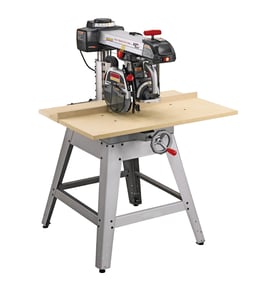
Yes. A Craftsman radial arm saw like model 11329441 can be “worth something” both as a usable shop tool (especially for accurate crosscuts and dadoes) and as a resale item; value is driven mostly by condition, completeness, and how well it’s tuned and aligned.
- Condition: smooth arm travel, solid column lock, minimal rust, no cracked castings
- Completeness: guard, table/fence pieces, yoke and carriage hardware, correct arbor parts
- Motor health: starts quickly, runs without excessive sparking, burning smell, or loud bearing noise
- Accuracy: holds alignment after locking (arm, bevel, and miter settings)
- Safety upgrades and setup: intact guard and a properly built table reduce risk and increase usefulness
These are common ranges for older 10-inch radial arm saws in many local markets; exceptional condition and accessories can push higher.
| Condition / situation | Typical outcome | Practical “worth” |
|---|---|---|
| Non-running or missing key parts | Parts/repair project | Low |
| Runs but needs cleanup and tune-up | Usable after setup | Low to moderate |
| Clean, complete, aligned, ready to use | Best resale and shop value | Moderate |
| Collector-grade, very clean, lots of original accessories | Niche buyer appeal | Moderate to higher |
We consider a radial arm saw a good keep when you regularly need:
- Wide crosscuts that are awkward on a miter saw
- Repeatable dadoes/rabbets with a dado stack (when equipped and set up correctly)
- Stationary, dedicated cutting in a long work area (stop blocks, repetitive cuts)
Radial arm saws reward careful setup. When the arm, yoke, and fence are aligned, you get fast, repeatable crosscuts; when they are out of adjustment, you get wandering cuts and higher kickback risk.
- Use a sharp, correct blade for the operation
- Keep the guard installed and functioning
- Avoid “do-everything” setups; use the saw for the jobs it does best
- Unplug before adjustments
For help identifying the exact model and matching the right replacement parts, use how to find your appliance model number (and what it means for parts).
Last updated: February 2026
Can I use a dado blade on a radial arm saw?
Yes, you can use a dado setup on a radial arm saw, but we only recommend doing it if your Craftsman 11329441 (10" accra-arm radial saw) is in excellent mechanical condition and you can control self-feeding. Dadoing on a radial arm saw demands strict setup, guarding, and technique.
- The arm, yoke, and carriage lock firmly with no drift or play
- The blade does not “creep” forward when you pull the carriage
- The table and fence are flat, solid, and securely fastened
- The motor reaches full speed smoothly with no unusual vibration
- You can keep the workpiece fully supported and clamped when needed
- Use the correct arbor size and a dado set rated for your saw’s RPM
- Keep the dado width conservative; wider stacks increase grab and kickback potential
- Set the depth with the saw unplugged; recheck depth after tightening the arbor nut
- Use a sacrificial fence and table surface so the dado can exit cleanly
- Feed slowly and steadily; if the carriage wants to “run” toward you, stop and correct the setup
| Factor | Radial arm saw | Table saw |
|---|---|---|
| Feed direction | You pull the cutter through the wood | You push wood past the cutter |
| Self-feeding tendency | Higher | Lower |
| Best use case | Controlled cross-grain dados with solid fixturing | Most dado work, especially long grooves |
A dado stack removes a lot of material fast. On a radial arm saw, that can amplify self-feeding and kickback if the carriage, locks, fence, or work support are not perfect, so setup and control are the difference between a clean dado and a dangerous cut.
For general electrical and safety checks before any power-tool repair or adjustment, use are diy appliance repairs safe.
Last updated: February 2026
What is the best brand of radial arm saw?
There is no single best brand of radial arm saw; the right choice depends on whether you want a modern production saw or a vintage, heavy-duty machine. For a Craftsman 11329441 10-inch Accra-Arm radial saw, the “best” brand is the one that matches your accuracy needs, parts availability, and how often you’ll use it.
- Use case: occasional DIY crosscuts vs. daily shop production
- Cut quality needs: rough framing vs. fine trim and cabinetry
- Support plan: comfort with DIY tuning, alignment, and electrical checks
- Parts strategy: ability to source wear items (switches, cords, bearings, guards)
- Space and dust control: footprint, fence setup, and dust collection options
| Tier | Brands you’ll commonly see | Best for | What to watch for |
|---|---|---|---|
| Modern, new production | Original Saw Company, Maggi | High duty cycle, repeatability | Higher cost, heavier machines |
| Vintage, heavy cast-iron classics | DeWalt, Delta/Rockwell, Northfield | Rigidity, longevity, rebuild potential | Condition varies; may need restoration |
| Value vintage (common in home shops) | Craftsman (older models like 113-series) | Good capability for the money | Requires careful setup and safety checks |
- Verify the arm and yoke lock tightly with no play
- Check the carriage bearings/rollers for smooth travel
- Confirm the blade is square to the fence and table
- Inspect the power cord and switch for heat damage or cracking
- Make sure guards and anti-kickback features are present and functional
Radial arm saw performance is driven more by alignment, rigidity, and condition than the name on the badge. A well-tuned Craftsman 11329441 can outperform a poorly maintained “premium” saw, especially for crosscutting and repetitive shop work.
If you’re evaluating an older saw, electrical condition is a big deal; our how to use a multimeter to test electrical parts video helps you check switches, cords, and continuity before you invest in repairs.
Last updated: February 2026
When did Craftsman stop making radial arm saws?
Craftsman radial arm saws were largely out of the mainstream new-tool lineup by the early 1990s, as miter saws became the more common choice for crosscuts. For Craftsman model 11329441 (10-inch accra-arm radial saw), the practical takeaway is that it is an older design, so correct model identification matters most when maintaining or sourcing parts.
Instead of relying on a single “stop date,” we use a practical timeline that matches what owners typically see in the market.
- Many Craftsman radial arm saws were sold primarily in the 1970s and 1980s
- By the early 1990s, they were far less common as new retail offerings
- Today, most units in use are maintained with inspection, cleaning, and replacement of wear items
Age-related wear is usually the limiting factor, not the basic design.
- Power cord and plug condition (cracks, stiffness, exposed conductors)
- Switch operation (positive on/off, no sticking)
- Motor performance (slow start, overheating, unusual noise)
- Carriage travel (rollers/bearings, smooth movement, no binding)
- Arm and yoke locks (hold position firmly)
- Blade guard condition and secure mounting
| Era | What it usually means for owners | Best next step |
|---|---|---|
| 1970s to 1980s | Many units still running; common wear and alignment issues | Inspect mechanical wear points and electrical safety items |
| Early 1990s onward | Fewer new units sold; parts can be more model-specific | Match parts by exact model and diagram callouts |
Knowing these saws are typically older helps set expectations: you get the best results by confirming the exact model number and then matching parts by diagram position, dimensions, and electrical ratings.
For help confirming the model number format and where to find it on the tool, use how to find your appliance model number (and what it means for parts).
Last updated: February 2026