Error Codes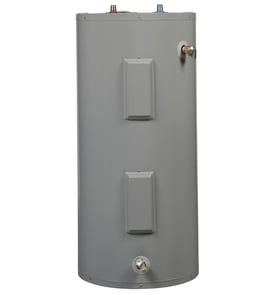



How long will an electric hot water heater last?
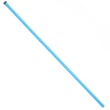
Most electric tank water heaters last 10 to 15 years. For your Kenmore 153312340 Economizer 5 electric water heater, lifespan depends mainly on water quality, installation, and maintenance; replacing wear items like the anode rod 100108260 can help the tank reach the upper end of that range.
Electric water heaters usually fall into these ranges:
| Type | Typical lifespan | What usually ends it |
|---|---|---|
| Electric tank water heater | 10 to 15 years | Tank corrosion and leaks |
| Electric tankless water heater | 20+ years | Scale buildup, component wear |
If you see these symptoms, plan for repair or replacement soon:
- Water pooling around the base (tank leak)
- Rusty or metallic-smelling hot water
- Rumbling or popping sounds (sediment buildup)
- Hot water runs out faster than it used to
- Temperature swings even after adjusting settings
These steps reduce corrosion and overheating stress on the tank and elements:
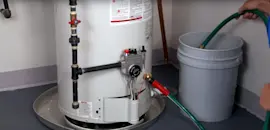
- Flush a few gallons from the drain valve periodically to reduce sediment
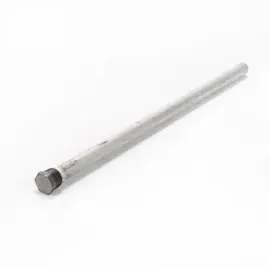
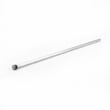
- Check and replace the sacrificial anode when it is heavily worn (common life-extender)
- Keep thermostat settings reasonable (many homes run well around 120°F)
- Inspect for seepage at element gaskets and fittings
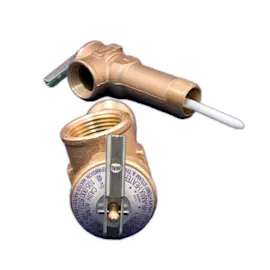
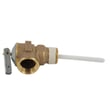
- Test the temperature and pressure relief valve for proper operation
Once a tank starts leaking, it is a tank failure, not a “part failure”. Preventive maintenance (especially anode rod replacement) is what most often separates a 10-year heater from a 15-year heater.
Last updated: February 2026
How much does a 40 gallon water heater scrap for?
A typical 40-gallon electric water heater usually scraps for about $7 to $30, depending on local scrap prices, whether the tank is steel or has higher-value metals, and if you bring it in drained and separated. For Kenmore model 153312340, the scrap value is based on materials, not the model.
- Local yard pricing (prices vary by region and by day)
- Material mix (mostly steel, plus copper/brass in fittings and wiring)
- Preparation (drained tank, removed insulation or plastic when required)
- Condition (some yards pay less for tanks with heavy scale or contamination)
- Weight (40-gallon tanks are heavier than smaller units, so they often pay more)
- Turn off power at the breaker and confirm it is off.
- Shut off the cold-water supply and drain the tank fully.
- Disconnect plumbing and electrical safely.
- Keep small parts you may want to reuse or sell separately (valves, thermostats, elements).
If the heater failed due to a common service part, selling or reusing parts can be worth more than scrapping the whole tank.
| Option | Typical payout | Best when |
|---|---|---|
| Scrap the whole heater | $7 to $30 | Tank is leaking or badly corroded |
| Replace a failed part | Often higher value than scrap | No tank leak; only “no hot water” symptoms |
If your Kenmore 153312340 tank is not leaking, a “no hot water” problem is often caused by a failed thermostat, heating element, or a worn anode rod. Fixing one of those can restore hot water and avoid the low return of scrap.
Parts that commonly fail on this model
- Thermostat 100108683 (upper thermostat)
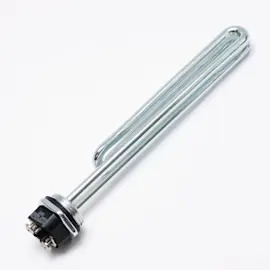
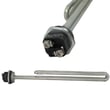
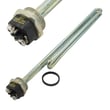
- Element 100108327 (heating element)
- Anode rod 100108260 (corrosion protection)
Last updated: February 2026
What's the difference between a 4500 watt and a 5500 watt hot water heater?
A 5500-watt electric water heater heats water faster than a 4500-watt unit, so it recovers quicker after showers and heavy use. The tradeoff is higher electrical draw, which can require a correctly sized breaker, wire gauge, and compatible heating element for your Kenmore model 153312340.
- Recovery time: 5500W typically restores hot water faster after the tank is depleted.
- Electrical load: 5500W draws more amps at 240V than 4500W.
- Circuit requirements: the higher draw often means a larger breaker and heavier wire (your home’s existing circuit must match).
- Element compatibility: the heater must use an element rated for the wattage and voltage.
- Operating cost: cost per gallon heated is similar; the main difference is how quickly the heat is delivered.
| Wattage | Approx. amps | What you notice most |
|---|---|---|
| 4500W | ~18.8A | Slower recovery, common residential setup |
| 5500W | ~22.9A | Faster recovery, higher circuit demand |
- Confirm the breaker size and wire gauge feeding the water heater match the higher load.
- Verify the heater is designed for the element wattage you want to use (some tanks are labeled for specific element ratings).
- If you are replacing parts on this model, use the correct element and sealing parts to prevent leaks.
- If you are troubleshooting “not enough hot water,” test the thermostats and elements before changing wattage.
- Thermostat 100108683 (upper thermostat)
- Element 100108327 (heating element)
- Water heater heating element gasket 100108379 (seal for the element)
Wattage affects how quickly your tank can recover, but electrical capacity and correct parts selection keep the repair safe and reliable. Many “slow hot water” complaints come from a weak element, a thermostat issue, or sediment, not just wattage.
Last updated: February 2026
Do I need a 20 or 30 amp breaker for a water heater?
For a Kenmore 153312340 economizer 5 electric water heater, the breaker size is based on the heater’s nameplate wattage and voltage. Most full-size electric tank water heaters use a 30-amp double-pole breaker on a dedicated 240V circuit, while some smaller or lower-wattage units can use 20 amps.
Use the water heater’s electrical rating label (typically lists volts and watts) and apply the standard sizing rule for fixed appliances.
- Confirm the heater voltage (commonly 240V) and total wattage.
- Calculate amps: amps = watts ÷ volts.
- Size the circuit for continuous load: 125% of calculated amps.
- Match the breaker to the wire gauge (breaker protects the wire).
- Use a dedicated circuit (no other loads on the water heater circuit).
| Common element wattage | Approx. running amps at 240V | Typical breaker | Typical copper wire |
|---|---|---|---|
| 3000W | 12.5A | 20A (double-pole) | #12 AWG |
| 3800W | 15.8A | 25A (double-pole) | #10 AWG (often) |
| 4500W | 18.8A | 25A or 30A (double-pole) | #10 AWG |
| 5500W | 22.9A | 30A (double-pole) | #10 AWG |
An undersized breaker can trip during normal heating cycles, and an oversized breaker can fail to protect the wiring. Correct sizing helps prevent nuisance trips, overheating at connections, and premature failure of electrical components like thermostats and heating elements.
Breaker sizing is only one piece of the puzzle. If the breaker is correct but you still have problems, these parts commonly affect heating and cycling:
- Upper thermostat: thermostat 100108683
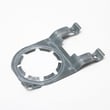
- Thermostat bracket (mounting and contact): water heater thermostat bracket 100108380
- Heating element: element 100108327
- Heating element seal (leaks onto wiring can cause faults): water heater heating element gasket 100108379
Last updated: February 2026
What is usually the most common water heater problem?
The most common water heater problem is not getting enough hot water (or running out quickly), usually caused by sediment buildup on the heating element or a failed thermostat or heating element. On Kenmore model 153312340 (electric), those issues show up as slow recovery, lukewarm water, or tripped high-limit.
- Sediment buildup: rumbling or popping sounds, reduced hot water, higher electric use
- Failed heating element: no hot water or limited hot water (often one element fails first)
- Bad thermostat: water too cool, too hot, or temperature swings
- Worn anode rod: rusty smell or discolored water, faster tank corrosion
- Leaking valve or fittings: moisture at connections, dripping from discharge pipe
- Confirm the breaker is on and not tripped.
- Check for water leaks around the tank, drain valve, and piping.
- Listen for rumbling or popping during a heat cycle (sediment).
- If you suspect an electrical failure, test components with a meter using our guide: how to use a multimeter to test electrical parts video.
| Symptom | Most likely cause | Parts on this page that often fix it |
|---|---|---|
| No hot water | Upper thermostat or element issue | Thermostat 100108683, element 100108327 |
| Runs out of hot water fast | Lower element or thermostat issue, sediment | Thermostat 100108424, element 100108330 |
| Water too hot or inconsistent | Thermostat out of calibration | Thermostat 100108683 or thermostat 100108424 |
| Dripping from relief line | T&P valve opening or failing | Water heater temperature and pressure relief valve 100108279 |
Catching the common causes early (sediment, thermostat, element wear) restores hot water faster and helps protect the tank from overheating, nuisance tripping, and premature corrosion.
Last updated: February 2026